The “Honshu Horseshoe”
It’s hard to believe over 12 months have passed since our epic three-month tour of Europe. But the time has come to get back on the bike-packing horse, so to speak.
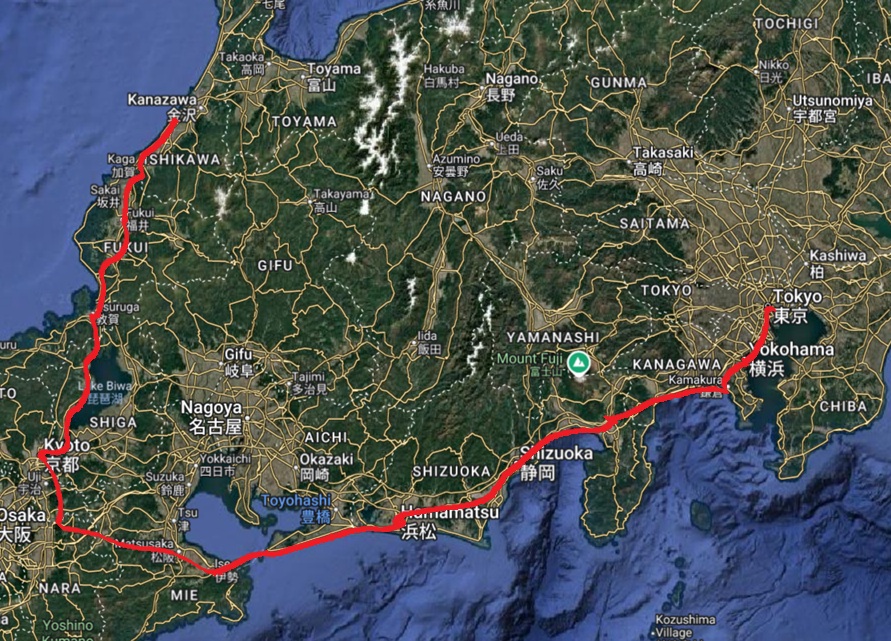
This time, the adventure takes us to Japan. We’ll fly into Tokyo in early autumn—skipping the summer heat—and set out on an ~800km+ horseshoe route across Honshu. From Tokyo to Hamamatsu, we’ll follow the historic Tōkaidō Road, one of the five great highways linking Edo (modern-day Tokyo) with Kyoto during the 1600–1800s. From there, the journey continues across Cape Irago to Toba, home of the legendary pearl divers, before rolling on to Ise and Nara en route to Kyoto. From Kyoto we’ll skirt the shores of Lake Biwa, then head north to the Sea of Japan, finishing in the cultural gem of Kanazawa.
We’re also bringing the band back together. Our retired mate Dave—last seen riding with us along the Danube in 2018—returns to the saddle, along with our almost-retired neighbour Denise. And joining us from Norway is our long-time friend Anne Christine, who caught the cycling bug on our Moselle ride during last year’s Europe tour.
Key References and Research
Apart from Dave—who skis in Japan every year—this trip is a first for the rest of us (aside from Chris’s couple of business trips to Tokyo). We’ve leaned heavily on Dave’s experience, both for towns he’s visited and for sorting out the key logistics.
We’re all flying into Narita with bike bags and heading home from the same airport three weeks later. In Japan, bikes are allowed on trains if they’re disassembled and covered (ours will be), but space can be tight—five bikes plus luggage is pushing it. To avoid the hassle, we’ve arranged a smarter plan: our bikes will be collected from Narita and delivered to our Tokyo accommodation, where we’ll reassemble and prep them. The empty bike bags will then be stored and shipped ahead to Kanazawa, our final stop. From there, they’ll be sent back to Narita in time for our departure.
This luggage forwarding and storage system—something Dave already uses for skiing—is apparently brilliant (at least for ski’s). It should take the stress out of managing bulky gear on crowded trains and makes the whole trip smoother from the start. We will test this service for the more bulky bike-bags!
https://www.japan.travel/en/guide/japan-by-bicycle
https://www.grasshopperadventures.com/article/best-time-to-visit-japan
https://eventshakuba.com/blog/how-to-ship-your-gear-in-japan/
With regards to the planning of the route, we knew we wanted to see a few key sights besides Tokyo, Mt Fuji and Kyoto, we wanted to follow the Tokaido where possible, we wanted to see some less travelled to cities (Nara and Kanazawa) and we had 3 weeks available (12-13 riding days). Ensuring we also had access to trains if required, the route seemed to lay itself out.
Final Preparation
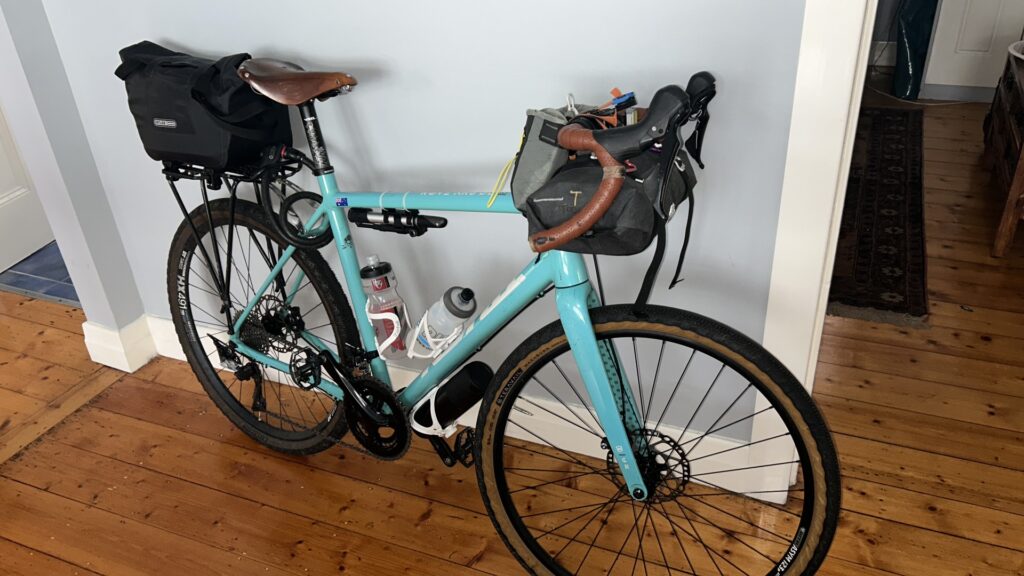
With just one week to go, here’s what we’re packing for our Honshu Horseshoe cycling adventure. We’ve kept our packing light and efficient. Both of us are using Ortlieb waterproof bags for reliability, plus a few extras for quick access.
Chris: 21 L total (Ortlieb 9 L handlebar pack + 12 L trunk bag) + 2 Apidura feed bags for quick access. Gear List and Bike-Sets is as follows:
On-Bike
- 2 × T-shirts (lightweight, quick-dry)
- 1 × Shorts
- 1 × Padded bike shorts
- 2 × Cycling socks
- 1 × Cycling shoes
- 1 × Neck buff
- 1 × Cycling cap
- 1 × Warm cycling jacket
- 1 × Short cycling gloves
- 1 × Thermal t-shirt (base layer)
- 1 × Rain jacket
Off-Bike
- 1 × Casual shorts
- 1 × Long pants
- 2 × T-shirts
- 1 × Long-sleeve shirt
- Multiple pairs of underwear
- 1 × Sleeveless puffer
- 1 × Casual shoes
- 1 × Compact beach towel
- Toiletrie
Bike Setup
- Rear Ortlieb Trunk Bag (12 L) – main off-bike clothing and toiletries.
- Ortlieb Handlebar Pack (9 L) – on-bike kit and weather layers.
- Apidura Feed Bags (2) – quick access to power banks, spare glasses, sunscreen, and daily snacks.
- Dual water bottles mounted in the main triangle.
- Frame-mounted tool/pump under the top tube.
- Brooks leather saddle for long-distance comfort.
- Quad-Lock for iPhone
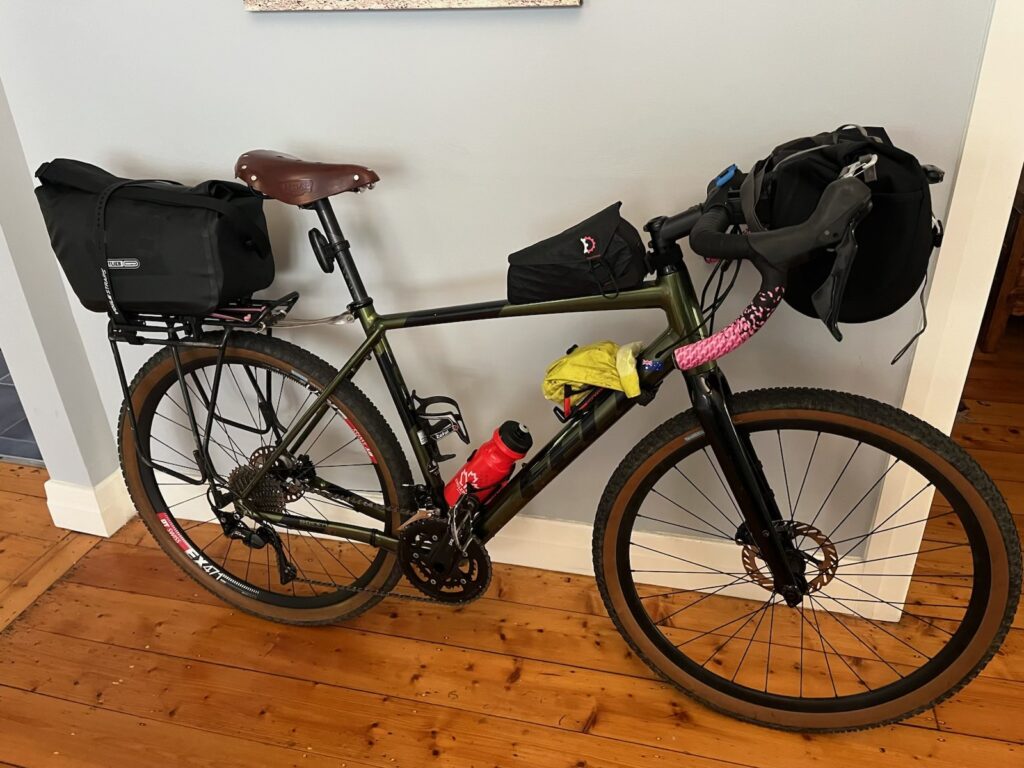
Janette: 23 L total (Ortlieb 11 L Handlebar Pack Plus + 12 L trunk bag). Gear list and Bike-Set-up is as follows:
On-Bike
- 2 × T-shirts (lightweight, quick-dry)
- 1 × Shorts
- 1 × Padded bike shorts
- 2 × Cycling socks
- 1 × Cycling shoes
- 1 × Neck buff
- 1 × Cycling cap
- 1 × Warm cycling jacket
- 1 × Short cycling gloves
- 1 × Thermal t-shirt (base layer)
- 1 × Rain jacket
Off-Bike
- 1 × Casual shorts
- 1 × Long pants
- 2 × T-shirts
- 1 × Long-sleeve shirt
- Multiple pairs of underwear
- 1 × Sleeveless puffer
- 1 × Casual shoes
- 1 × Compact beach towel
- Toiletries
Bike Setup
- Rear Ortlieb Trunk Bag (12 L)
- Ortlieb Handlebar Pack Plus (11 L)
- Top-tube bag for small items (tools/phone/ID)
- Dual bottles and Tool cage
- Brooks leather saddle for long-distance comfort.
- Quad-Lock for iPhone
….and Shared Gear
Bike & Repair
- 2 × Spare inner tubes each (4 total)
- 2 × Tyre levers
- 2* CO₂ inflator (shared)
- 1 × Multi-tool (with chain breaker + Allen keys)
- Tools for assembling/disassembling bikes (Allen keys, pedal wrench if needed)
- 2 × Bike bags for transport
- 1 × Small bottle chain lube
- Chain cleaning gear (brush/cloth, degreaser/wipes)
- 1 × Rag/cloth for chain/hand cleaning
- 1 × bike lock per bike
Electronics
- Phones + chargers
- Plug adapters (Japan Type A/B, 100V)
- Power banks
- Komoot for Mapping and GPS
Essentials & Safety
- Passports + photocopies
- Credit cards and Yen Bank Account
- Travel insurance documents
- First aid kit (plasters, antiseptic, painkillers, electrolytes)
Day 1 – Arrival in Tokyo (Taito Area)
Travel day — QF79 MEL → Tokyo for the Melbourne folk (Depart MEL ~09:30 and Arrive NRT. ~19:00). Meet with Anne-Christine who arrived at Tokyo-Narita after a ~24 hours on Qatar Airways via Doha.
🚉 Logistics: Airport courier to apartment fell through (soft bike bags refused; dimensions too big). Uber Van took Dave + five bike bags to the accommodation; everyone else caught the Keisei Skyliner to Ueno and walked onward.
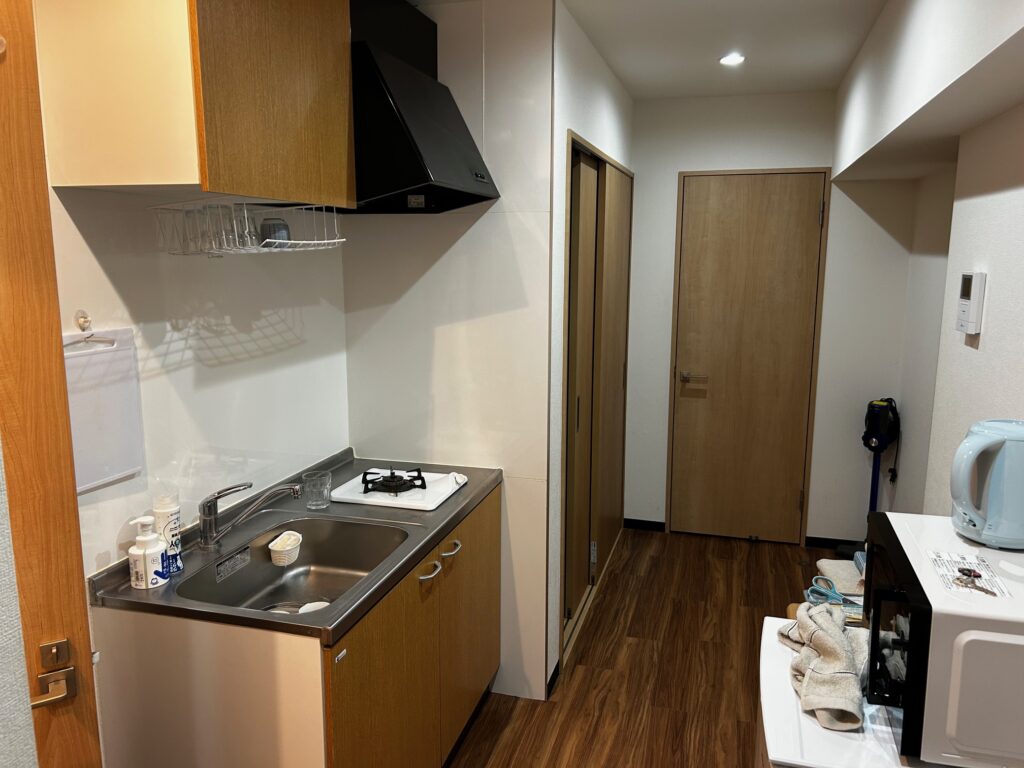
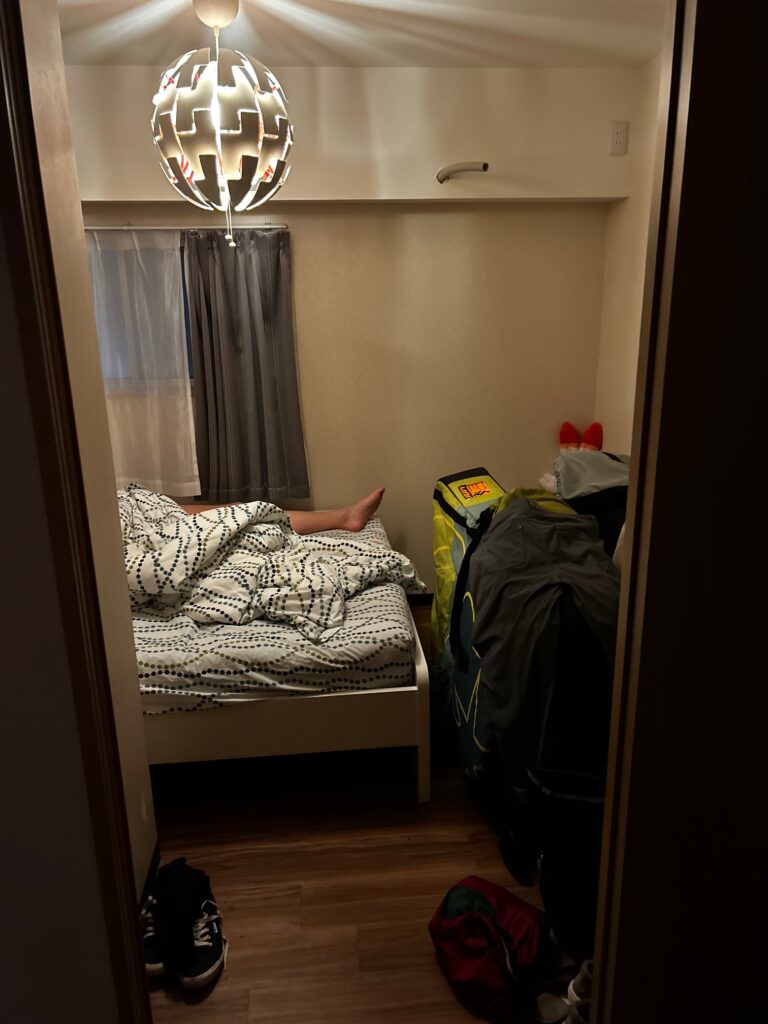
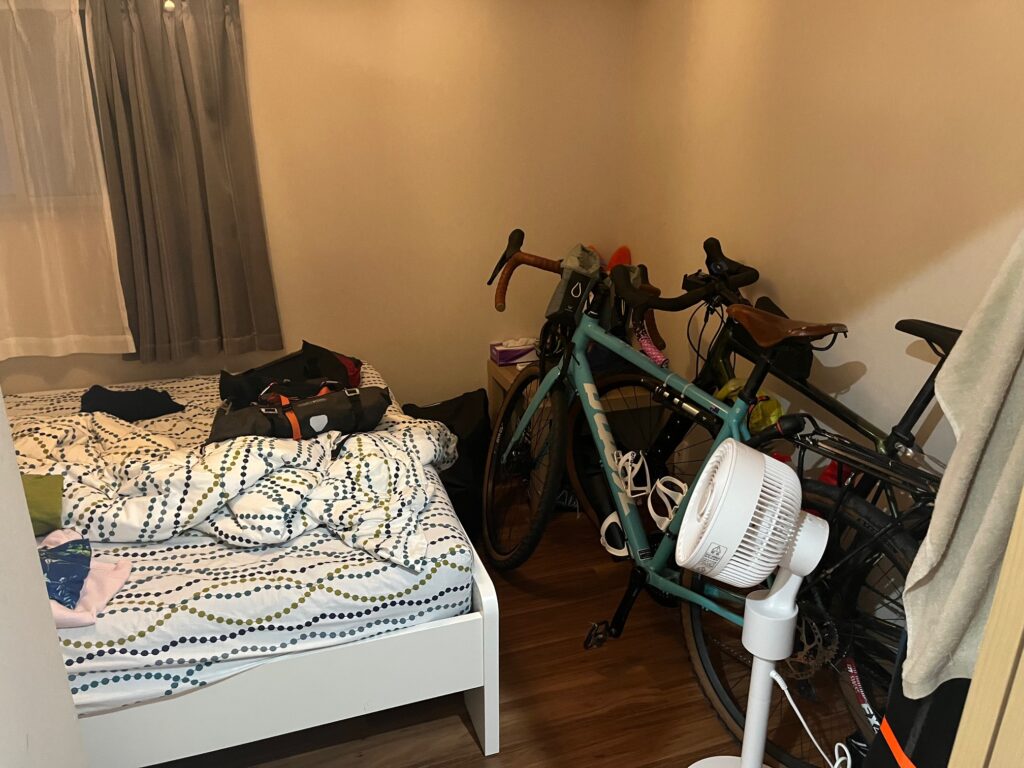
🏡 Stay: Guesthouse/apartment in Taitō booked with AirBNB. Small, but very comfortable 3 bedroom apartment on the first floor, so out first opportunity to haul bike bags and carry-on luggage up 2 flights of stairs.
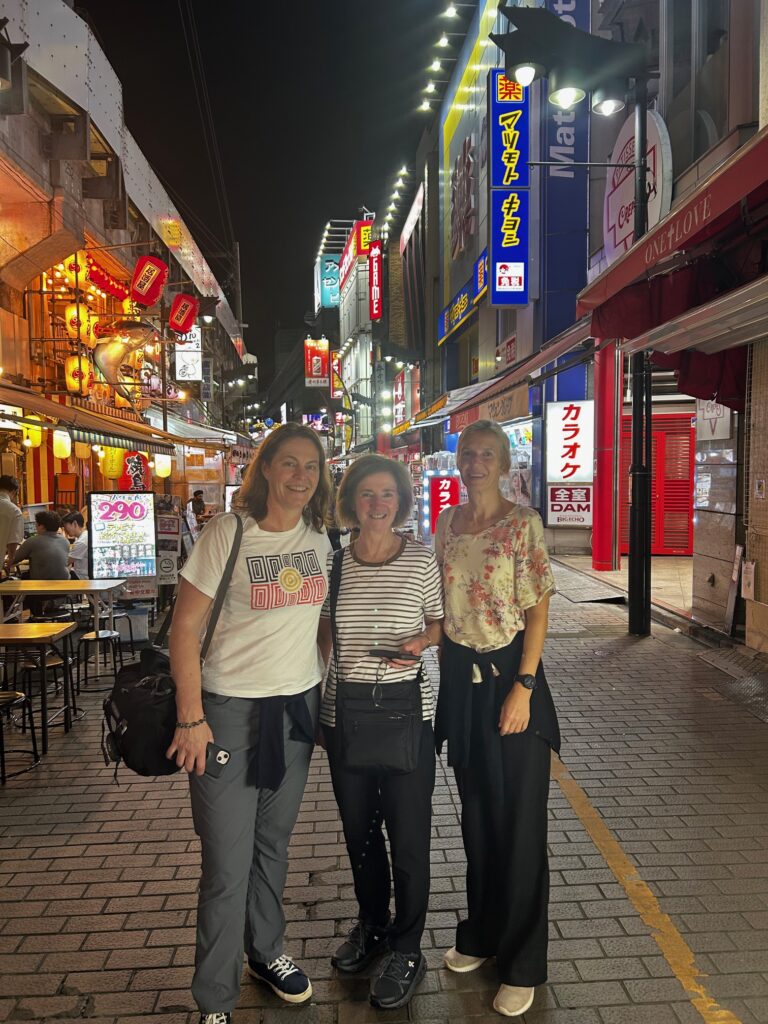
🍺 Food/Drink: Priority is always to have a end of day drink to speak about the day’s experience and any plans for the next day , so straight into the back streets of Taitō to Craft Beer Scissors for a drink. After a cold craft beer, dinner for the evening for the evening and breakfast for the following morning was found in the local 7-Eleven
💭 Reflection: Curveball with bike transport that would now require a re-plan on how we were to move bike bags around Japan, but spirits high—team together and stoked, Tokyo lights outside, and 7-Eleven (or any 24hr convenience store for that matter) provides great selection of ready meals.
Day 2 – Tokyo Build Day (Taitō / Ueno / Yanaka)
📏 Stats: No riding; ~10 km walking.
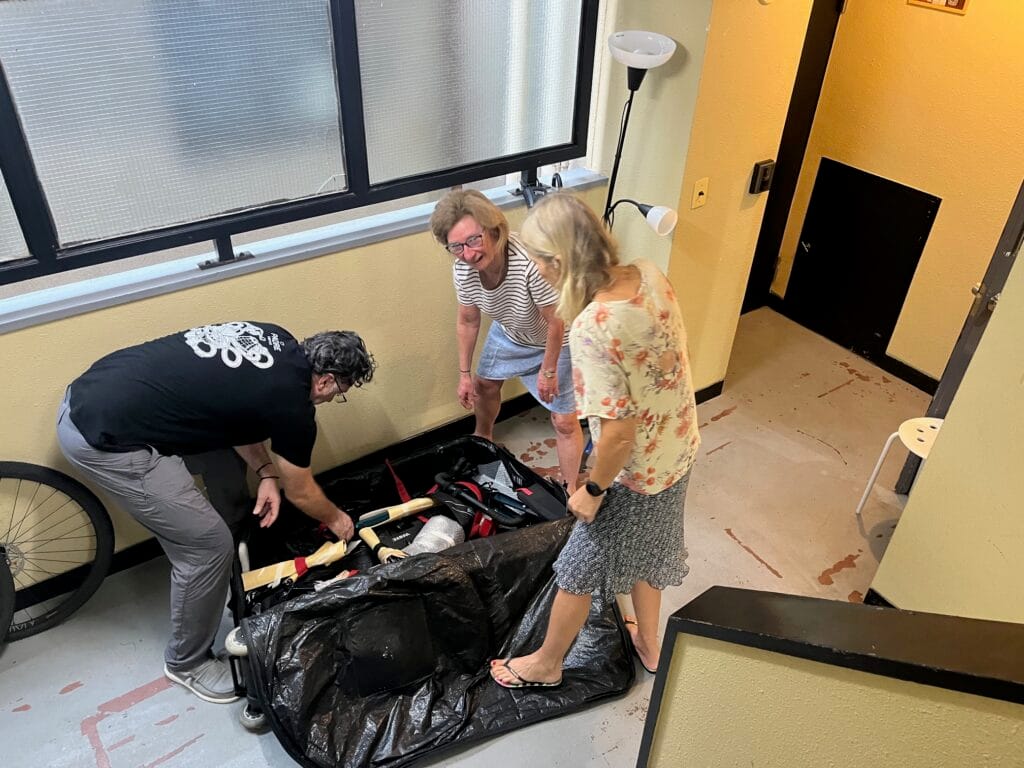
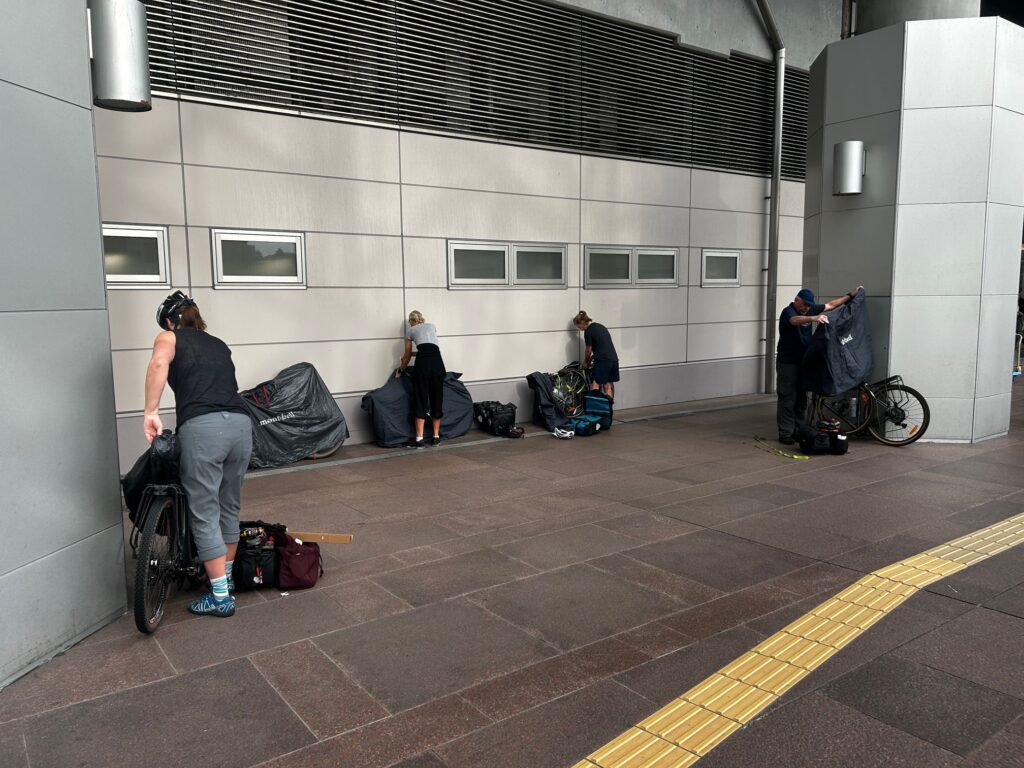
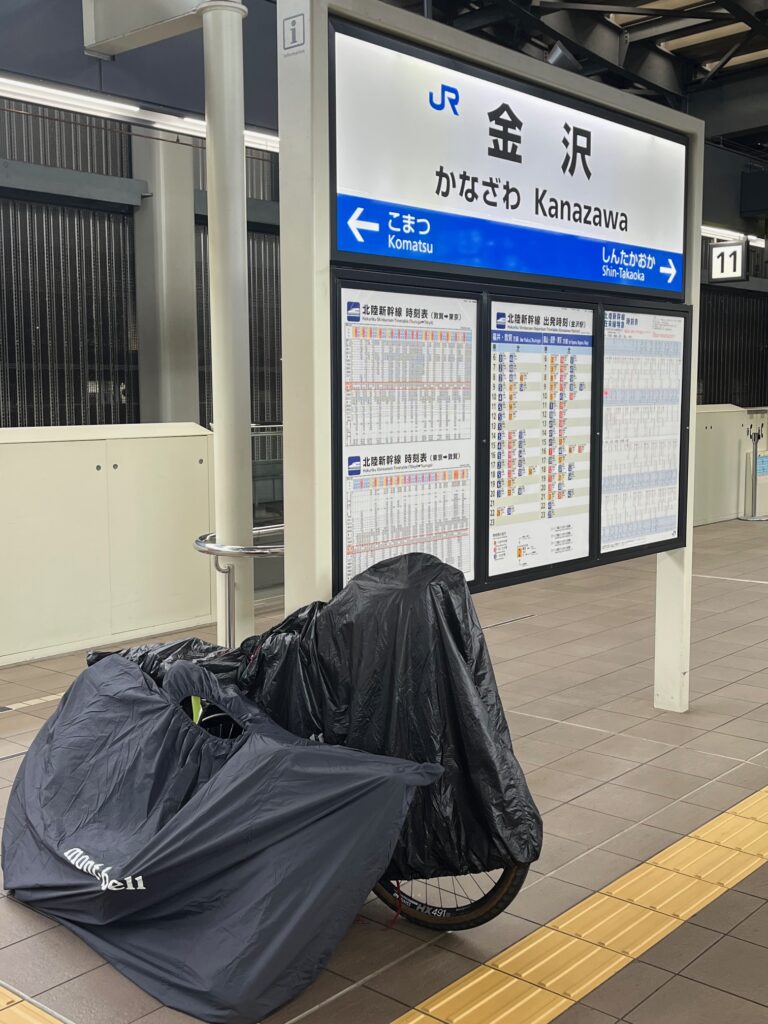
🛠 Bikes and Equipment : Unpacked, assembled, and checked—no damage. Brief scare with Anna-Christina’s rear caliper (seemed stuck) but a little research and tinkering fixed it. Visit to local bike shops and Mont-Bell to get necessary bike maintenance equipment including CO₂ canisters, new water bottles, and chain oil. With the change in how we were going to manage the future transportation for the bikes given the difficulties in bike logistics we also invested in the mandatory Rinko Bike bag for train journey back to Tokyo as well as a mitigation for any train journey that was unplanned.
☕ Stops: Excellent coffee at Woodwork (which is also named due to the excellent work craft store)- note, plan for good coffee shops in Japan to be mostly open after 10am.
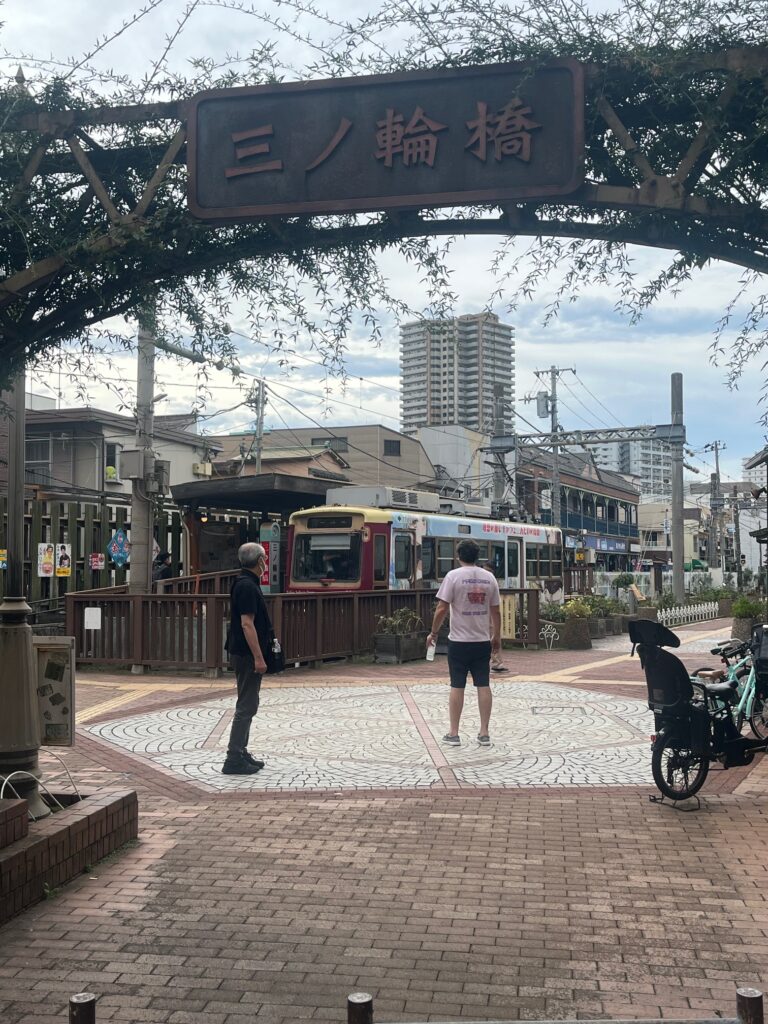
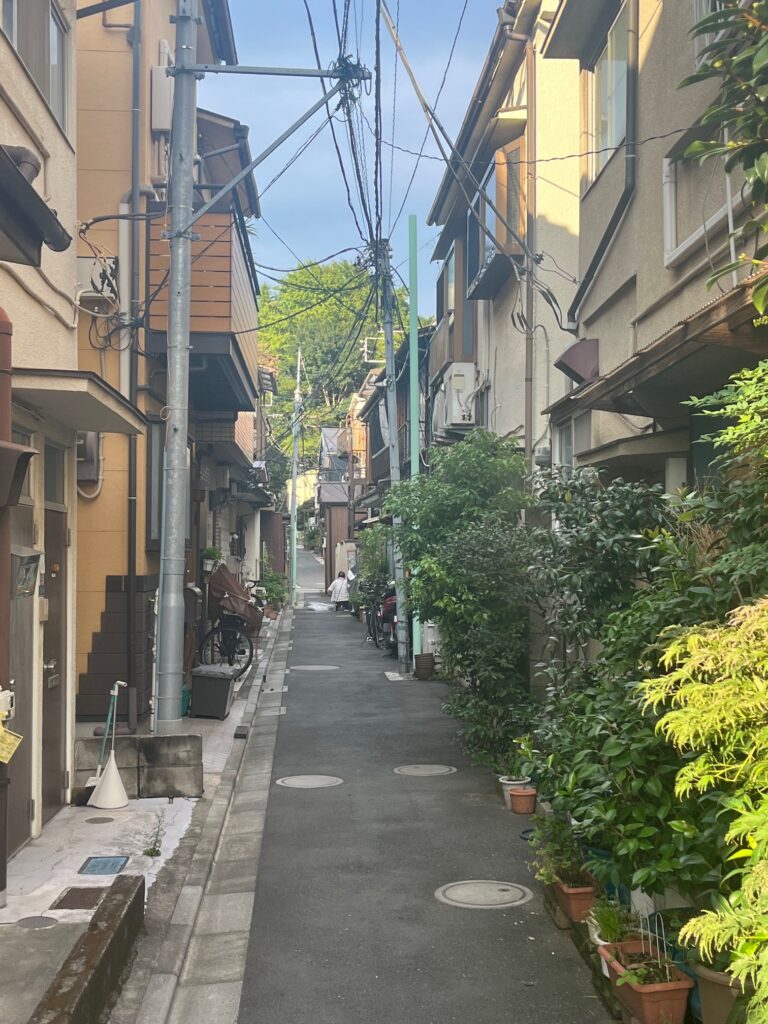
🚶 Wandering: Up toward the Arakawa Tramway (Tokyo Sakura Tram), looping back through Yanaka-Ginza—laneways, old-Tokyo vibes.
🍶 Dinner: Matsura Izakaya in Taitō, near the apartment.
💭 Reflection: Productive, a good stretch of the legs and fun—bikes dialed, supplies sorted, easy Tokyo ramble before the first ride.
About the Arakawa Tramway (Tokyo Sakura Tram)
- Officially the Toden Arakawa Line, running Minowabashi ↔ Waseda, 12.2 km with 30 stops. Since 2017 it’s nicknamed the Tokyo Sakura Tram. Tokyo Metro
- It’s the only remaining line of the old Tokyo Toden streetcar network—and today one of just two tram/light-rail lines in Tokyo (the other is the Tokyu Setagaya Line). Wikipedia+1
- The route’s ancestry goes back to the early 1910s (sections opened in 1911–1913), which is why it’s often called Tokyo’s “oldest” surviving tram line. Wikipedia+1
Day 3 – Tokyo City Loop Test Ride (Shibuya / Akasaka / Tokyo Station)
🛠 Purpose: Shakedown ride for the bike to make sure gears are working, brakes are working, tyres are pumped. Bike in good order.
📏 Stats: Test ride; city loop ~25–30 km (urban streets).
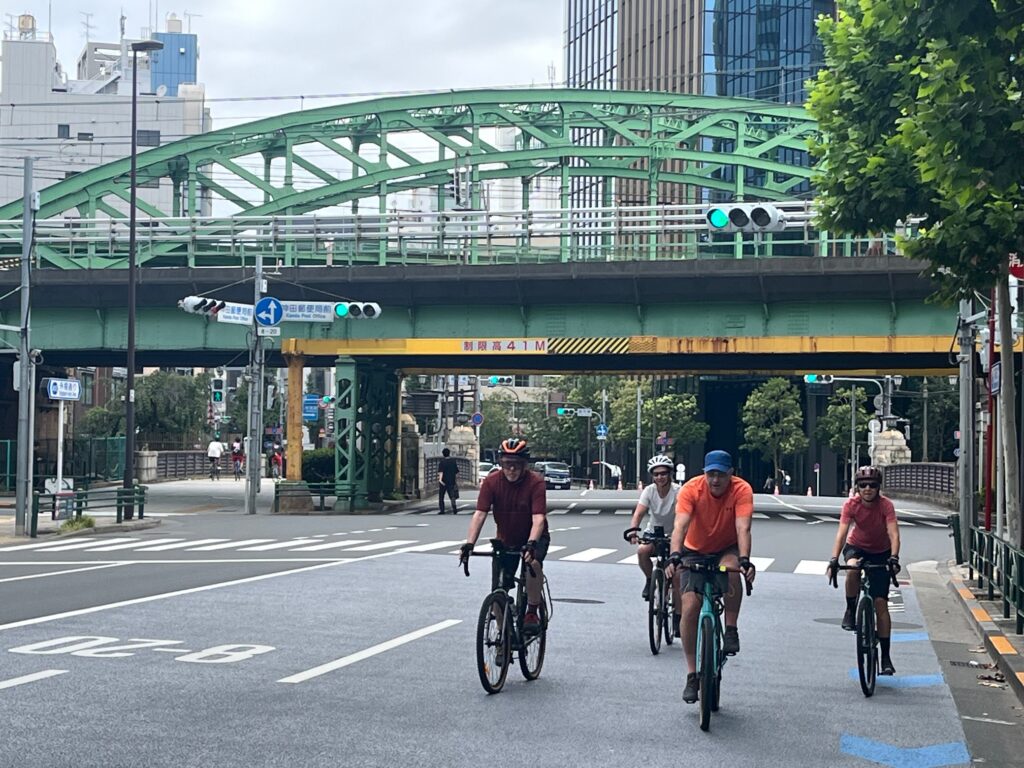
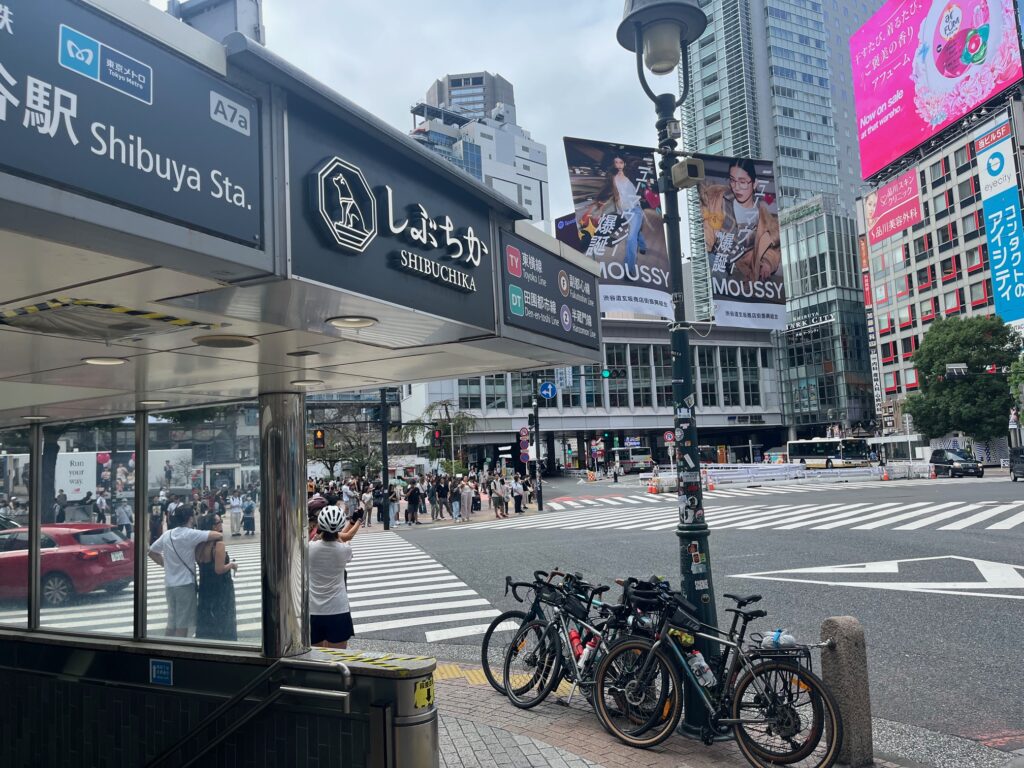
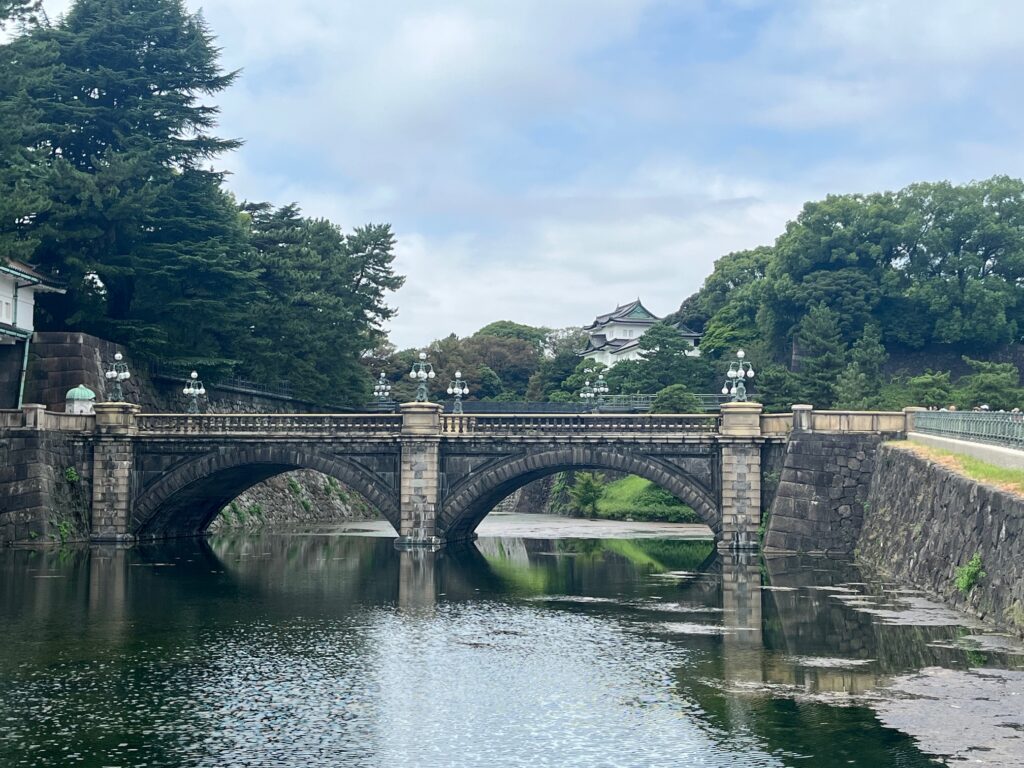
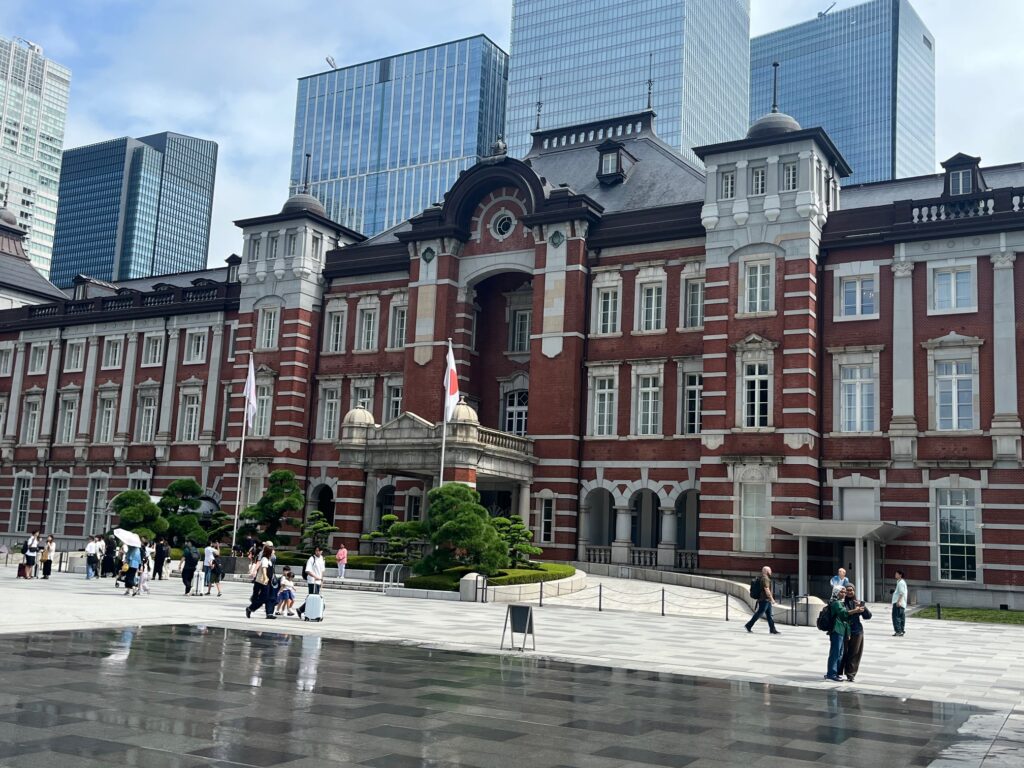
🚧 Route & Notes: Headed southwest toward Shibuya. The World Championships marathon brought rolling road closures, so we threaded alternate streets. Skirted the Imperial Palace moat on one side, then continued to Shibuya Crossing. Coffee stop at Beans Garage. For the return we looped back via Akasaka—past the National Diet / parliamentary district—then by Tokyo Station and back to Taitō for an Izakaya lunch under the railway lines.
🛠 Bikes and Equipment : Arranged for Bikebags and any discarded clothes to be stored at our hotel for our return to Tokyo. Thanks to the excellent and patient staff at the Candeo Hotel Roppongi
🥩 Dinner: Wagyu Panga near the apartment—fantastic beef and a great end to the tune-up day.
💭 Reflection: Bikes felt solid in real-world traffic; closures turned into a fun navigation challenge and a sightseeing bonus.
Day 4 – Tokyo → Kamakura (City-to-Coast)
📏 Stats: 60 km
🌦 Weather: Woke to heavy rain; it eased before rollout. 35 °C+ and ~80% humidity.
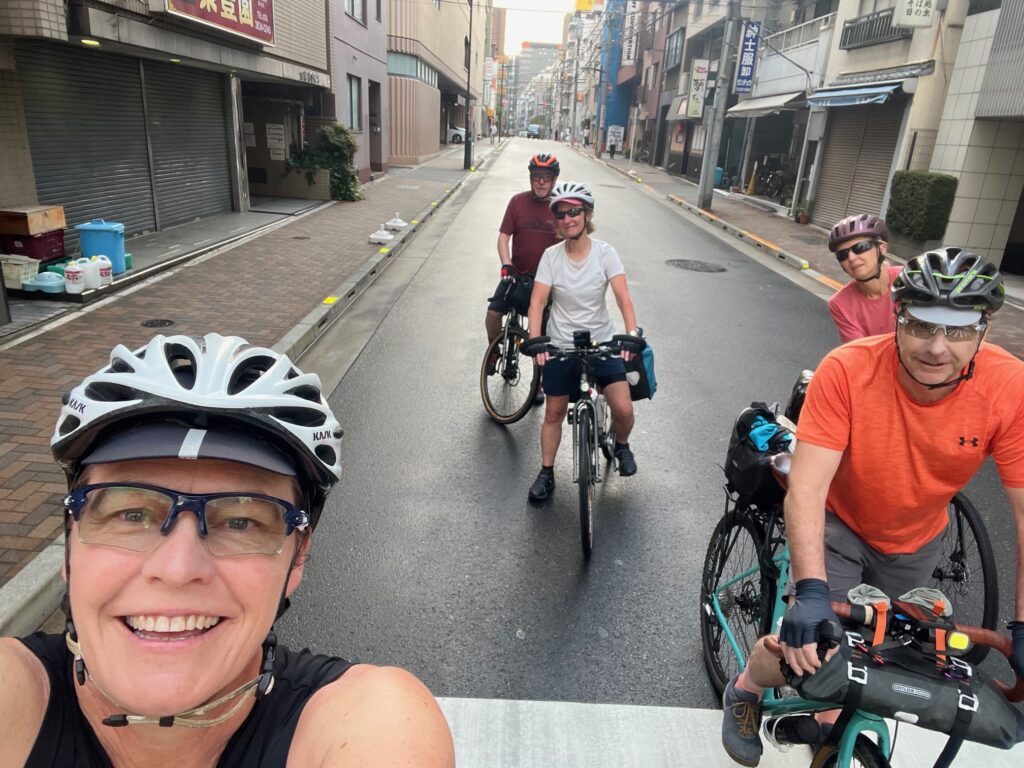
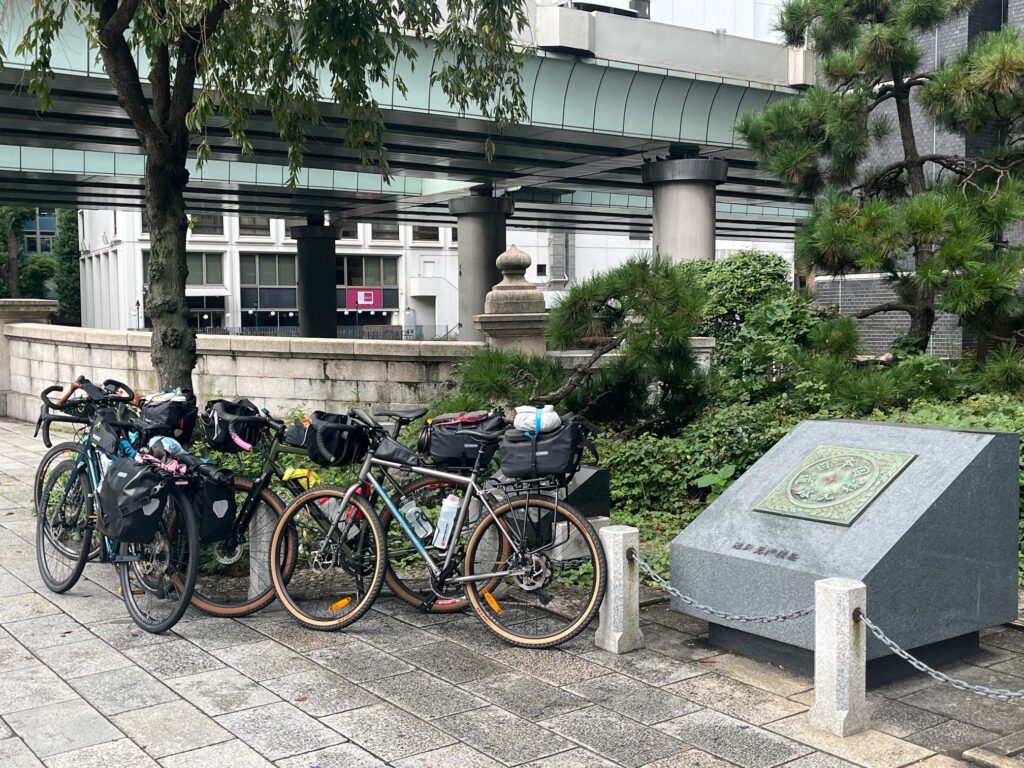
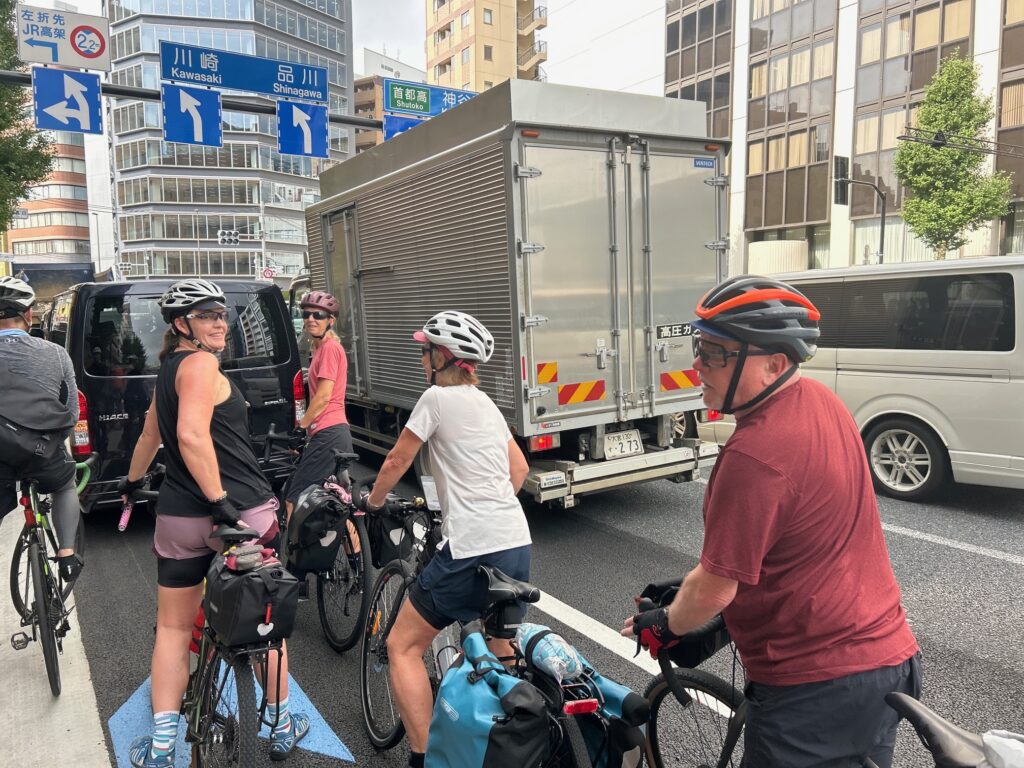
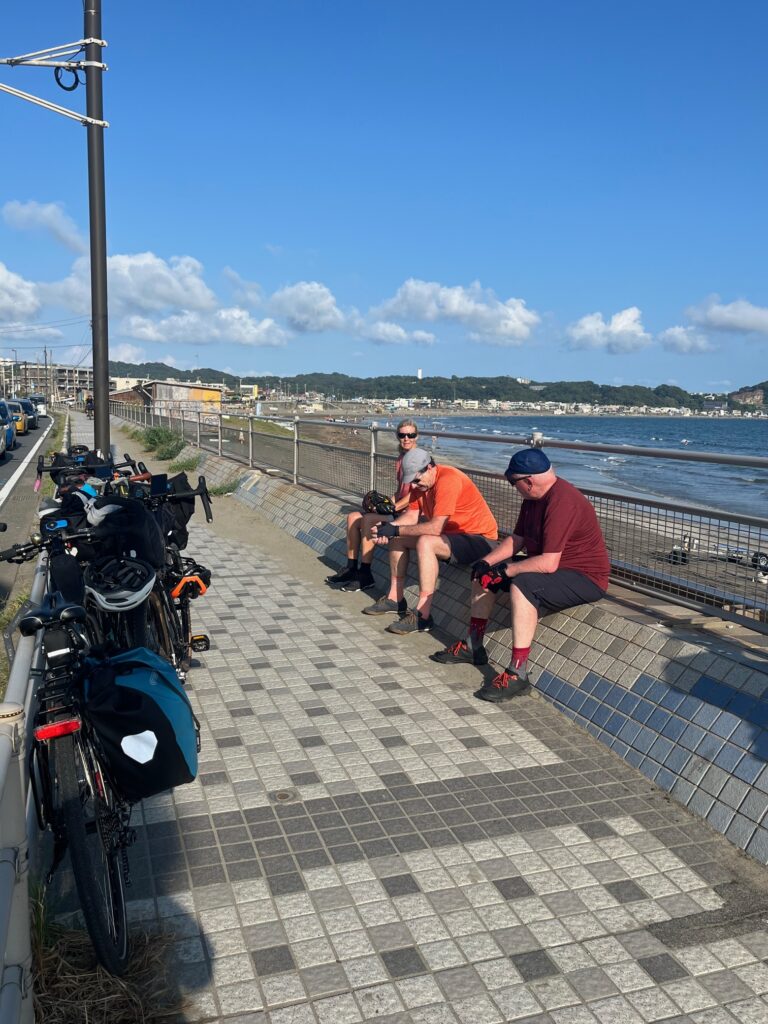
🗺 Route & Notes: Left the apartment around 08:00 once the showers cleared. Backstreets of Tokyo to Nihonbashi Bridge (traditional start of the Tōkaidō), then south via mix of backstreets and main roads to Shinagawa → Ōta → Kawasaki → Yokohama (past the Kirin Brewery – shall we?) → Kamakura. Climb (Yokohama → Kamakura): a short ridge before dropping into Kamakura—nothing long, but punchy in the heat. We spun easy gears, used the shaded stretches, and enjoyed the smooth seaside descent. Quiet single-lane side roads where possible; main roads had usable bike paths when needed. In a city of ~20 M, drivers were notably patient and courteous. The only grind: so many traffic lights.
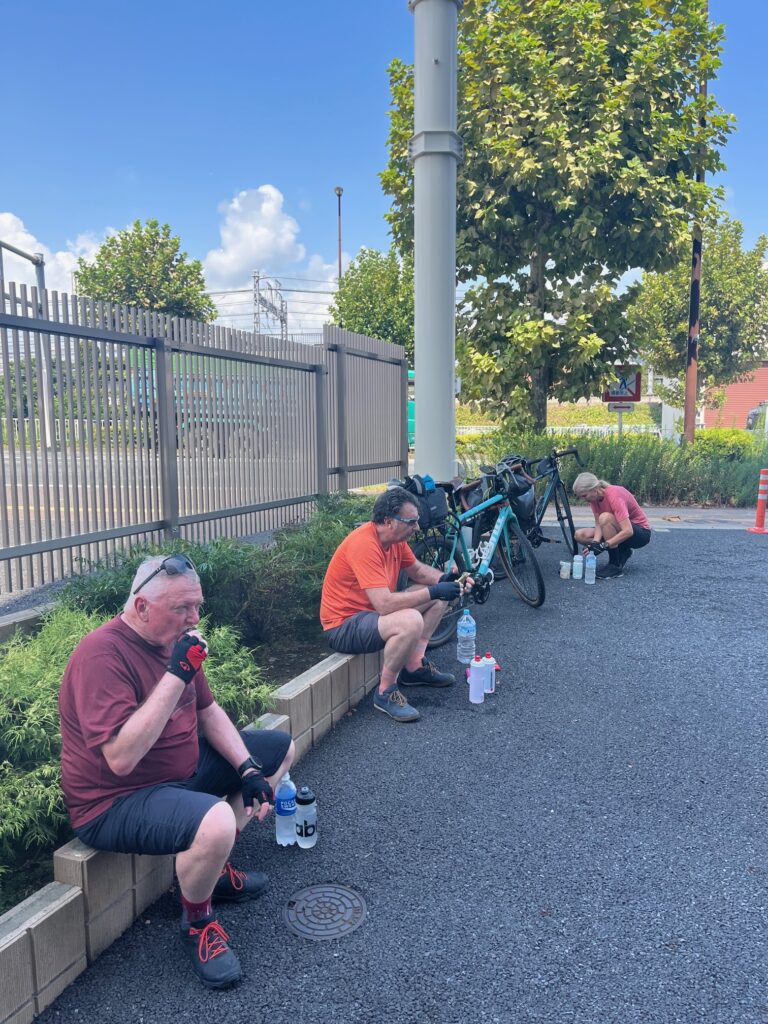
⛽ Fuel / Food : Multiple cool-down stops at 7-Eleven and Lawson for cold drinks and snacks.
🏨 Stay: Kamakura Inn, a traditional Rakuan — beer and snacks at the on-site bar most welcome.
🍝 Dinner: Il Birraio — excellent Italian meal to set up the next day.
💭 Reflection: A classic city-to-coast day—historic bridge, a ribbon of neighbourhoods, a hot little climb, and Kamakura’s sea breeze at the finish. Don’t under-estimate the amount of water required for a very hot and humid day on the bike.
Day 5 – Kamakura → Moto-Hakone (Coast to Clouds)
📏 Stats: 61.4 km | Ride time ~5:00 | Elapsed ~10:00
🌡 Weather: 28 °C with ~80% humidity.
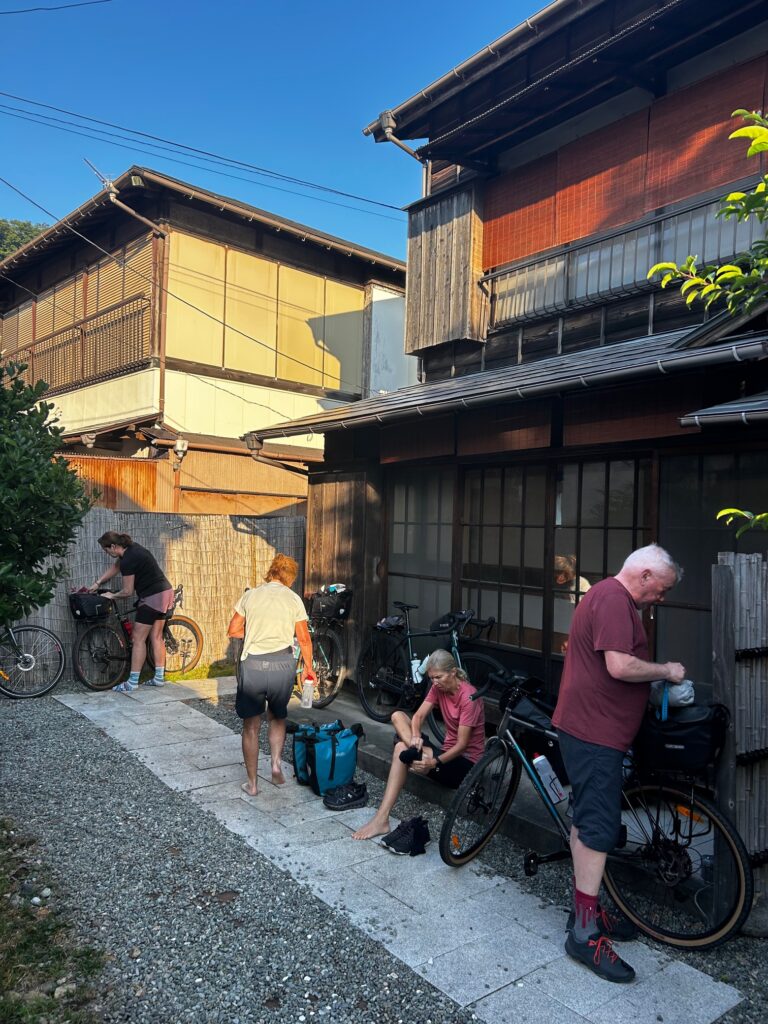
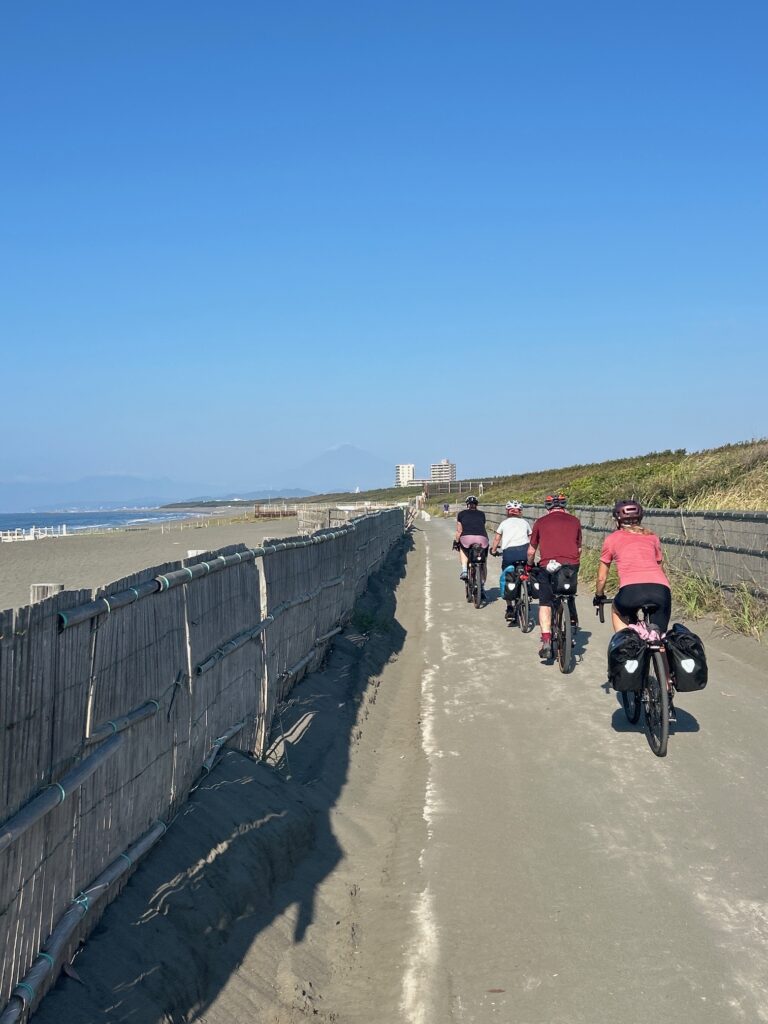
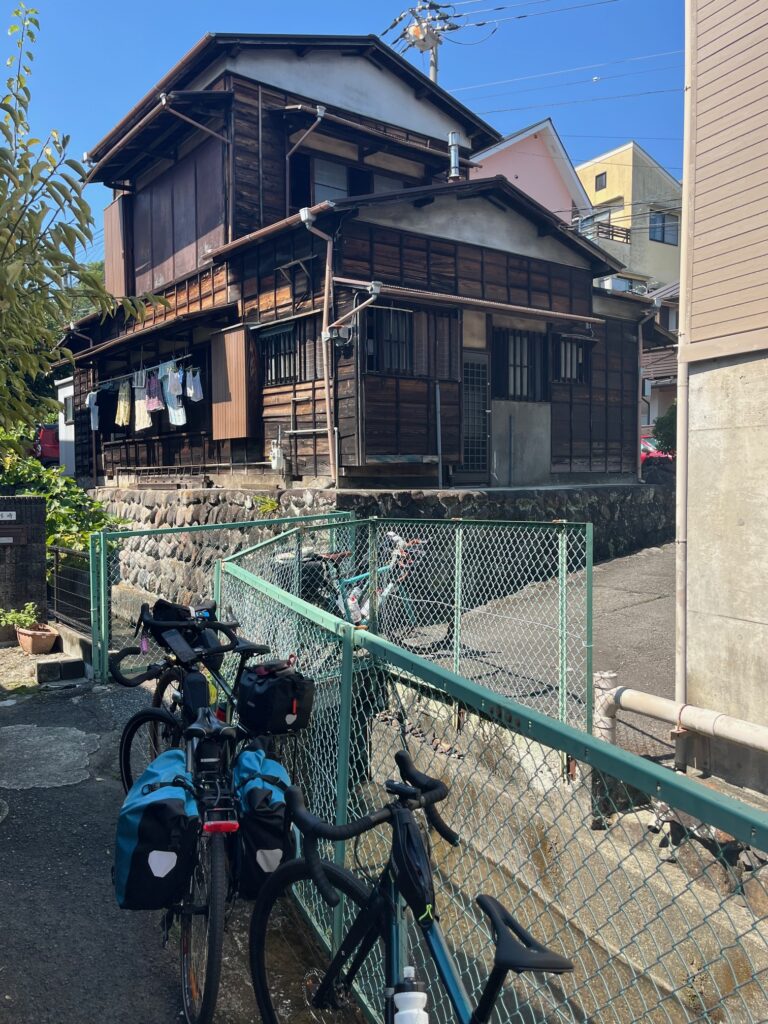
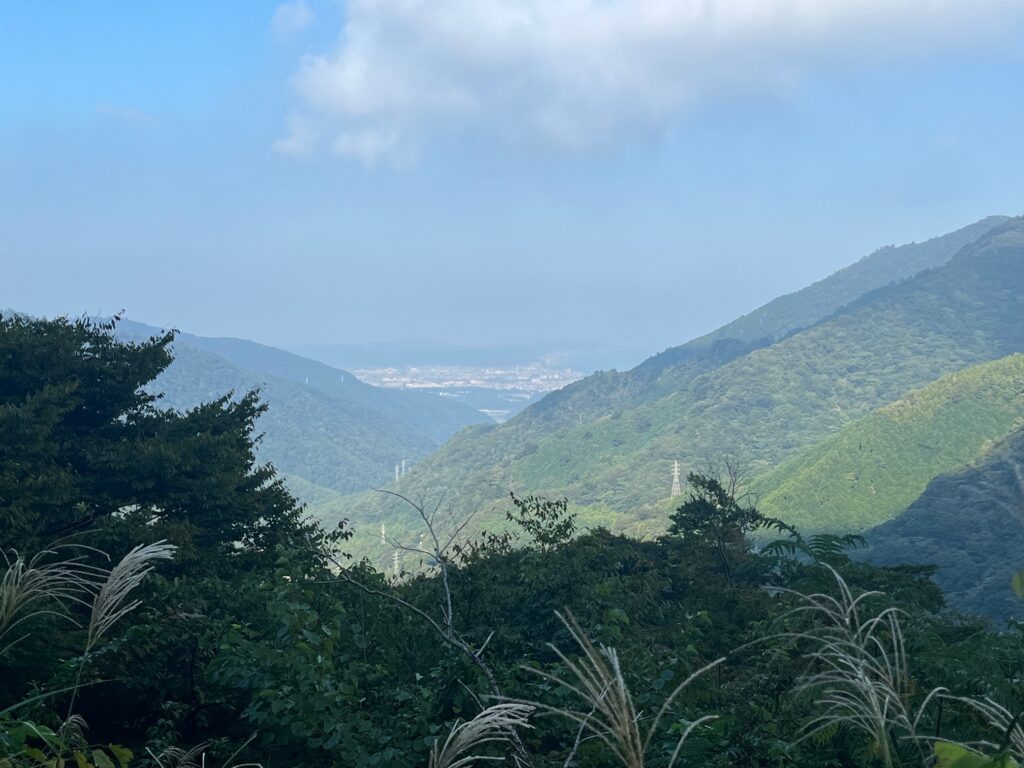
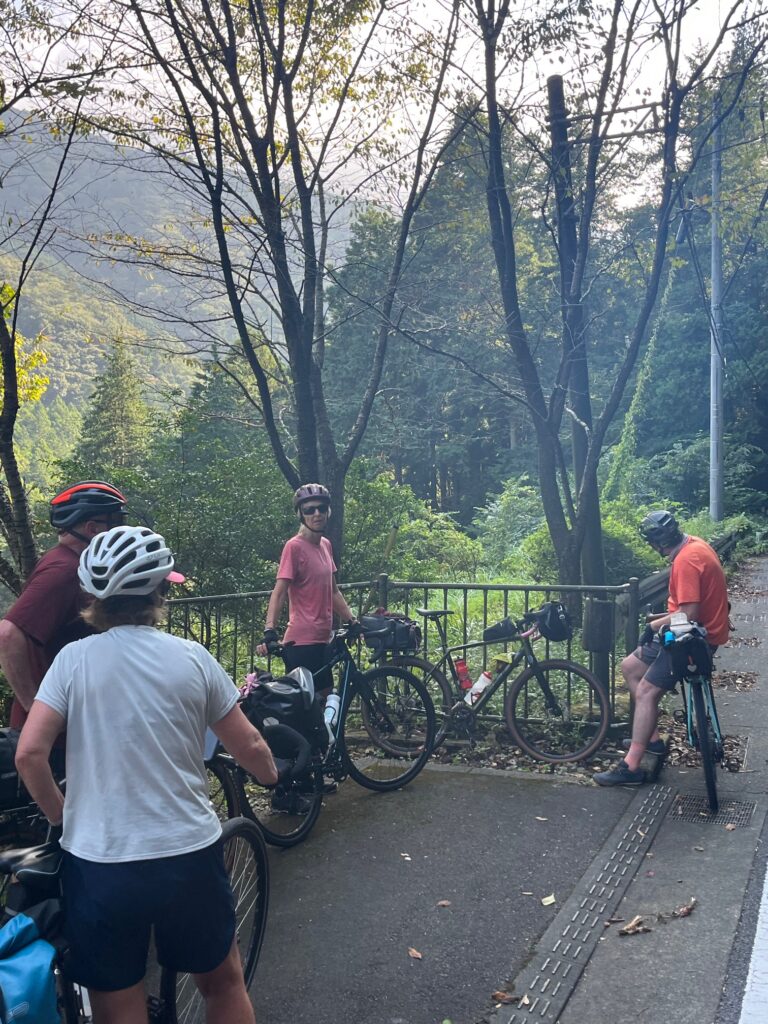
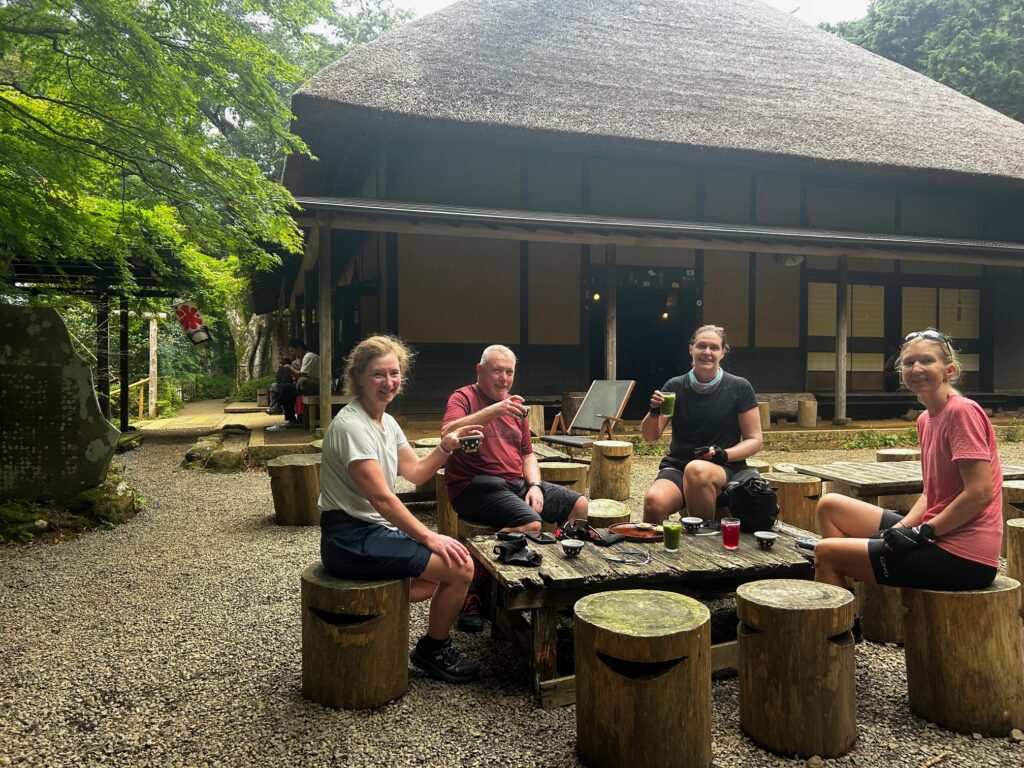
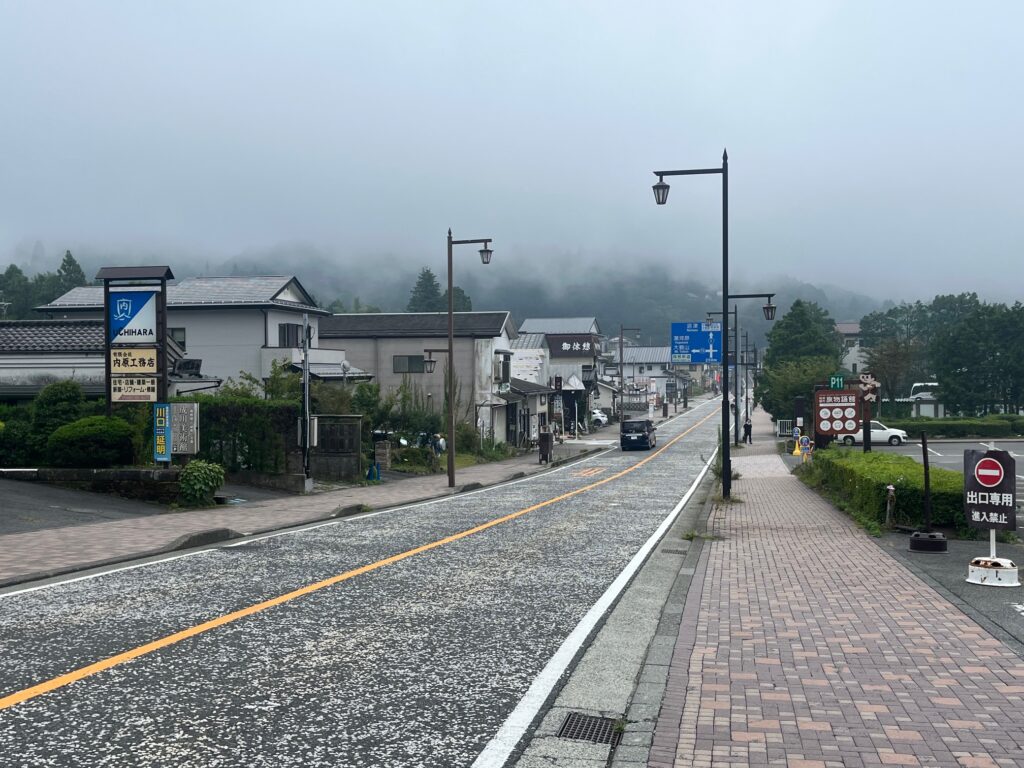
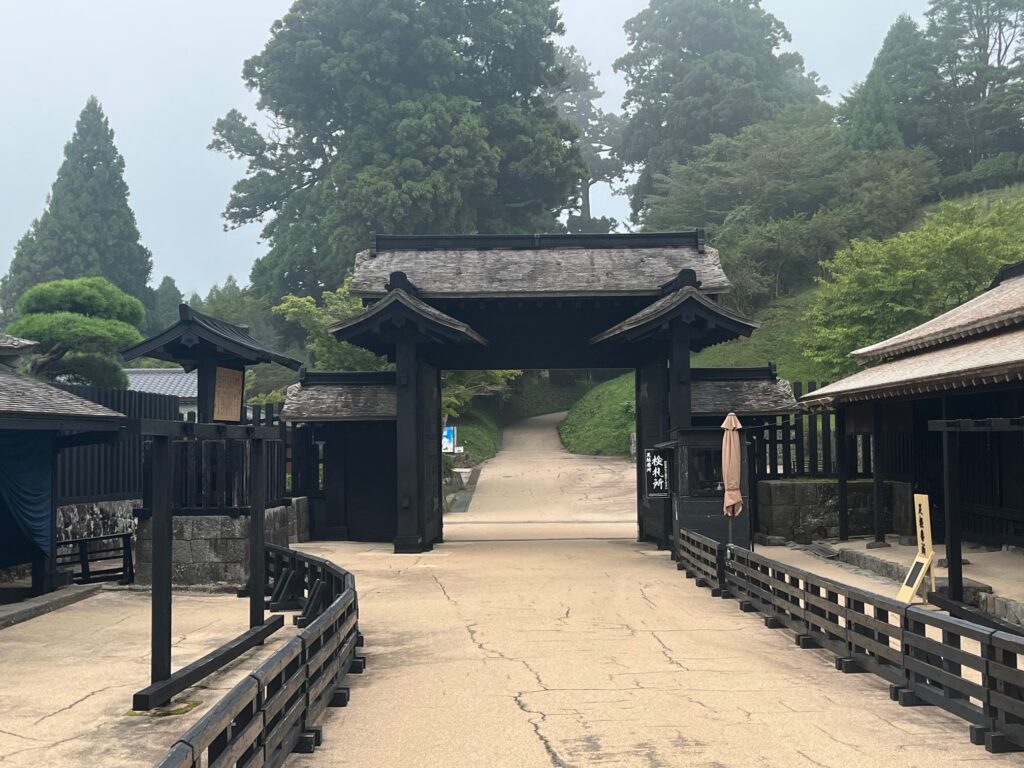
🗺 Route & Notes: Start at 7am to get ahead of the heat. Flat coastal run with our first glimpse of Mt Fuji at Kugenuma Beach. Turned inland around Ninomiya after meeting some fellow Australian adventure cyclists, then tracked toward Odawara. Lovely backstreets in Odawara—narrow lanes with canals beside old brown wooden houses. Lunch & refill at 7-Eleven at the base of Hakone (~90 m). Climb: ~12 km with ramps up to 18–20%, including a section of 16 switchbacks. Plenty of shade, but lots of hike-a-bike in the steepest parts. Teahouse near the top—one of the last preserved teahouses on the old mountain route, dating to the shogunate era. Descent into Moto-Hakone by Lake Ashi (Ashinoko)—straight into the cloud base.
⛽ Fuel: 7-Eleven lunch and cold drinks; multiple konbini stops through the heat.
🏡 Stay: Private house through Booking.com with a natural hot spring piped to the bathroom—too hot to use tonight!
🍽 Dinner: Purchase food from 7-Elven for Self-catering and recovery after a big climbing afternoon.
💭 Reflection: From surf vibes to mountain mist—today was about heat management, patience, and taking the steep stuff however it comes. Always great to compare notes with fellow adventure cyclists.
Day 6 – Hakone Rest Day (Moto-Hakone / Lake Ashi)
📏 Stats: Rest day (gentle sightseeing)
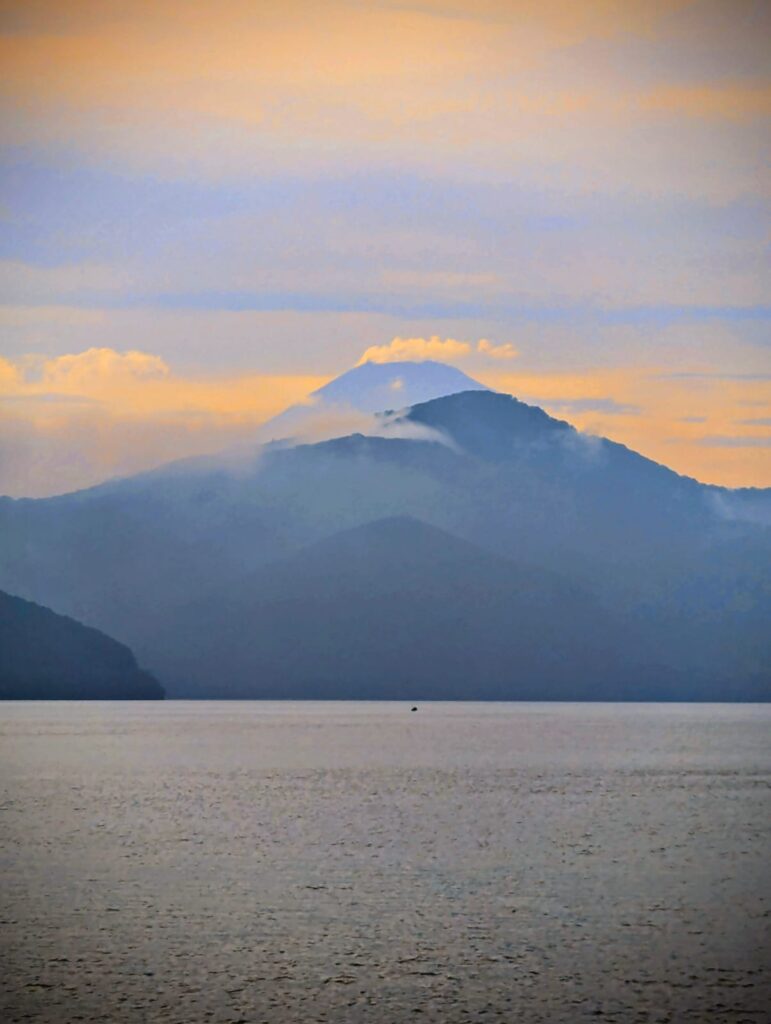
🌫 Weather: Morning mist over the lake and village. Mt. Fuji appeared around ~3:30 pm, then slipped back behind late-evening mist.
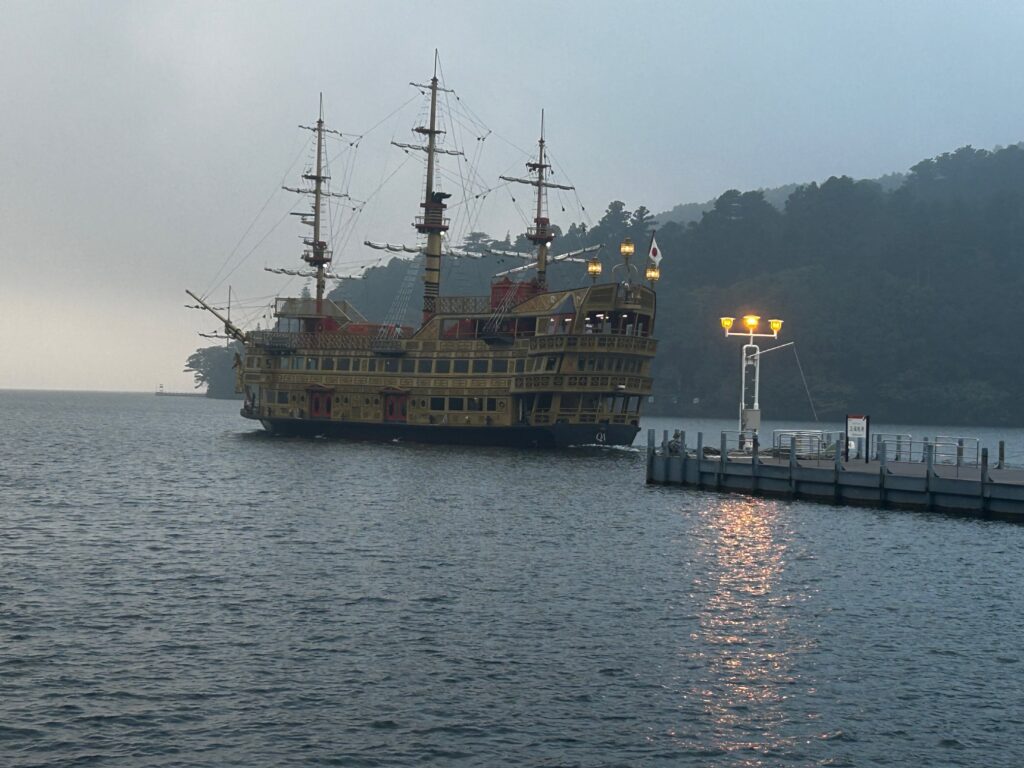
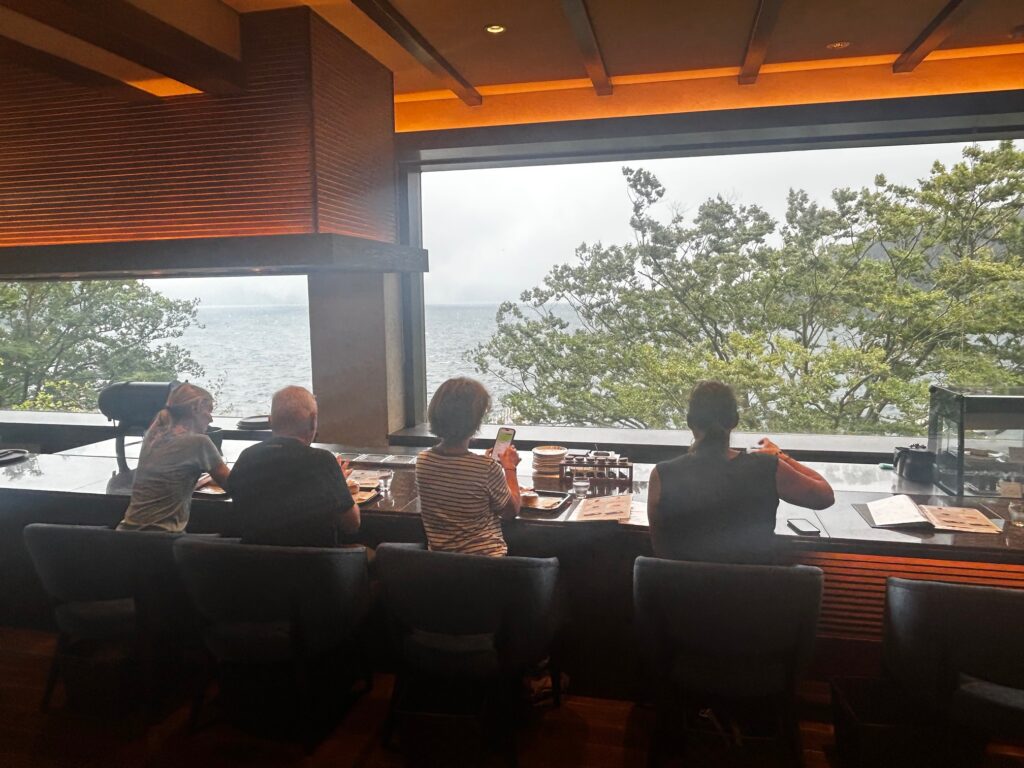
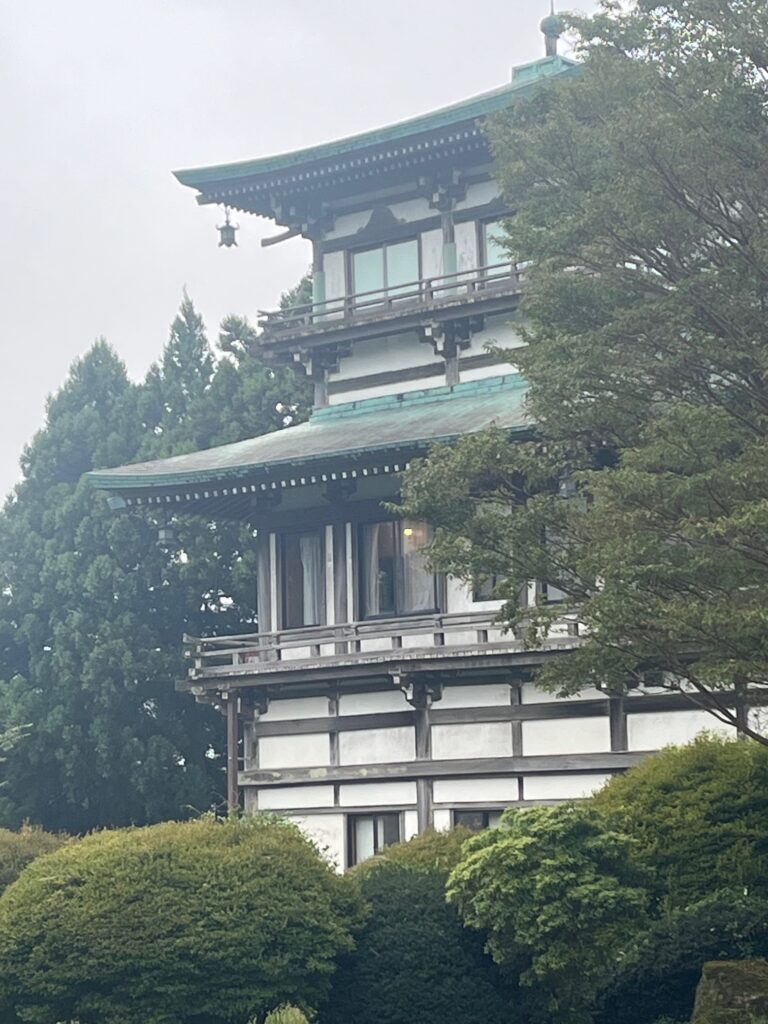
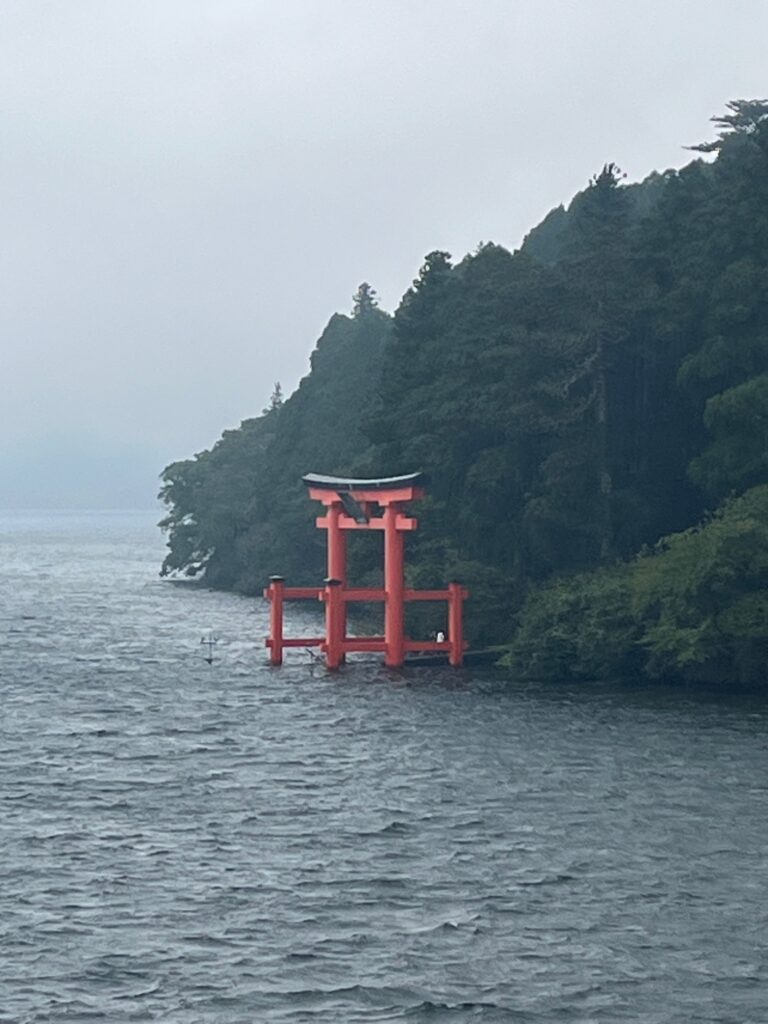
🗺 Day Notes: Planned pause after the big push over Hakone—stretch, recover, easy strolling. Breakfast at The Bakery & Table—excellent bread and baguettes with a lake view. Boat ride on Lake Ashinoko over to Hakone-on; wandered the little town and lakeside paths. Noted a beautiful onsen, Ryuguden Honkan. Drifted back to Moto-Hakone in the afternoon for a quiet reset. Dinner at Shogun 761—cosy side-street café, simple and delicious.
💭 Reflection: Exactly the reset we needed—cool lake air, carbs, and a surprise Fuji cameo. Long descent tomorrow and an ~80 km day ahead.
Day 7 – Hakone → Yoshida (Clouds to Coast, Then Beyond)
📏 Stats: Planned 89 km to Shizuoka → actual 114 km to Yoshida !
🌡 Weather: Cool roll-out from altitude, warming on the flats; tailwind most of the day. Mid to High 20’s, lower humidity
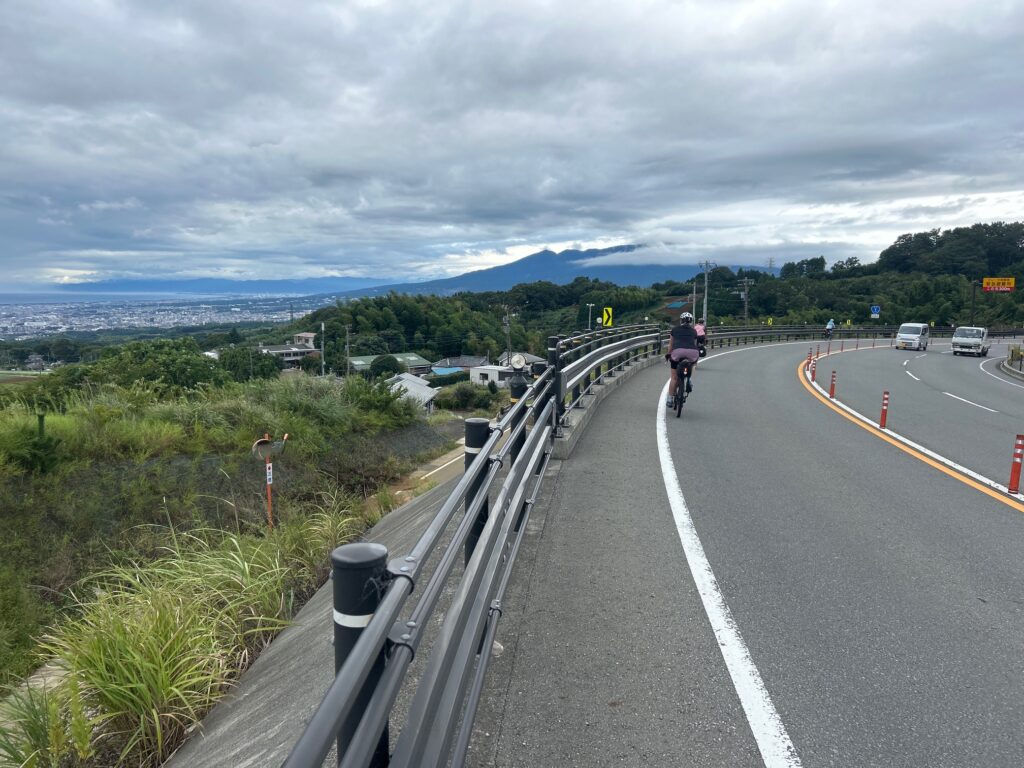
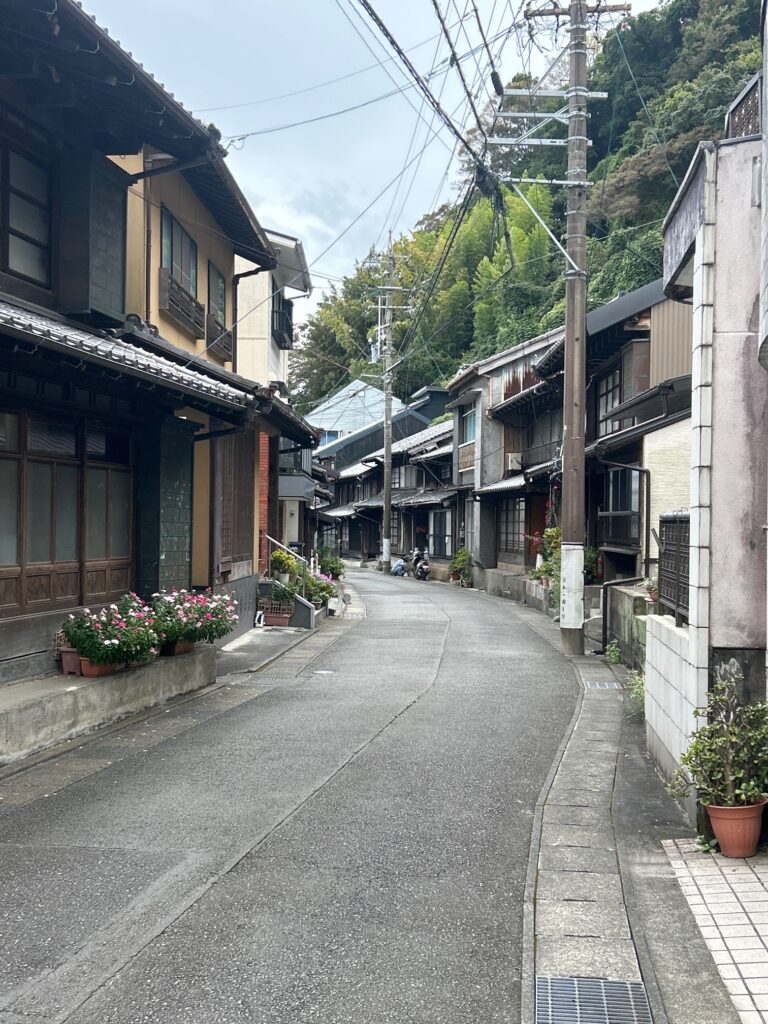
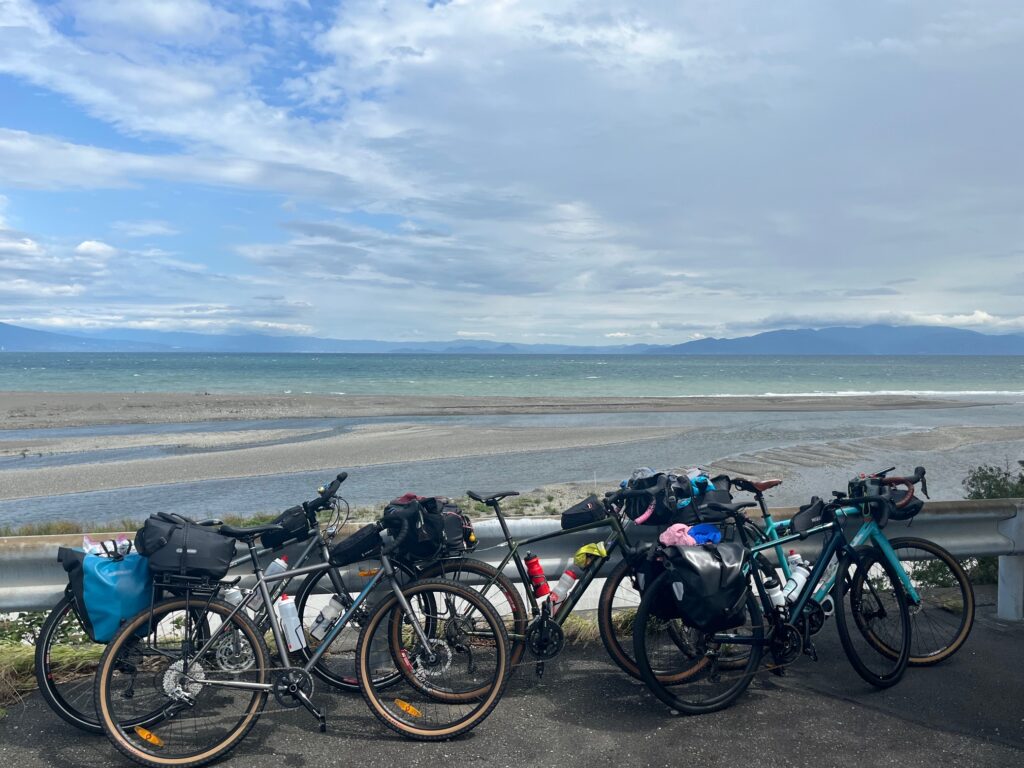
🗺 Route & Notes: Start 07:00, Long downhill out of Hakone’s cloud, a short kicker, then ~20 km continuous descent to the coast. Picked up the Pacific coastal cycle route toward Fuji—smooth, scenic beachside riding. Reached Shizuoka early; with speedy terrain and a friendly wind, we pushed on past the original plan. After Shizuoka, followed canals to the Meiji Utsunoya Tunnel, then rolled onto riverside paths and canals along the Asahina River and Hanashi River. Highlight: the villages beneath Sarta (Satta) Pass—narrow lanes of dark-brown wooden houses, with waterfalls and streams spilling toward the Pacific. Today’s town chain was Mishima → Numazu → Fuji → Shizuoka → Fujieda → Yoshida.
⛽ Fuel: As usual, 7-Eleven stops for water; a bakery in Shizuoka—most of us had hand-made pork sandwiches (lovely) and a final ice-cream stop prior to the Tunnel through at a Citizen Information Bureau!
🏡 Stay: Change in plan meant we cancelled our APA Hotel accommodation in Shizuoka and instead booked similar accommodation in Yoshisa at the Hatago Inn.
🍽 Dinner: Although very few options close to our hotel (more a business visit area), we found a small family run Izakaya (浩.げたや) serving cold beer and a variety of lovely local dishes..
💭 Reflection: A rare confluence—fast terrain, tailwind, and good legs—turned a solid plan into a memorable stretch goal. Long day, worth every extra kilometre. Riding near the Tōkaidō rail corridor, we saw Shinkansen in the wild all day—sleek, majestic trains flashing along the main line linking Tokyo–Nagoya–Kyoto–Osaka.
Day 8 – Yoshida → Hamamatsu (Tea, Tōkaidō & Big Bridges)
📏 Stats: 56 km | Ride time ~5:00 – nice and relaxed!
🌥 Weather: Overcast with light rain at times. Mid to High 20’s, lower humidity
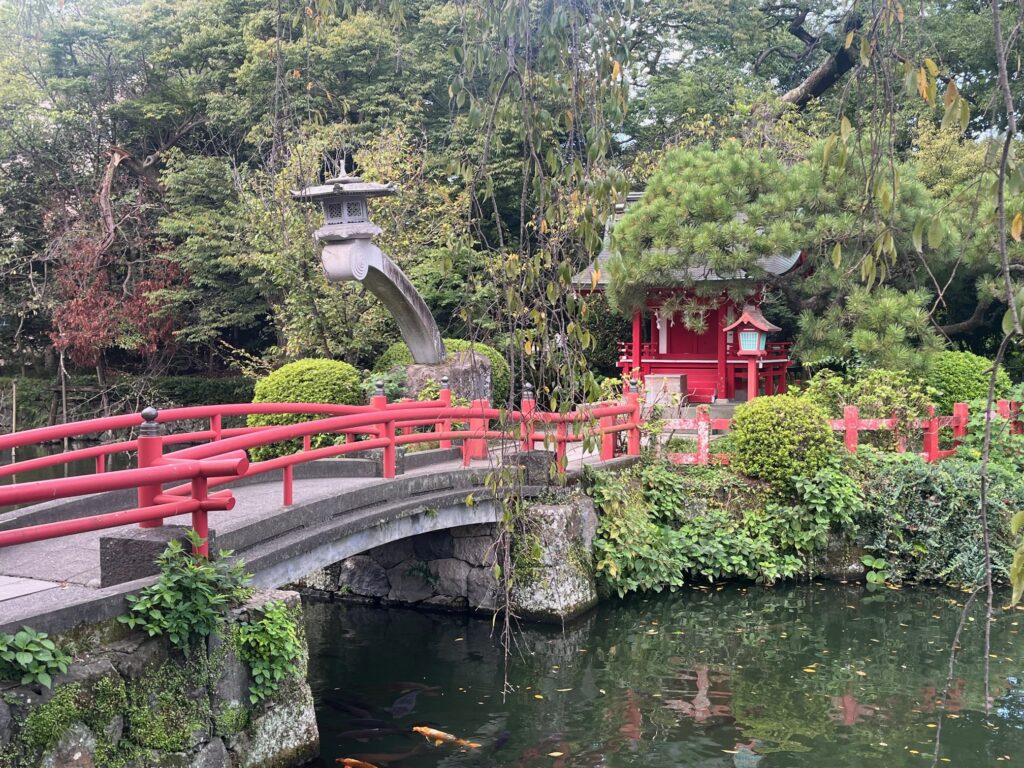
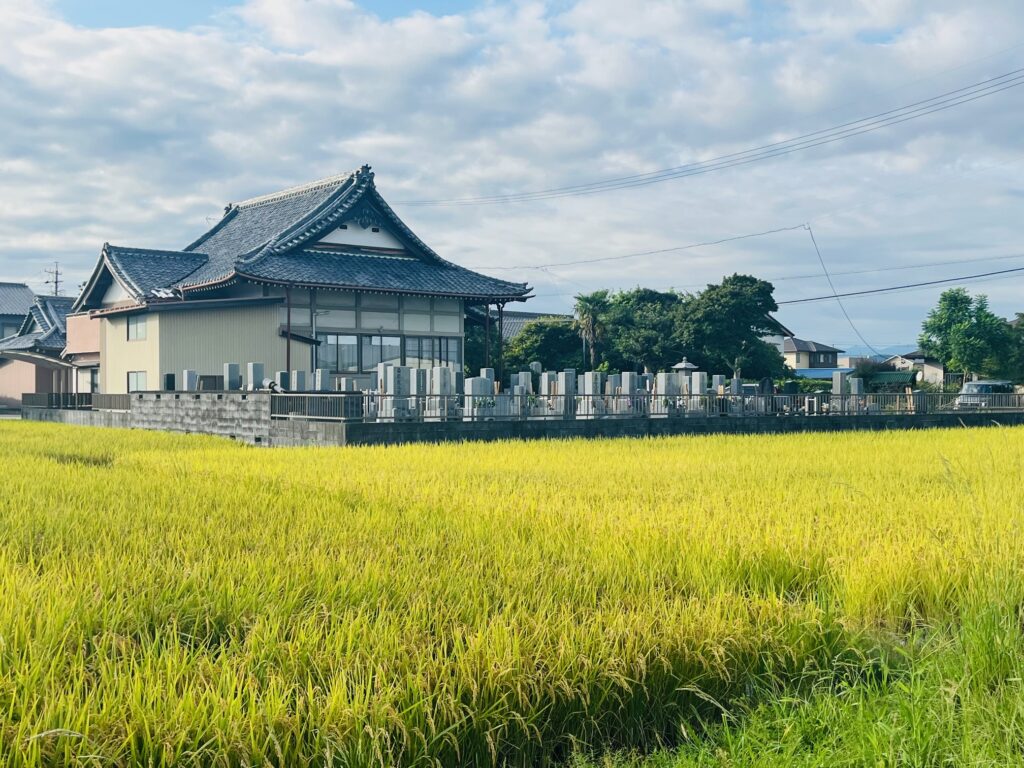
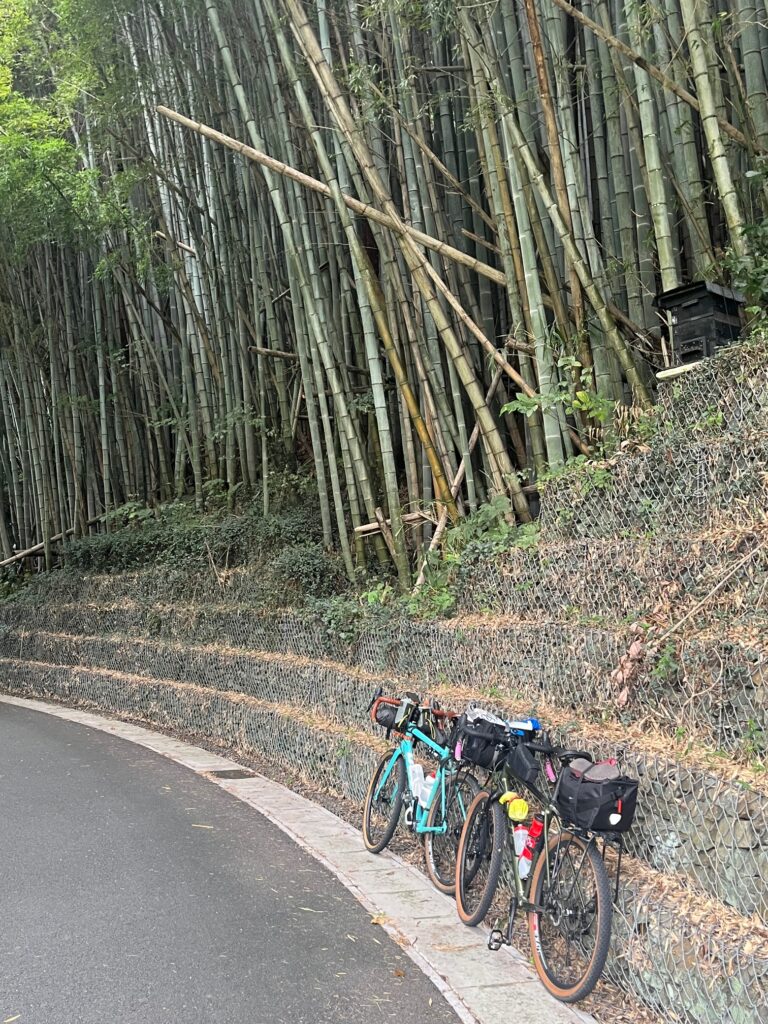
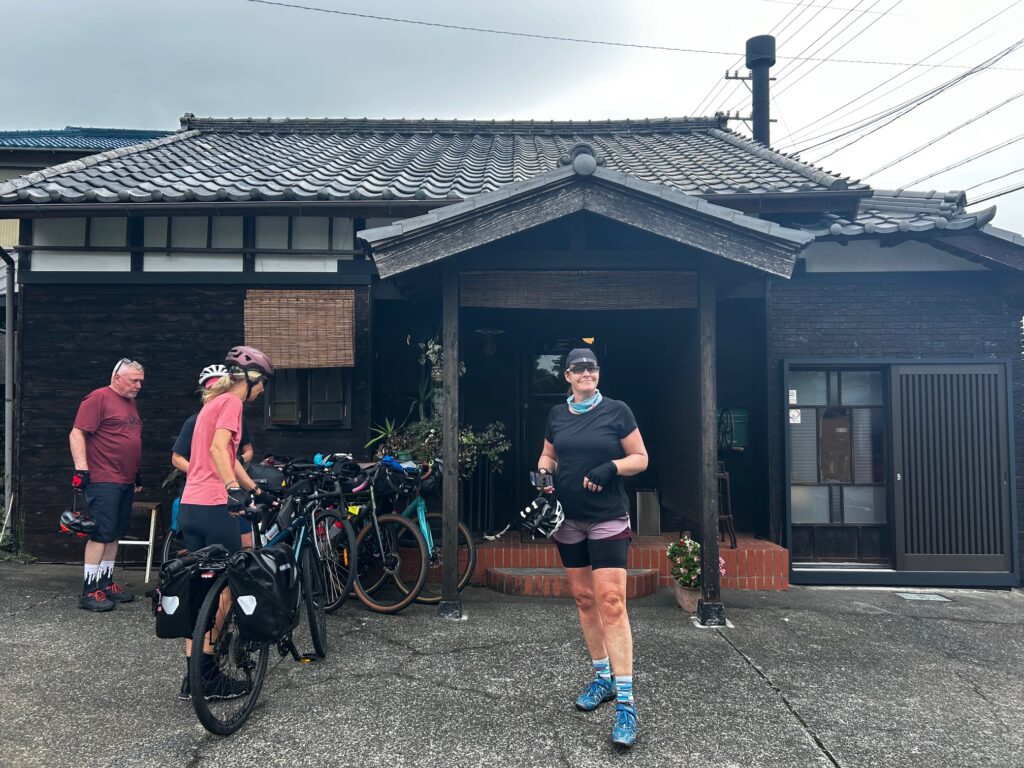
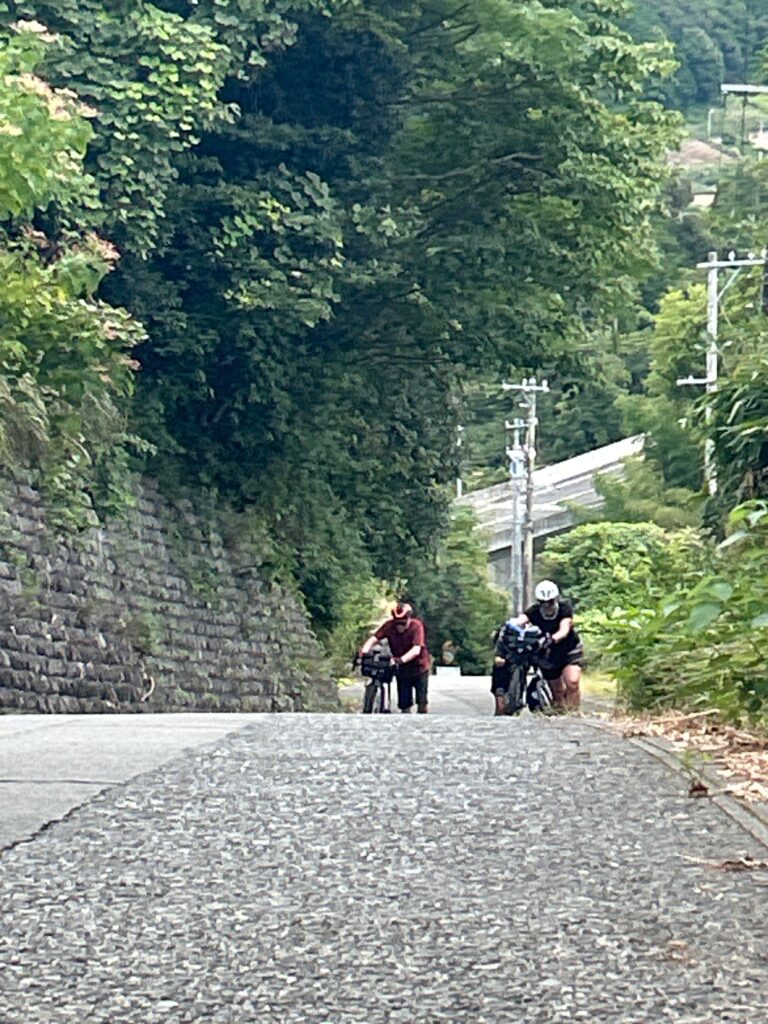
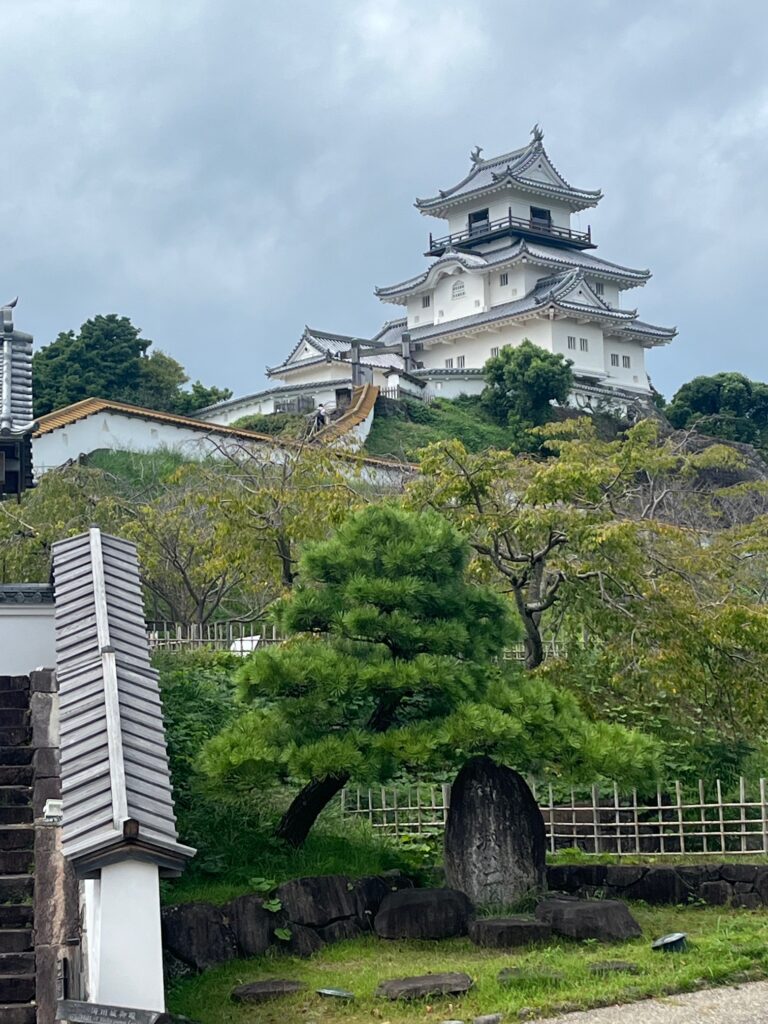
🗺 Route & Notes: Early stretch (~10 km in): gentle rise through tea plantations—mature bamboo, narrow alley-like lanes, tea fields on both sides. Tea museum near Shimada—well worth the stop: exhibits on tea craft plus a classic Japanese garden and architecture. Post-museum: a family-run coffee shop in a quaint dark-brown wooden house; very welcoming to foreign cyclists. Rejoined the Tōkaidō west of Shimada and east of Kakegawa: a couple of big descents and climbs, with hike-a-bike on 15–16% ramps in the steepest parts. The downhills at similar gradients were technical—a challenge for newer cyclists—so we kept speeds low, walked sections as needed, and prioritised control over pace. Kakegawa Castle stood out—one of the more impressive Dave has seen in his Japan travels. Continued via Fukuroi → Iwata, crossing a series of long river bridges (incl. the Hamamatsu Bypass) over broad floodplains. Rolled into Hamamatsu around 2:00–2:30 pm, strolled town, and found a couple of bars.
⛽ Fuel / Food : Konbini (7-Eleven / Lawson / FamilyMart) water and food stops as needed; caffeine top-up at the family coffee shop.
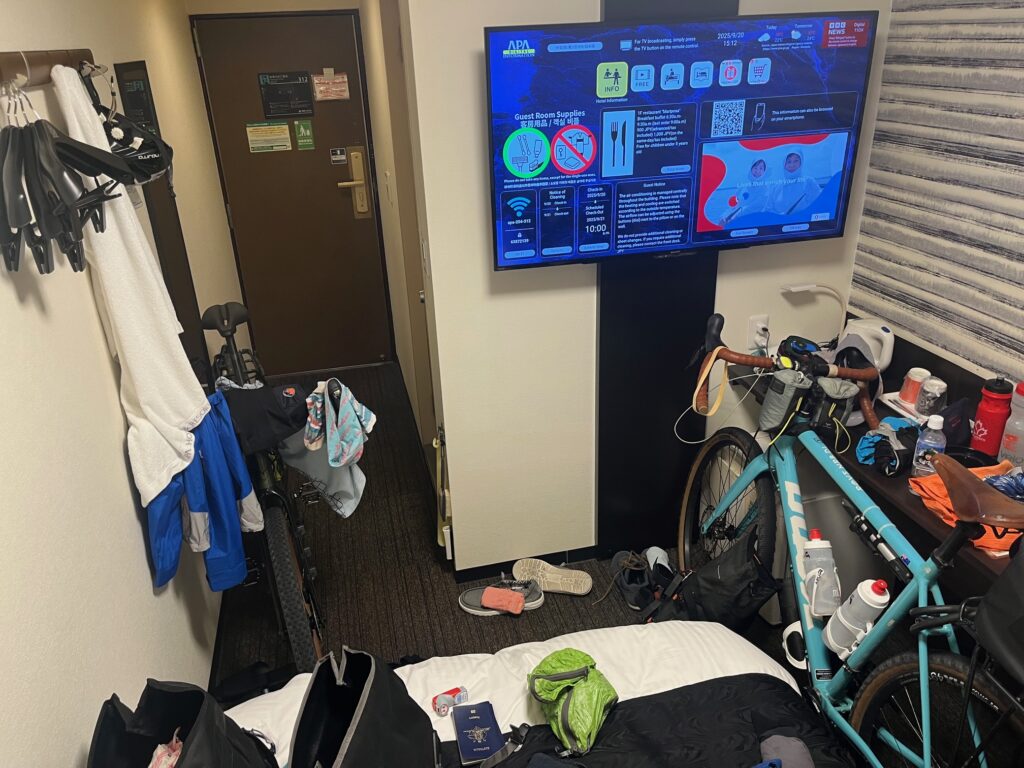
🏡 Stay: APA Hotel Hamamatsu – very welcoming, accepting of bikes in small rooms.
🍽 Dinner: American-style barbecue — big protein + carbs to set up tomorrow’s push toward Irago.
💭 Reflection: A varied “short” day—tea, climbs, castles, and those endless bridges—perfect setup for the push down the Tahara Peninsula.
Day 9 – Hamamatsu → Irago (Wind, Waves & Warmth)
📏 Stats: 80 km | Ride time ~8:00
🌥 Weather: NW ~23 km/h (gusts ~45 km/h), in short a head-wind; temps high-20s → low-30s °C.
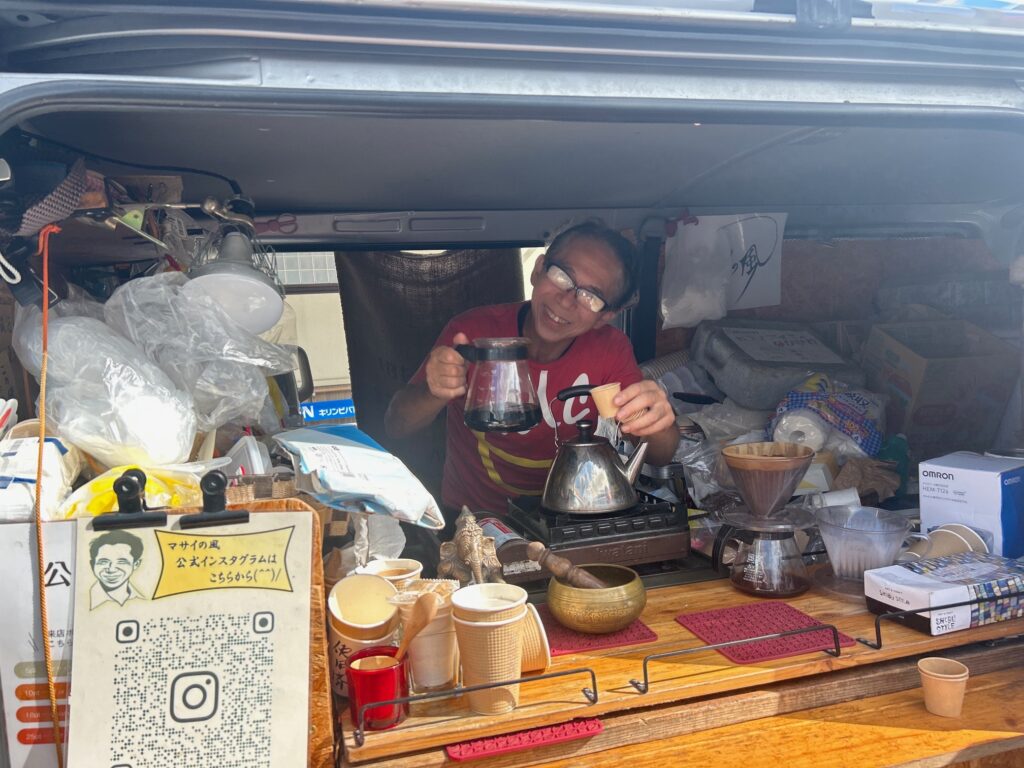
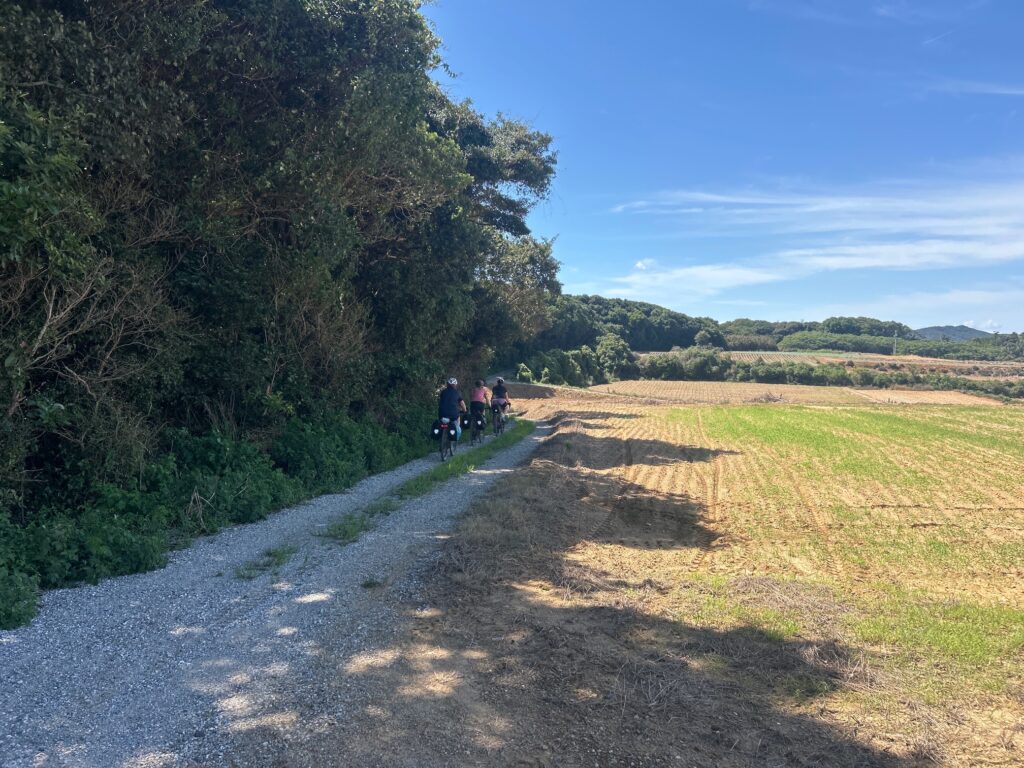
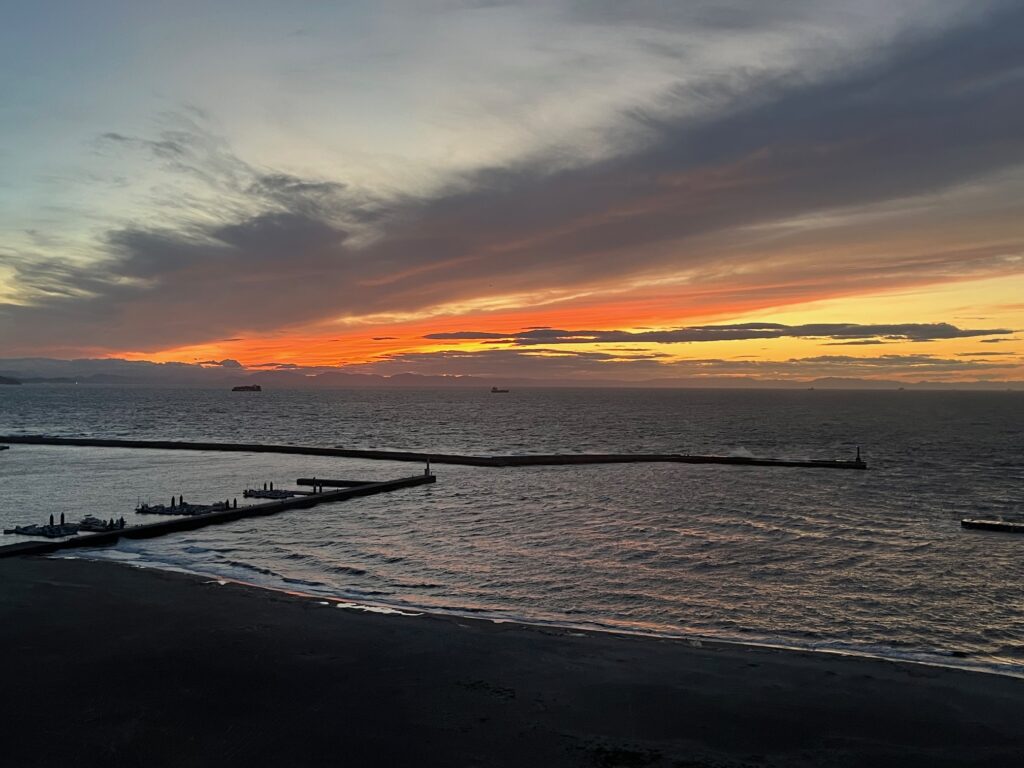
🗺 Route & Notes: Start 07:15 with an early roll to beat the wind, west through Kosai, then onto a beach road. Sunday scene: local surfers and Kombi-van vibes—surf shacks open, a few post-session beers before noon. Kombi coffee vans and ice-cream trucks dotted the strip; we chatted with a friendly English-speaking Japanese barista about his beans and sourcing—excellent coffee. Beach trail sections served up puddles, gravel, sand, and mud—slow and a bit technical. Cut inland into agricultural country—lumpy ups and downs over streams, past dairy and veg plots toward Tahara. Surf event wrap-up: We didn’t catch heats, but Tahara still had branding, barriers, and road closures from a World Surfing Championship wrapping up—won by a young Australian, which was nice to hear. Afternoon push south-west on the main road—safer and steadier given the wind and heat—toward Cape Irago.
⛽ Fuel: Frequent konbini water top-ups and use of the highly available drink vendor machines (everywhere!), a coffee from a van at the Michi-no-Eki Shiomizaka Self-service Restaurant on the Shirasuka Coast. Lunch at LeiLei (Hawaiian-inspired): chicken karaage and a refreshing Coke—sugars + fluids back in the tank.
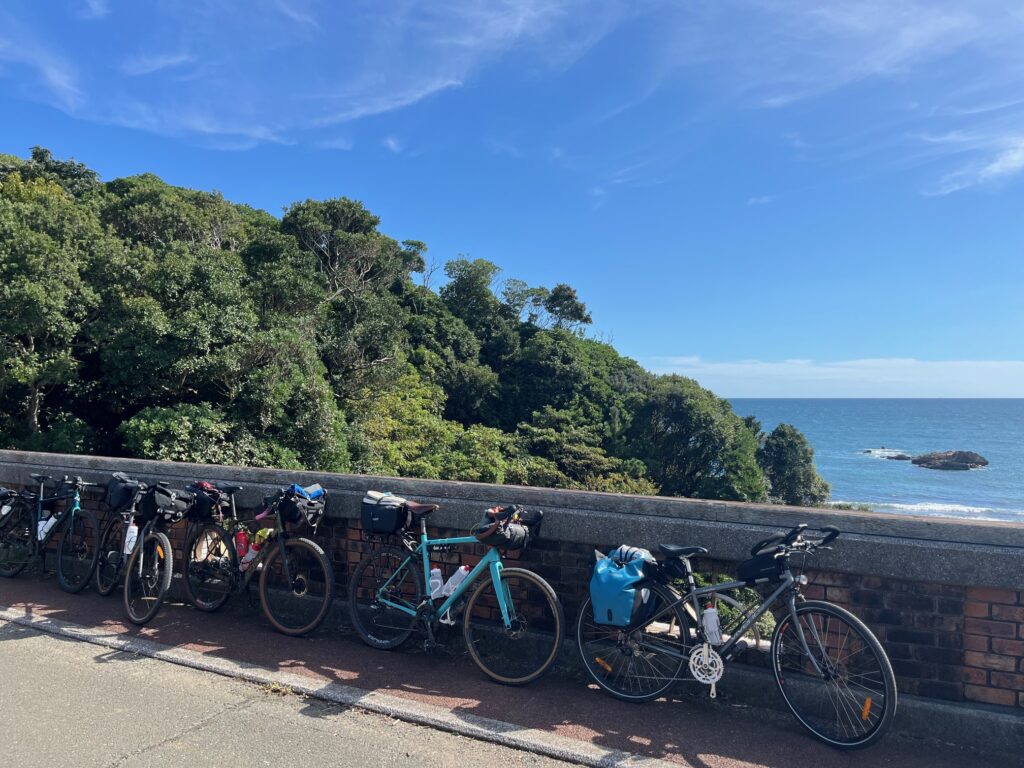
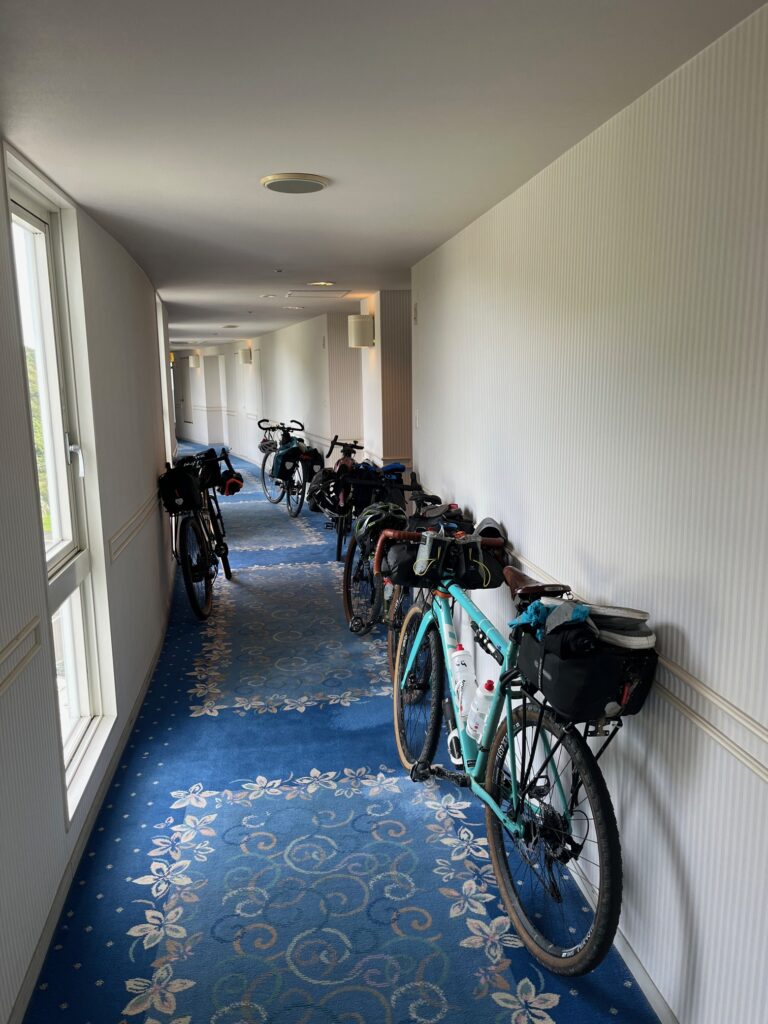
🏡 Stay: Check-in at the Irago Resort & Conference Centre and a blissful onsen soak after a wind-buffeted day. Also included Dinner and Breakfast (half-board)
💭 Reflection: Salty beach tracks, farm lanes, and a stubborn wind—balanced out by surfer stoke, good coffee, and an evening onsen.
Day 10 – Irago → Ise (Ferry Day & Old Town Stroll)
📏 Stats: ~17 km riding, short, easy day
🌥 Weather: Mid to High 20s °C, little wind to speak off..
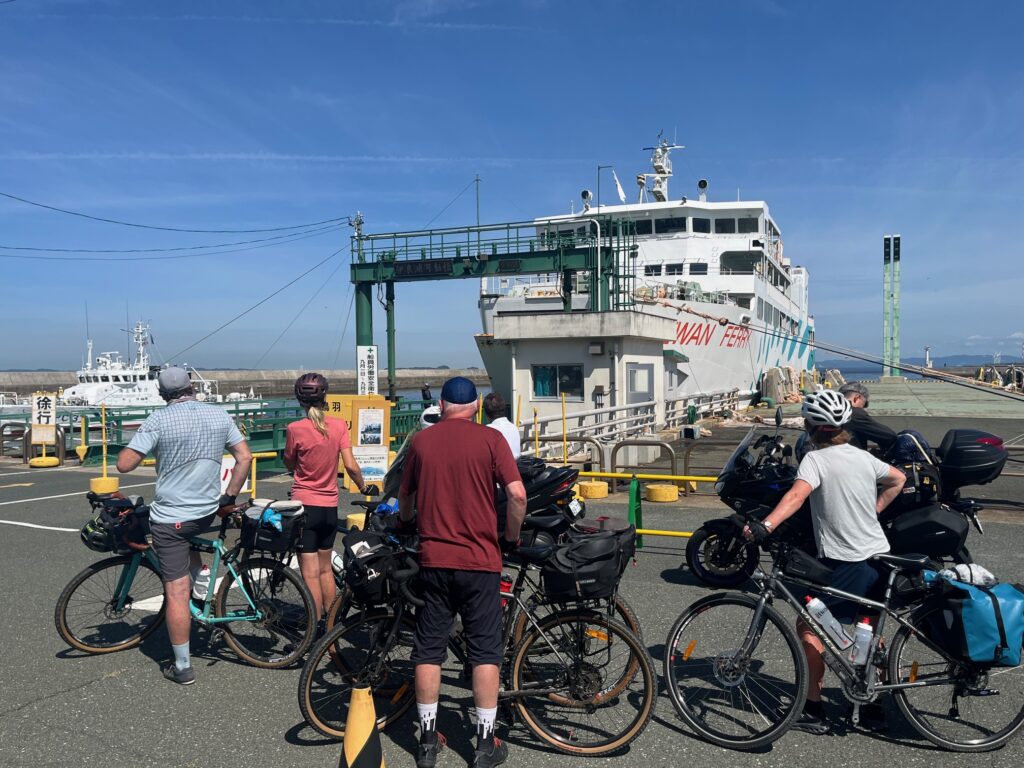
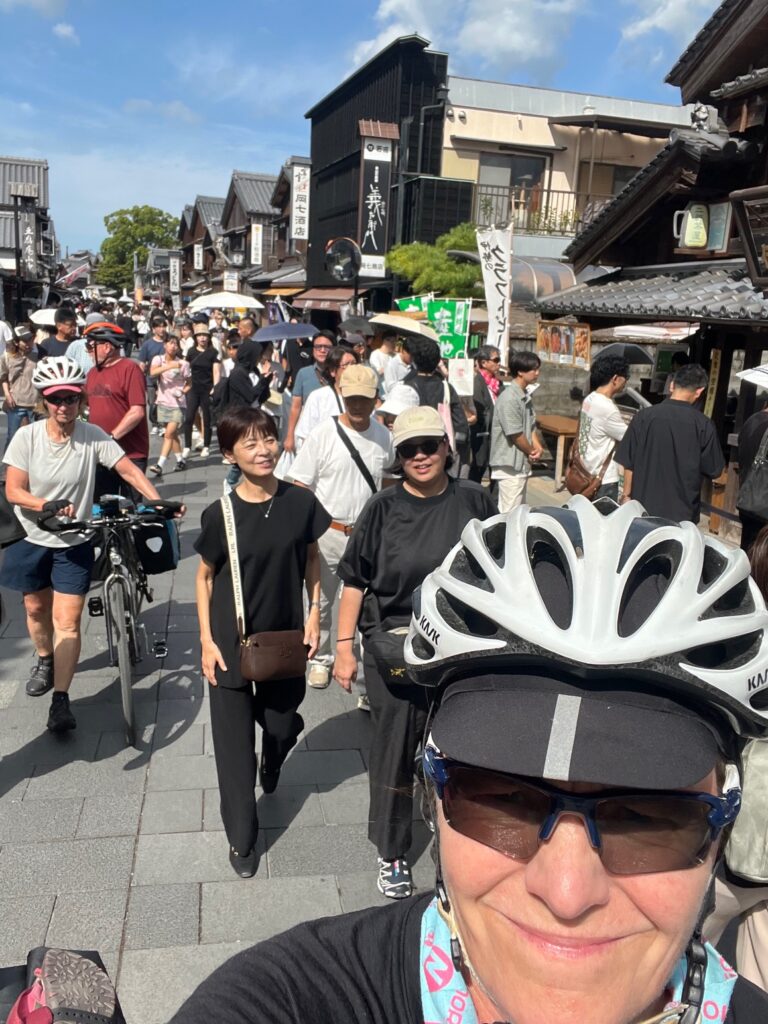
🗺 Route & Notes; Start: Sleep-in + breakfast at the Irago Resort & Conference Centre. Boarded the Isewan Ferry at 10:40 am (Irago → Toba, ~1 hour crossing). First stop: Mikimoto Pearl Island / Pearl Museum — history of cultured pearls and a little (not as much as hoped!) on the Ama women divers. Rolled out of Toba with a few short climbs/pinches, then on toward Ise (Mie Prefecture). Reached the old town with its shrine andbeautiful dark-brown wooden buildings and restaurants). It was very crowded, so we walked the bikes through. Late afternoon return to the old town as places began to close (~16:30), with a Beer at Ise Kadoya Beer beside the Isuzu River.
🏡 Stay: Checked into a friendly B&B (shared with another family) — set up in three rooms with a warm welcome.
🍽 Dinner: We took a local bus from the tourist centre to a small Izakaya (台湾酒場 煌(ファン) right next to the Comfort Inn in the centre of Ise — run solo by an impressively efficient woman who took orders, cooked, and served all at once. Standouts: the gyoza and the rice cake (mochi).
💭 Reflection: A deliberately light transit day — boat, pearls, old-town ambience — and a front-row seat to izakaya multitasking mastery. Perfect reset before the ~80 km day ahead.
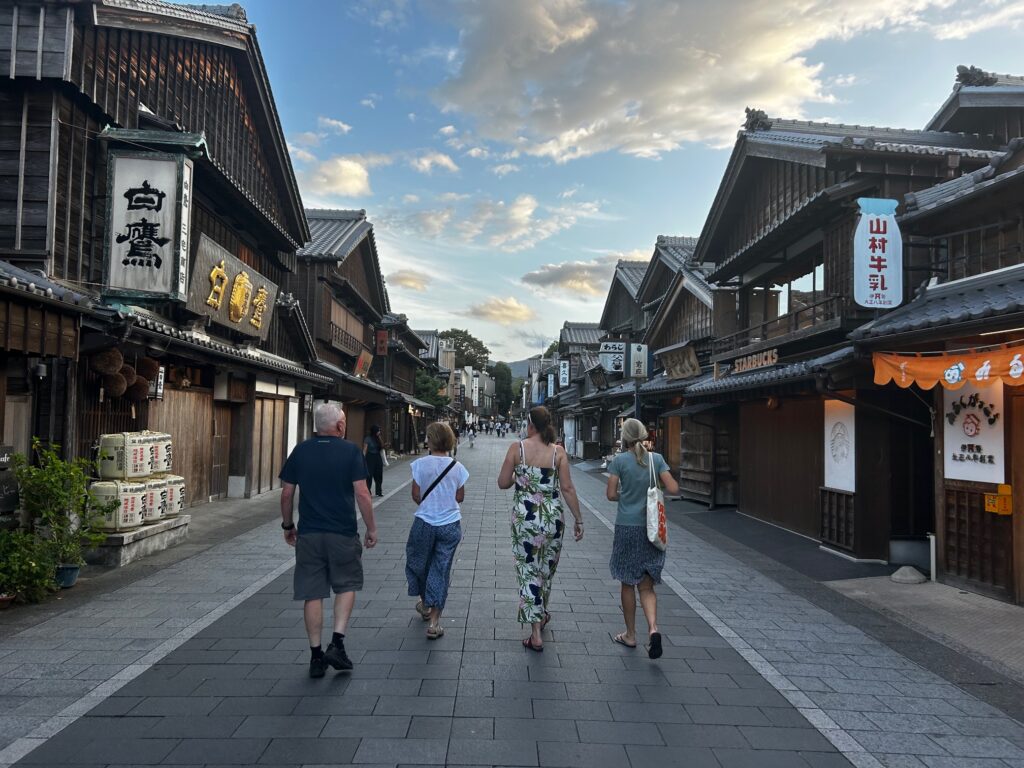
Day 11 – Ise → Nabari (Railside Flats, River Valley & Route 165 Pass)
📏 Stats: ~80 km | Ride time ~5:00
🌥 Weather: 25–30 °C heat with a south-easterly tailwind helping push us westward
🗺 Route & Notes: Again a 07:00 start to stay ahead of heat given a long day and a hill pass. Have reviewed the route to track the railway as a bail-out option before the ~500 m climb after ~50 km. Easy roll through Matsusaka: wide rice plains, canal edges — beautifully flat. Into the Kumozu River valley, shadowing the Kintetsu Osaka Line in case we needed a train. Main climb via Route 165: steady push through multiple tunnels to the pass, then a smooth descent on good pavement. Plenty of motorbikes — friendly waves both ways. Actually arrived in Nabari ahead of plan and given public holiday meant check-in at 15:00, so we enjoyed a beer and potato chips at the station bus stop — a small victory lap. Town chain – Ise – Matsusaka – Ōmitsu – Nishi-Aoyama – Omura – Nabari
⛽ Fuel / Food: Newton konbini’s — lunch & refreshments.
🏡 Stay: Ryokan Kasuga (near Nabari Station). A very welcoming mother and daughter run BNB. Again, bikes we taken care off in a garage
🍽 Dinner: a small Izakaya (てん串) right next to station. The unexpected guests on a public holiday saw the lady owner call on her family to support our dinner and drinks – very nice folks.
💭 Reflection: The rail-shadow strategy kept the head calm while the legs did the work. Flats → river valley → climb-and-flow: classic touring done right.
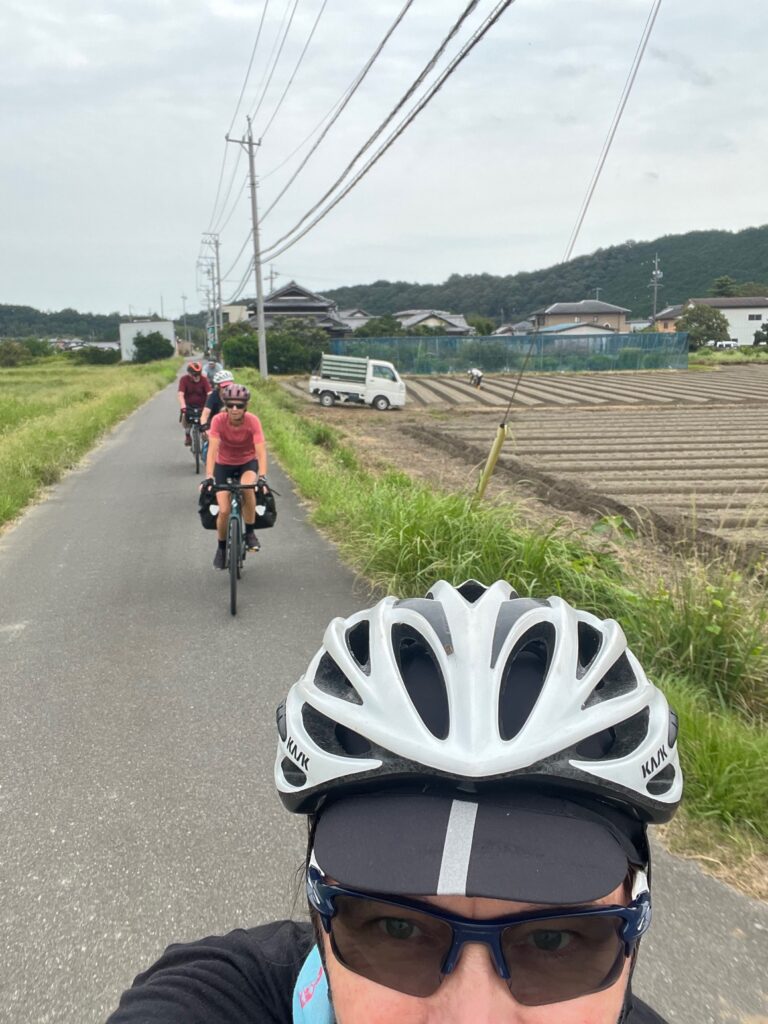
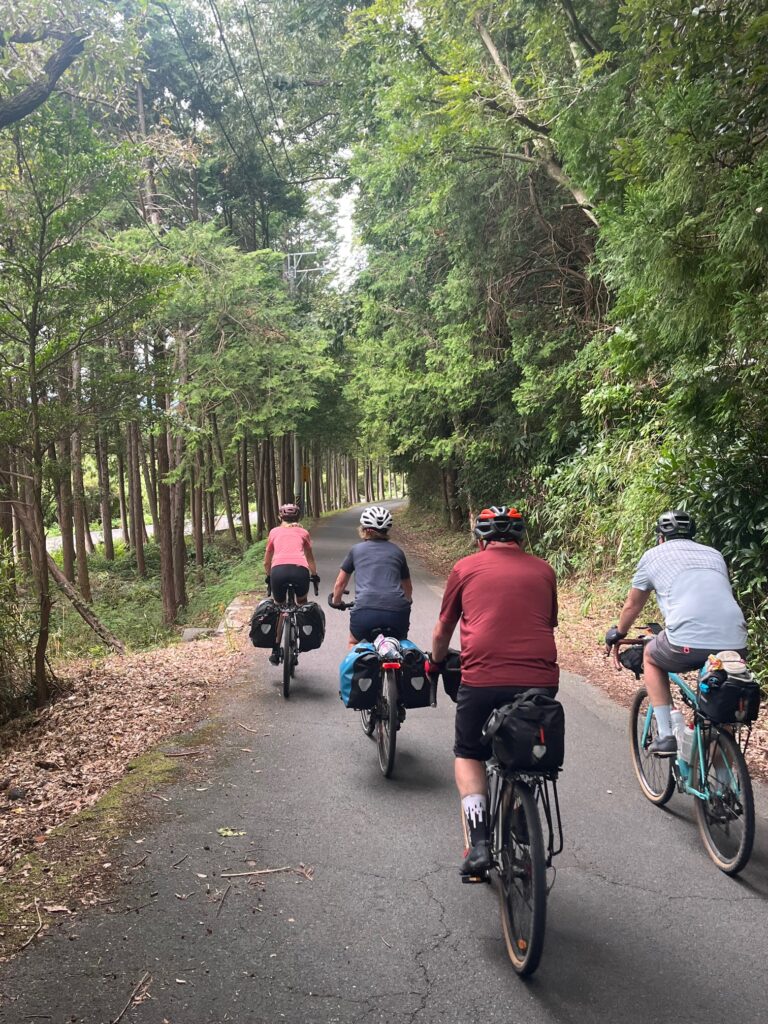
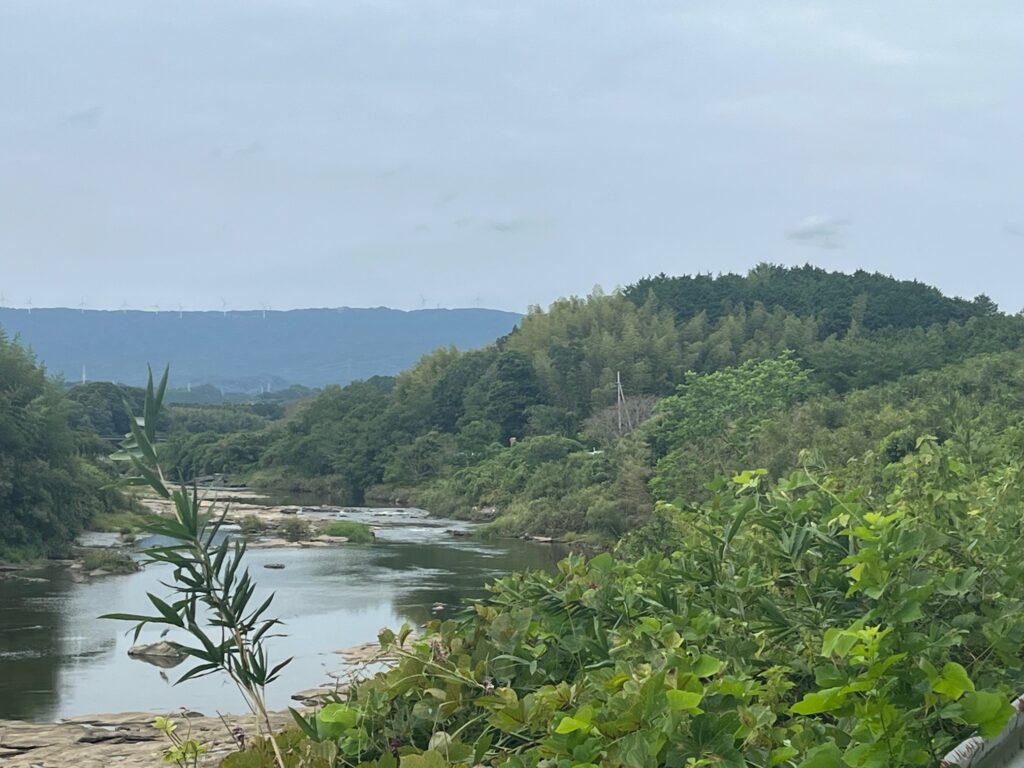
Day 12 – Nabari → Nara (Valley, Ridge & Temples)
📏 Stats: 42 km | Ride time ~3:30 | early start for sightseeing
🌥 Weather: 25–30 °C no real wind to speak off – if any a small tailwind.
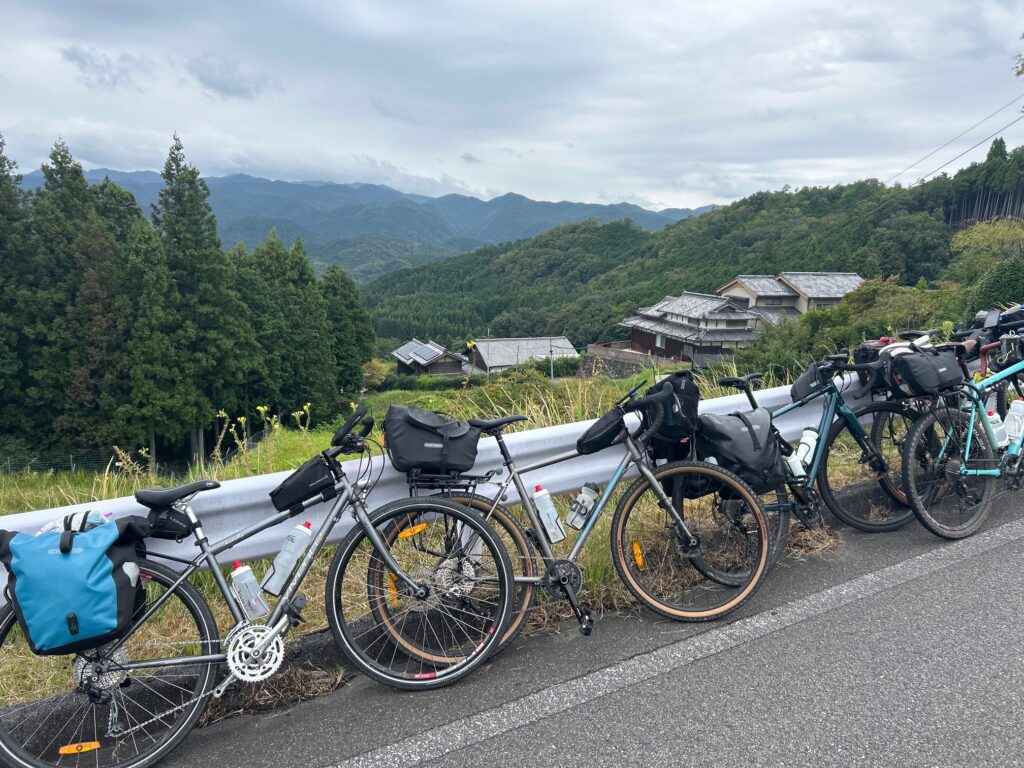
🗺 Route & Notes; : Trimmed Nara stay from 1½ days to one night to allow for big passes as we head toward the Sea of Japan. Rolled out of Nabari, cruising the flats along the Uda River valley. Climbed steadily to ~500 m, followed a ridgeline (peaking ~560 m), then a fast ~230 m drop into Nara.
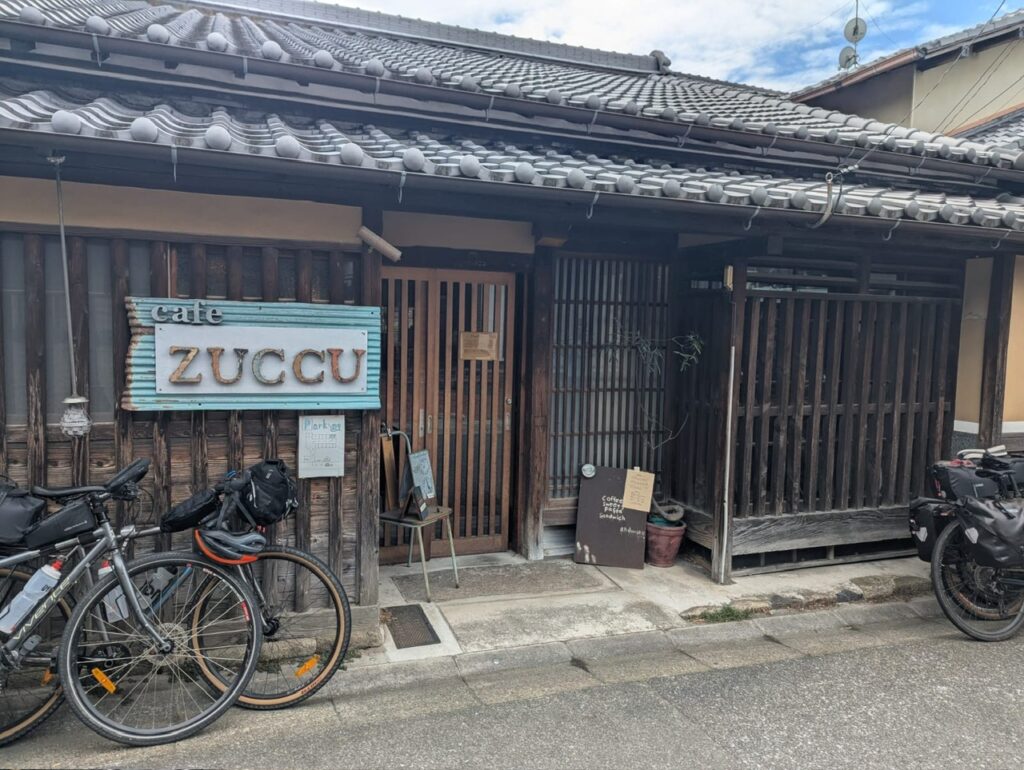
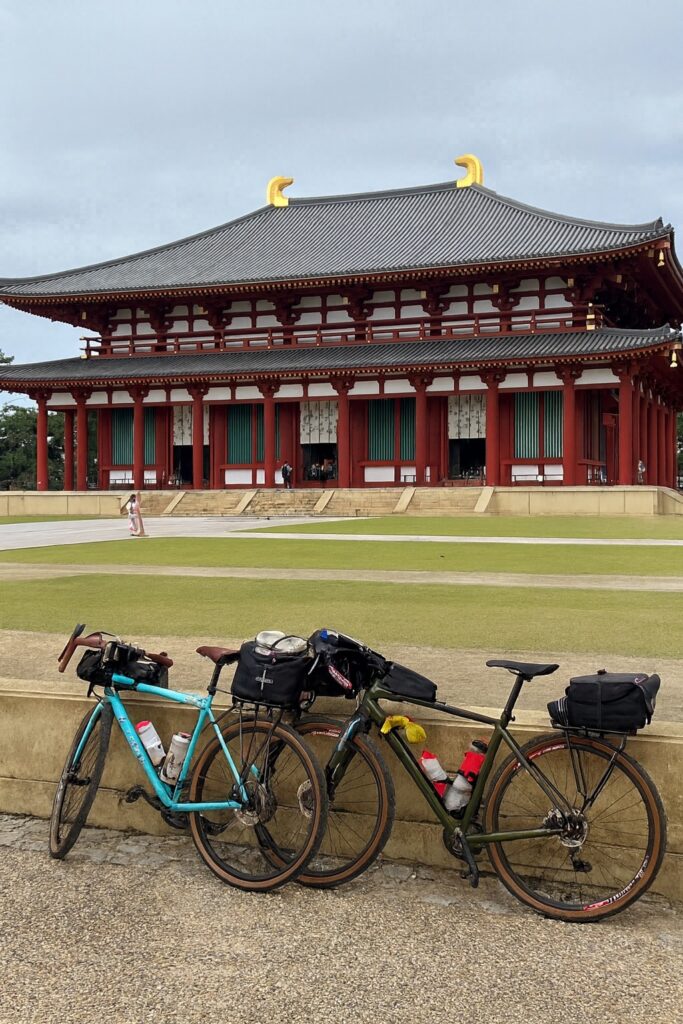
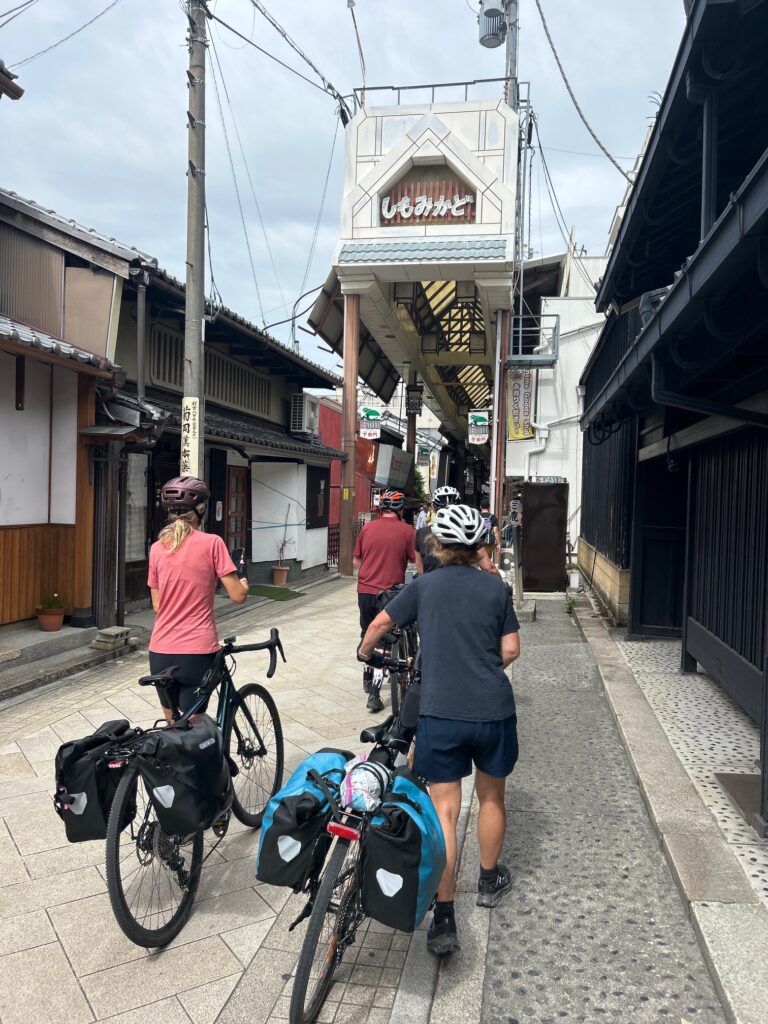
Arrived ~1:00 pm; first stop: Café Zucca — lovely old-fashioned wooden building with arts & crafts inside. Perfect first coffee before exploring. Ukimidō Pavilion (Nara Park) — deer everywhere; they literally walk the streets of Nara. Kōfuku-ji temple/shrine complex including the Five-storied Pagoda, Three-storied Pagoda, and Octagonal Hall (Nan’endō). Beautiful buildings, though the main hall is under renovation until 2034and wrapped in scaffolding. A major drawcard for day-trippers; with luck, by evening the crowds thin and we can enjoy quieter Nara streets. Nara Market District — long covered arcade (~1 km), people-watching highlight.
⛽ Fuel / Food: Newton konbini’s outside of Iucho for drinks and brunch. Once reaching Nara lunch at Yamato Craft Beer — our first pizza of the trip really hit the spot. Afternoon: Bar Hana — tiny 12-seat gem serving whisky, local beers, jamón off the bone, and a tidy cheese board. Watched sumo with locals — a trip highlight.
🏨 Stay: Hotel Tenpyo Naramachi — spacious rooms and another nice onsen or was it a spa?
🍽 Dinner: Wandered the alleyways of Nara, found a cosy izakaya, and enjoyed a local beverage with Hamburg and Steak dinner before heading back to prep for tomorrow’s ride into Kyoto
💭 Reflection: A couple of challenging climbs and rolling terrain delivered us into a history-packed city; coffee at a charming crafts café, deer like locals, and hopes for a quieter Kōfuku-ji precinct at golden hour. Perfect day.
Day 13 – Nara → Kyoto (Riverside Path & Thousand Gates)
📏 Stats: 58 km | Ride time ~3:30
🌥 Weather: Overcast, mid-20s °C, with a south-westerly tailwind helping us along.
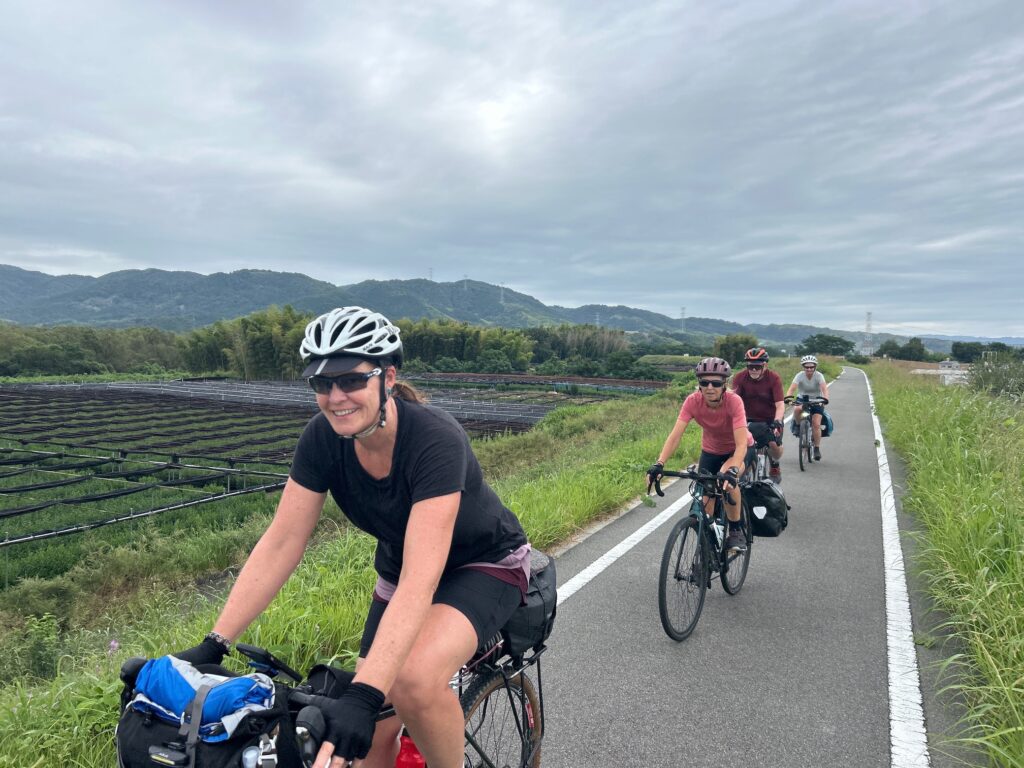
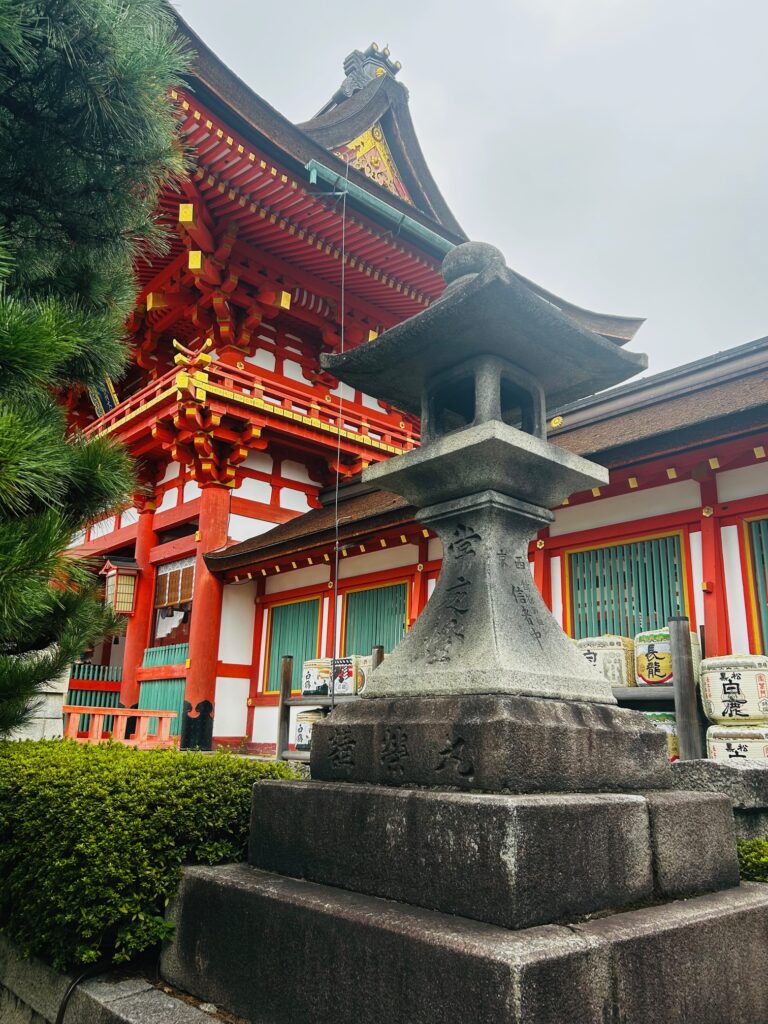
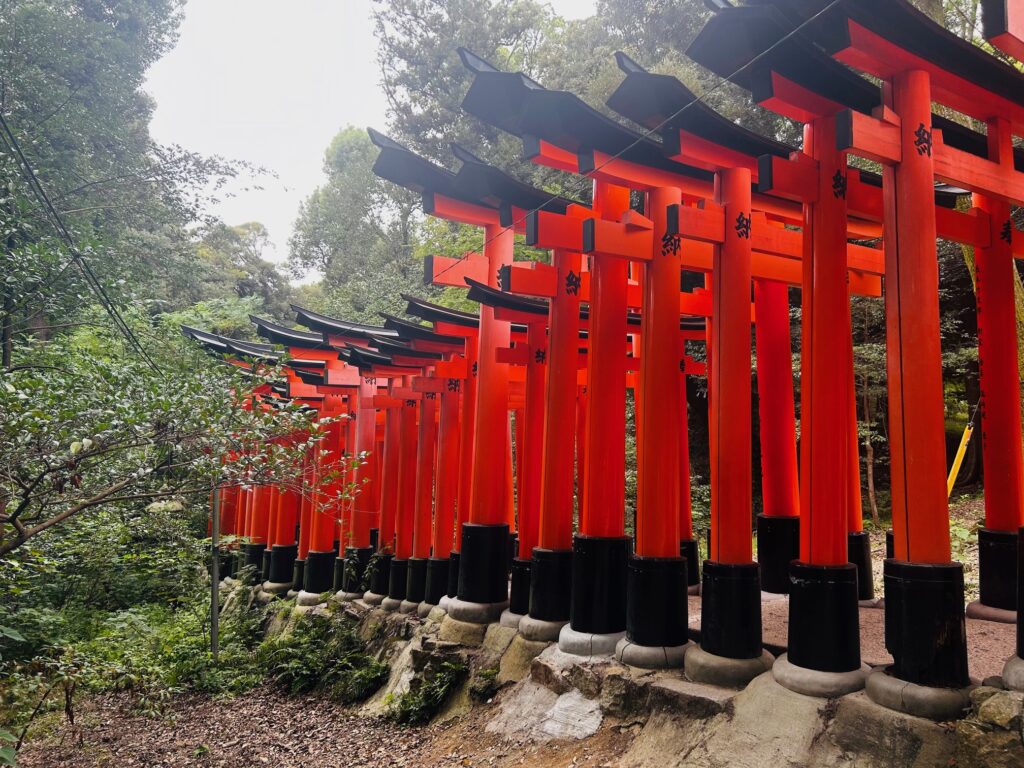
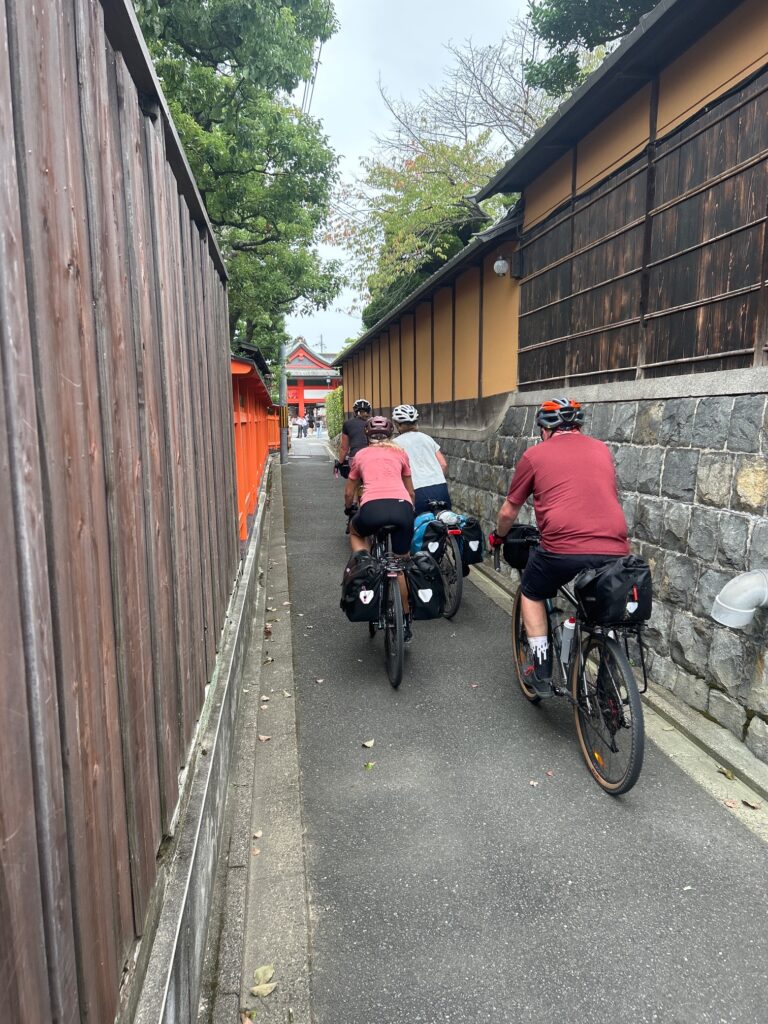
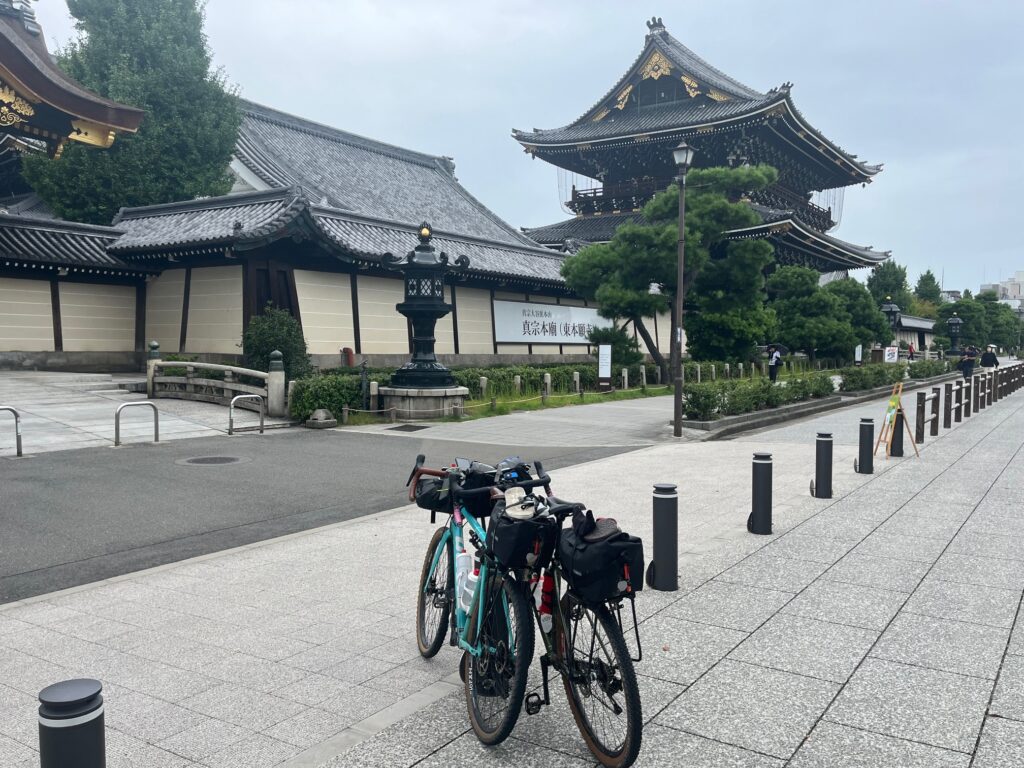
🗺 Route & Notes: Start ~09:00 and rolled north out of Nara onto the Keinawa Cycling Road — ~34 km on a raised embankment beside rivers/creeks, broad views, and plenty of local riders. Drink stop: Sakura Daiho Watchtower — wide views over river/lake confluences with pockets of heavy industry. Continued into Kyoto, pausing at Fushimi Inari (the “thousand gates”) — striking and very busy; especially jarring to see tourists dressed as geisha — men included — within a Shintō sacred site. From there, rolled to Sanjō Ōhashi — the Kyoto terminus of the historic Tōkaidō route we began at Nihonbashi in Tokyo. A satisfying bookend. Central Kyoto loop: past the massive Nishi-Hongan-ji, up to the Imperial Palace, then riverside toward our lodging — passing a “little Amsterdam” area west of the river, opposite Gion (lanes of bars, cafés, and izakayas) — before finishing at Kyoto Beer Lab, where we swapped stories with two Australians from Darwin fresh from a motorcycle ride across Mongolia (desert/dirt roads, ger stays, and a few mishaps).
⛽ Fuel / Food: Watchtower drink stop + the usual casual top-ups at Konbini stores (7-Eleven, FamilyMart, Lawson).
🏨 Stay: Kyoto Rokkaan (ryokan guesthouse) — after a little search of the neighbourhood – ample room for five travellers – except for the mosquitos in the plants at the front door
🍽 Dinner: Kyo Apollo — a lovely restaurant; we sat on the floor at a low table, ate plenty, then finished with a sake at a local bar.
💭 Reflection: Tailwind and car-free embankments made the Nara→Kyoto link a joy. A reminder, too, about respectful behaviour in shrine precincts. Great to arrive early, settle in, and trade tales with fellow wanderers
Day 14 – Kyoto Rest Day (Gion, Canals & Sake)
📏 Stats: Rest day (10k on foot + a couple of subway hops)
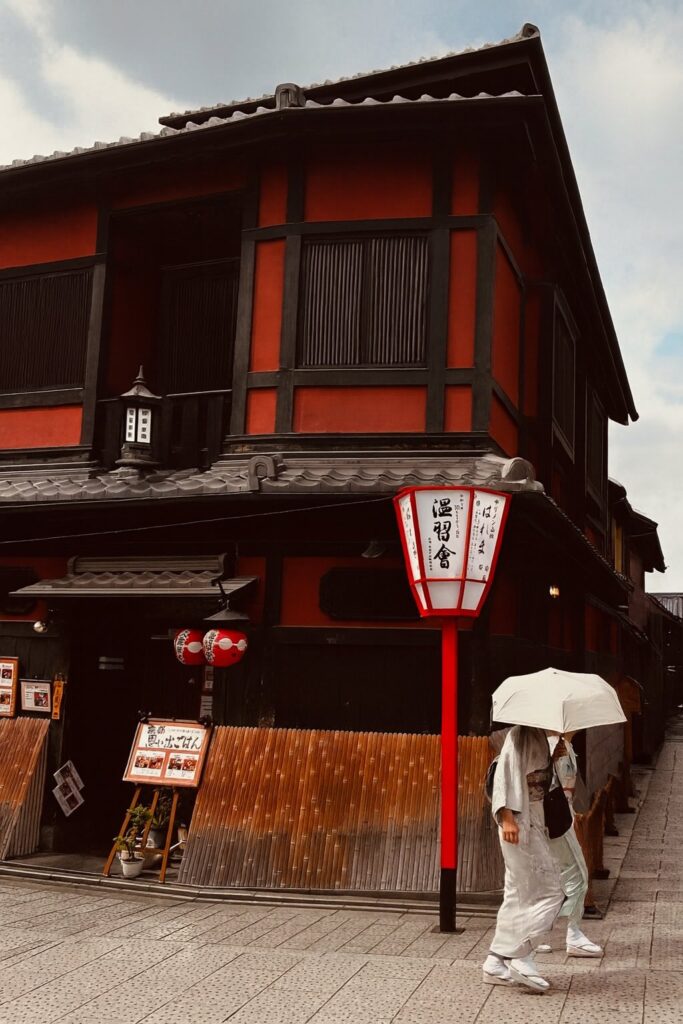
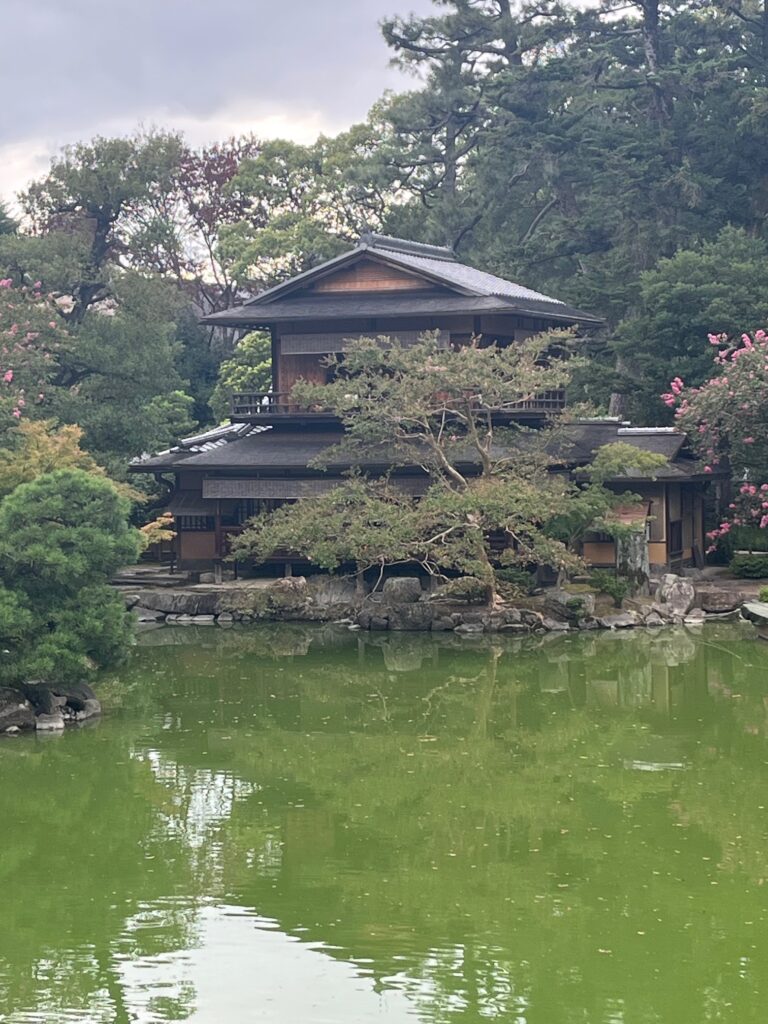
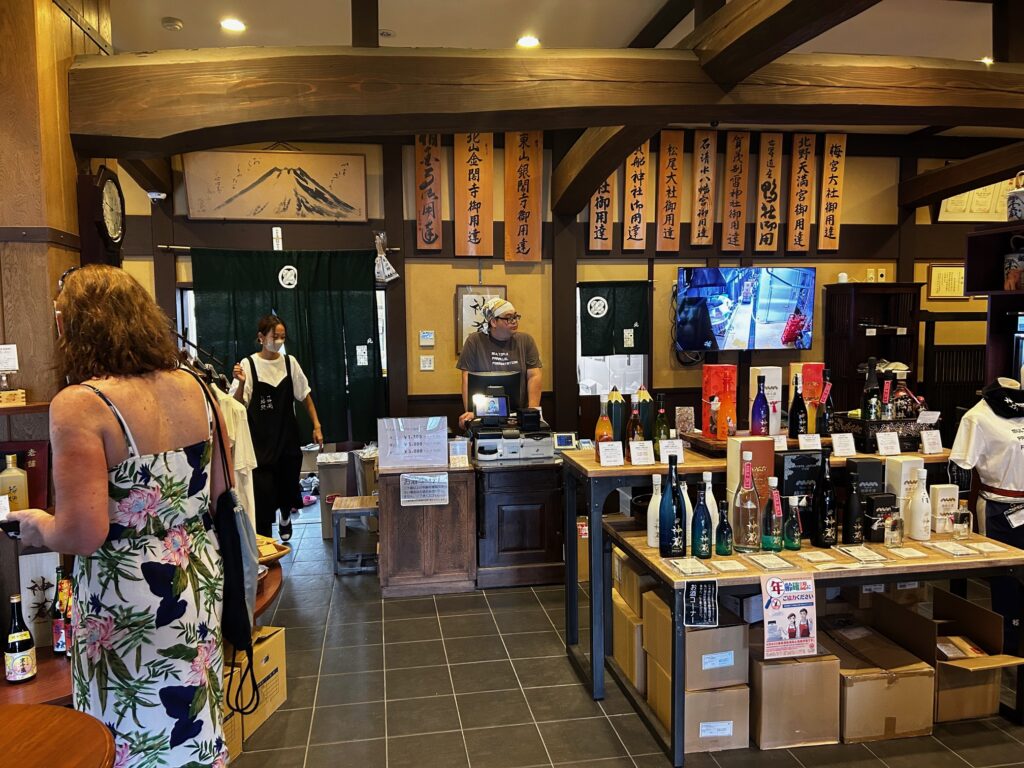
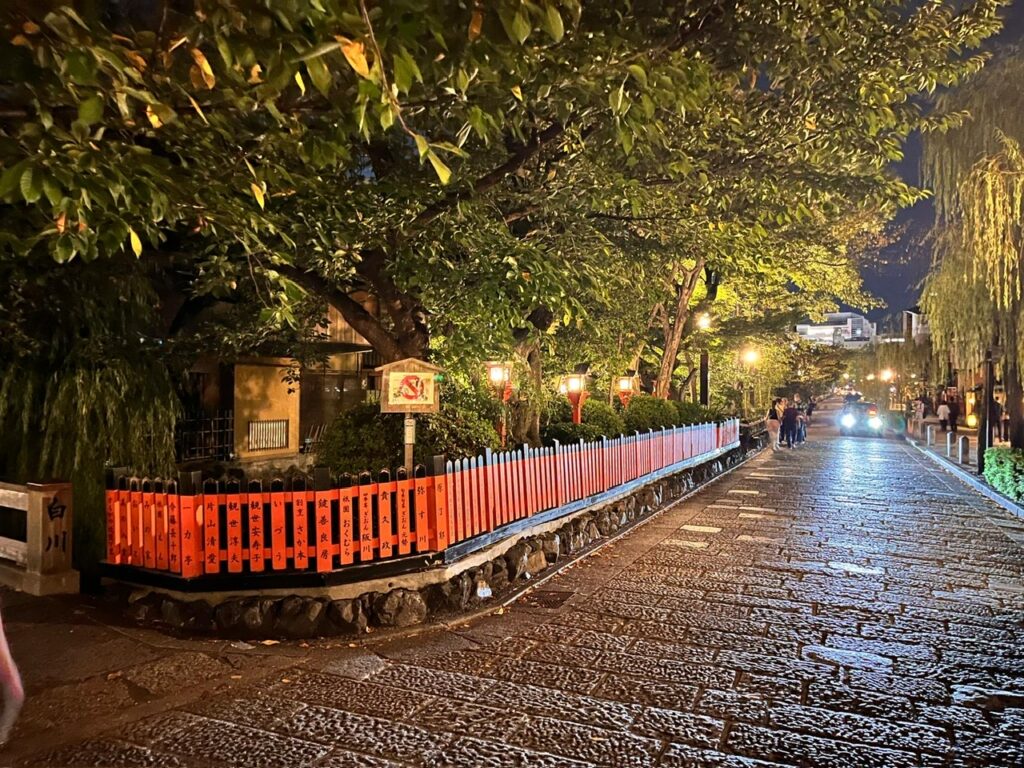
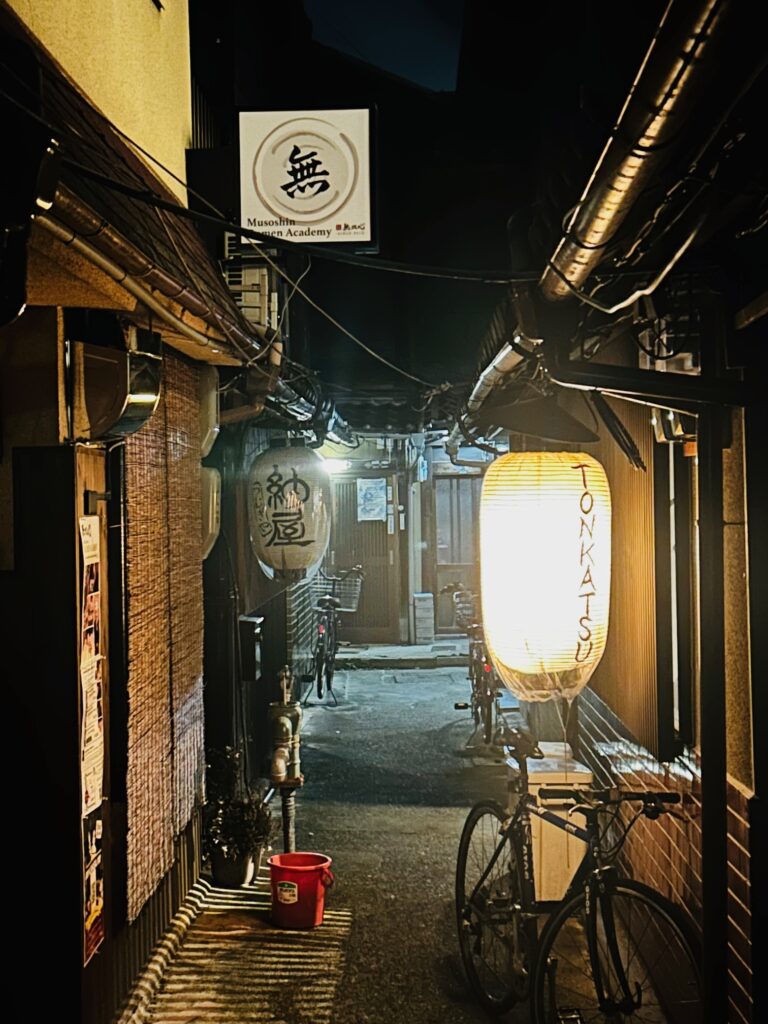
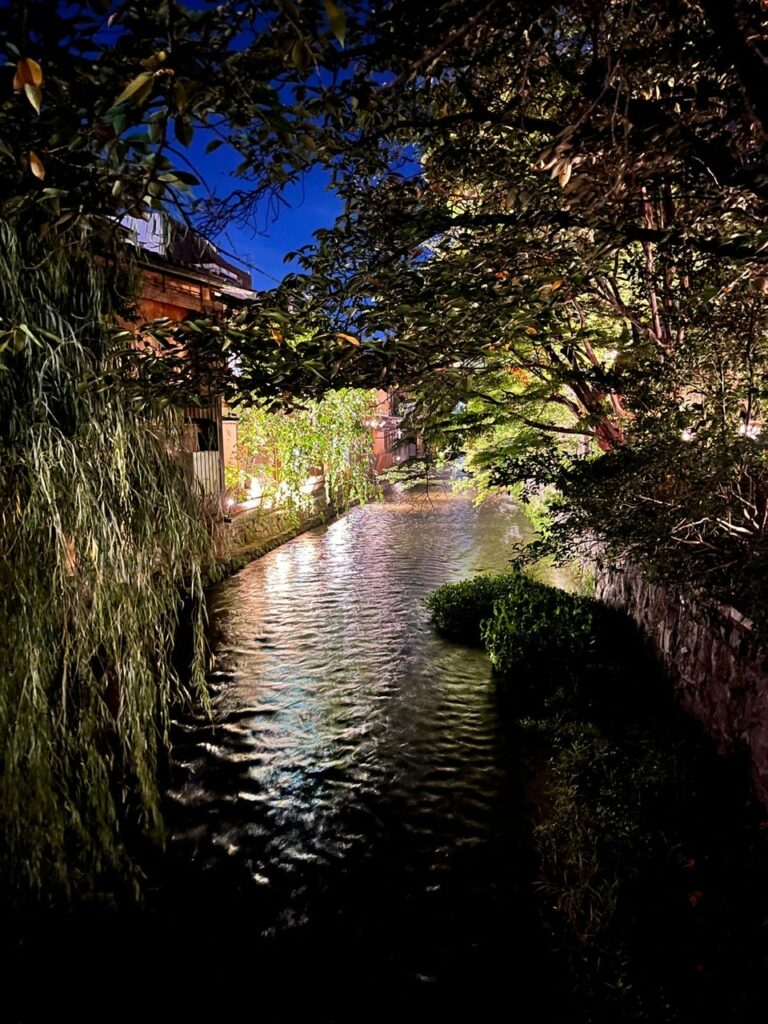
🗺 Route & Notes: Start: ~10:00 sleep-in departure, except for those inclined to see key sights before the hordes of tourists who arose around 7am. Chose the historic Gion area for a slow wander. Breakfast at Agnes D. Café (little French spot) — a very welcome croque monsieur. Strolled the Shirakawa Canal—a postcard lane through Gion, fed by Lake Biwa. Accidentally photobombed a local wedding (oops, sorry!). Continued to Heian Jingu Shrine, past the Kyoto Museum of Art, and up to Kyoto University for a peek at campus life. Midday serendipity via Google: Matsui Sake Brewery tasting — from sparkling to very dry; fascinating how different rice varieties (Kyoto vs. other regions) shape flavour. Crossed the river on the stones of Kojin, looped through the Imperial Palace grounds, then subway back toward the centre of town.
⛽ Fuel / Food: Pre-dinner refreshment and chicken karage at Kyoto Beer Lab (repeat visit / repeat enjoyment).
🍽 Dinner: Okonomiyaki (read fancy omelettes) restaurant (千房 京都祇園店) in the Gion area —group photos courtesy of a Melbourne father / daughter couple (oddly enough to be seen again in the boarding plan at Narita airport 10 days later!) simple, delicious, and early to bed.
💭 Reflection: A perfect leg-rest day—canals, shrines, and sake—with just enough wandering to keep the curiosity fed before tomorrow’s departure from Kyoto.
Day 15 – Kyoto → Takashima (Canals, Passes & Lake Biwa)
📏 Stats: 71 km | Ride time ~4:00
🌥 Weather: Overcast, mid–high 20s °C; expected northerly wind once we hit Lake Biwa (light head/crosswind at times).
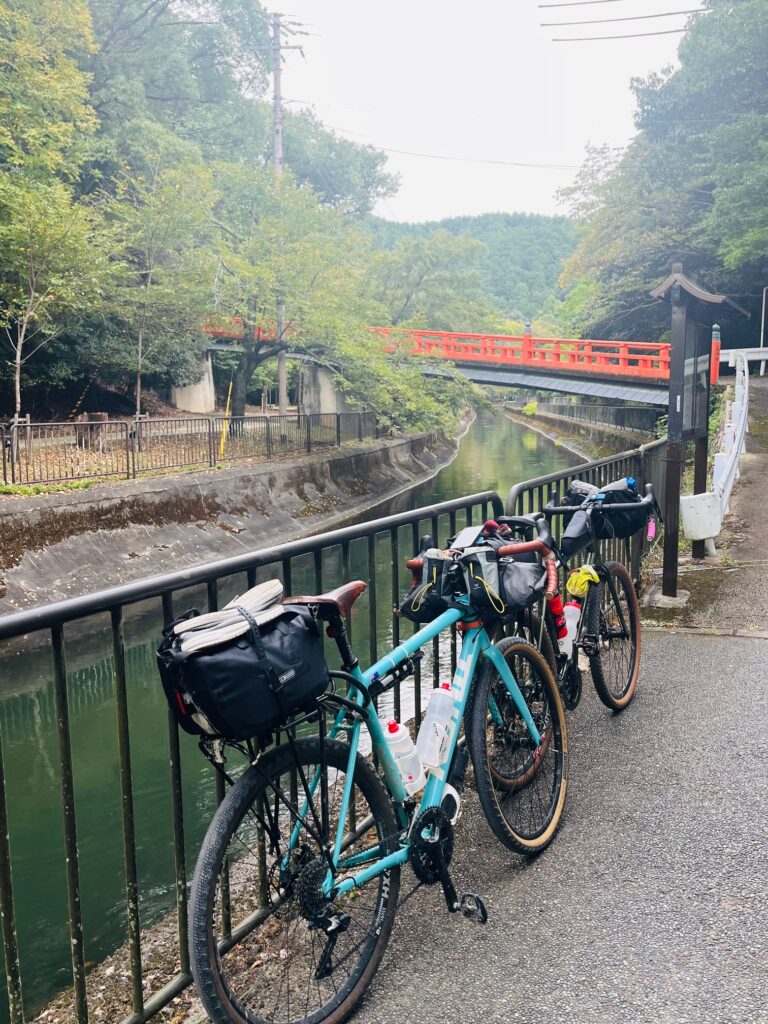
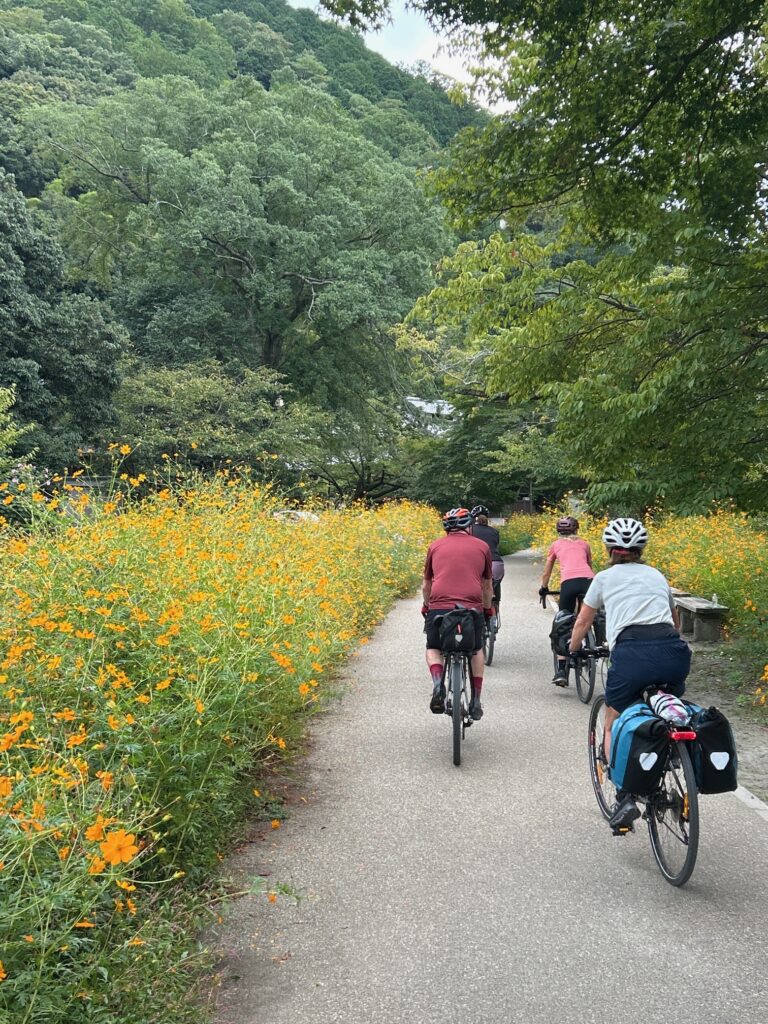
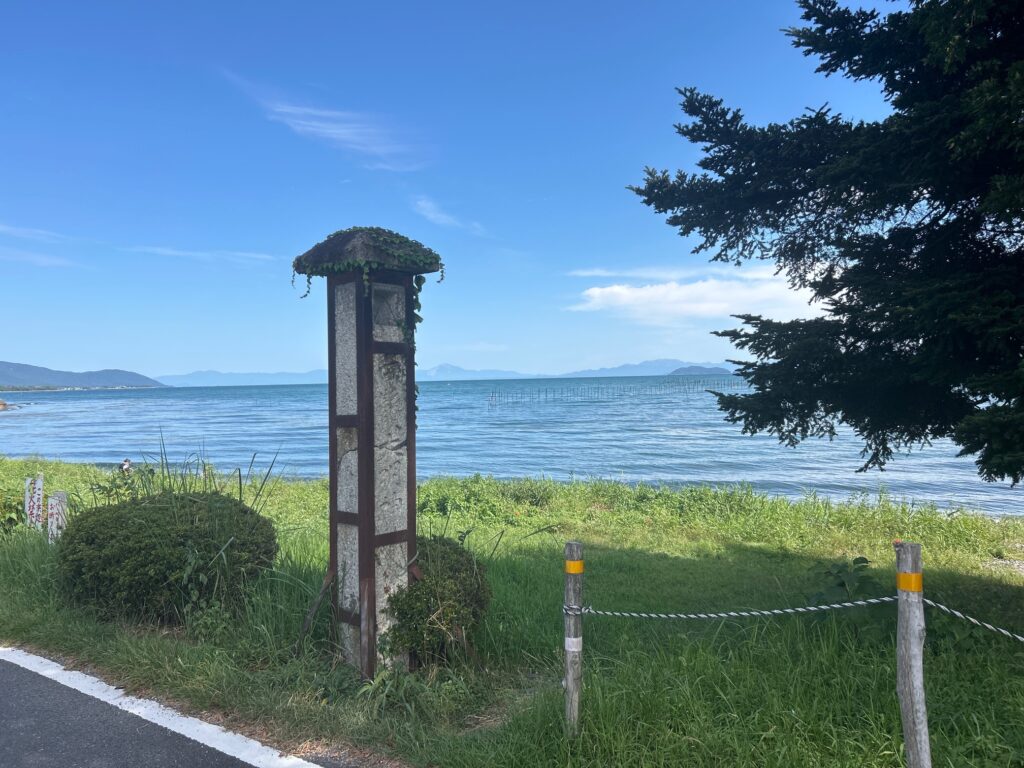
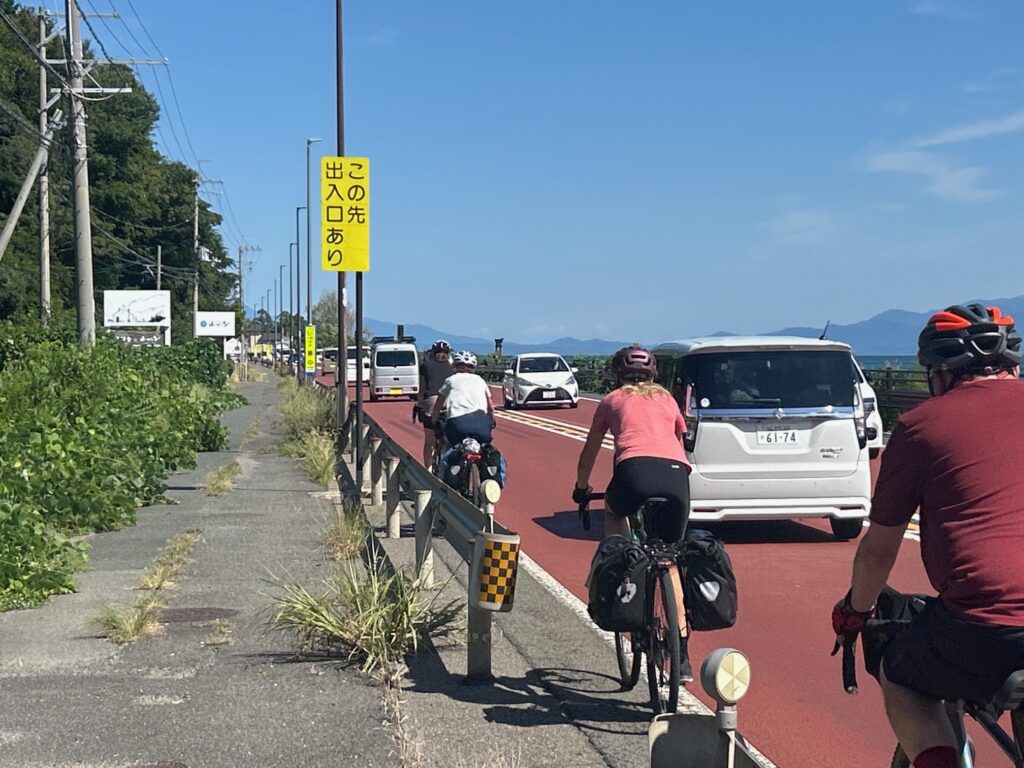
🗺 Route & Notes: Start ~08:00 and rolled out via Gion, revisiting old timber facades and shrines, then followed the Lake Biwa Canal out of Kyoto. Climbed toward a pass near the Higashiyama peaks, passing a marker for our favourite Old Takedo Road, then dropped to the Yamashina Canal tucked at the mountain base. Kicked up again to the Kozeski Pass, rolled down into Ōtsu. Turned north along Lake Biwa through Ogoto → Ono → Wani → Horai into Shiga Prefecture. From Ōtsu to Takashima we followed the Japanese National Cycling Route — very well marked, well laid out, and with a great surface the whole way. Lake vibe: swimmable pockets, small craft everywhere, and plenty of road cyclists out for flat weekend spins. Finished in Takashima for a quiet lakeside evening.
⛽ Fuel / Food: Casual top-ups along the canals/lakeshore.
🏡 Stay: Japanese-inspired villa in Takashima.
🍽 Dinner: Self Catering with a stop and the Lawson before heading for accommodation. A variety of Home-prepared meals including sashimi, fish fillets, and a very welcome Wagyu steaks with salad and a nice drop of Médoc from Bordeaux — “What is a great steak without a great red?”
💭 Reflection: Kyoto’s canals and passes set up Biwa’s big-water horizon perfectly. Scenic, mostly-flat lakeside riding on a superb national route — a classic Saturday on two wheels.
Day 16 – Takashima → Tsuruga (North Biwa, Pass & the Sea of Japan)
📏 Stats: 44 km | Ride time ~3 Hrs
🌥 Weather: ~25 °C with a helpful southerly tailwind for much of the day.
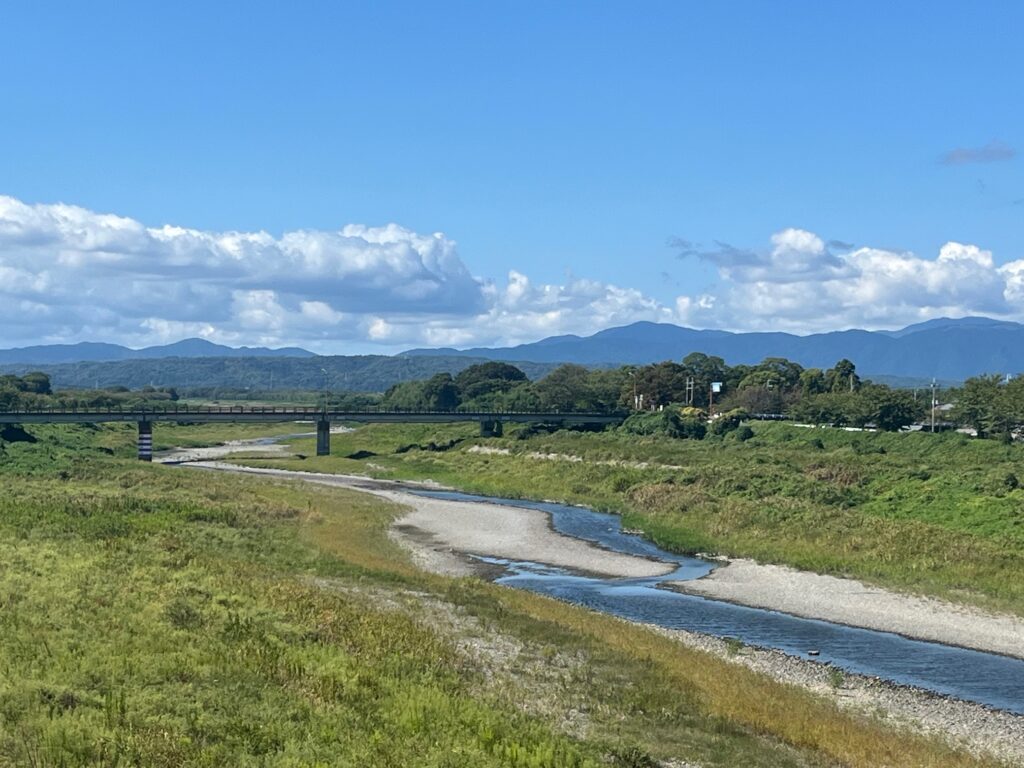
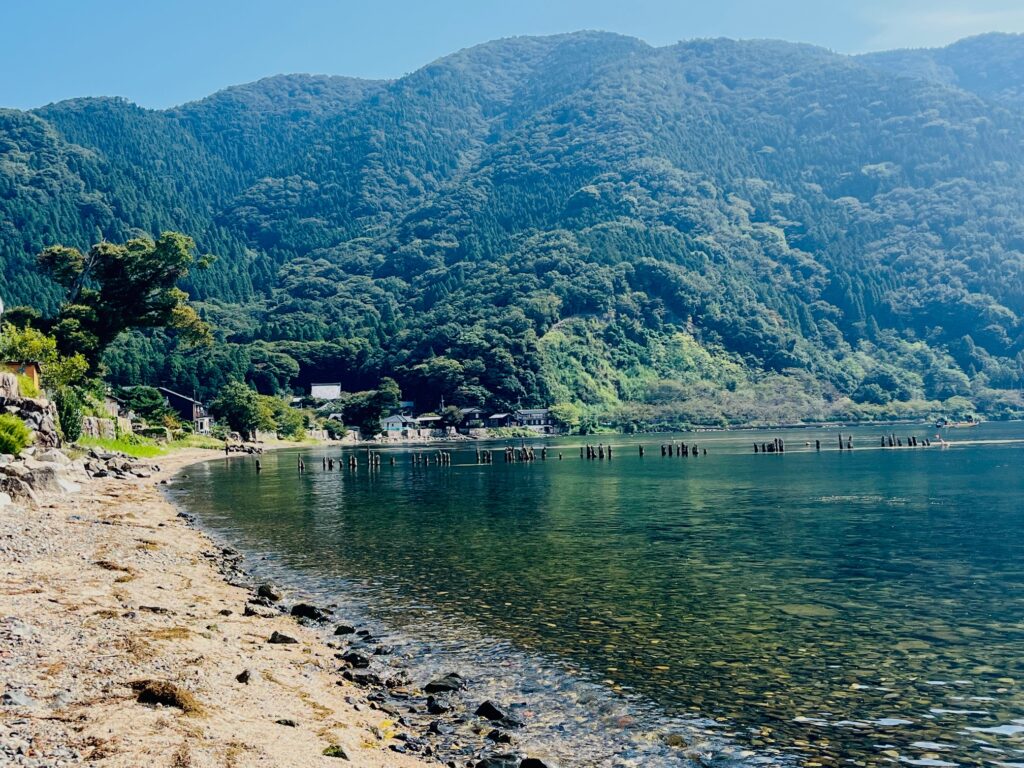
🗺 Route & Notes: Back on Lake Biwa at the northern end, continuing on the Japanese National Cycling Route — well-marked, well laid out, great surface. Pre-climb pause: coffee at Café Fleur de Mars, a 150-year-old lakefront building run by two lovely Japanese women who were excited about our travels through their region and Japan — a perfect moment before the hills. Left the lakeshore for a slow, steady climb to ~400 m on Route 161, riding with the Chinai River alongside; over the top and dropped into the Goi River valley on the far side. Long, rewarding descent into Tsuruga, entering from the south for a lazy loop of town. Rolled past Kenai Mo Matsubara Beach — lovely sand and lots of fishing; interestingly, no swimmers today. Tsuruga Bay at last: that glint of blue that feeds the Sea of Japan — milestone reached. Took in the Port of Humanity story — Polish orphans after WWI and Jewish refugees in the early 1940s who passed through here.
⛽ Fuel / Food: Easy top-ups between lake and climb; simple snacks before the descent. Lunch at a wonderfully un-expected port-side donburi restaurant (Uogin) where the seafood dish was delicious.
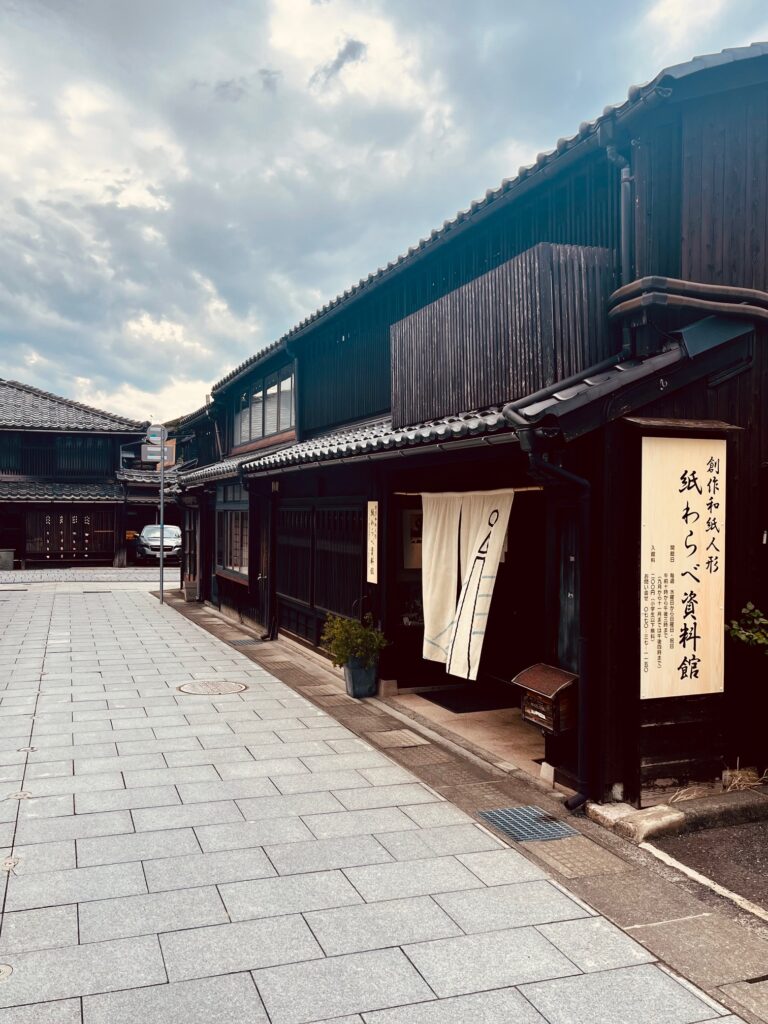
🏡 Stay: Hobo Lee — a charming Japanese-style B&B in Tsuruga’s old town of classic dark-wood buildings. A friendly bar up the road (a haunt of our host and friends) welcomed us with free beers — hospitality A+.
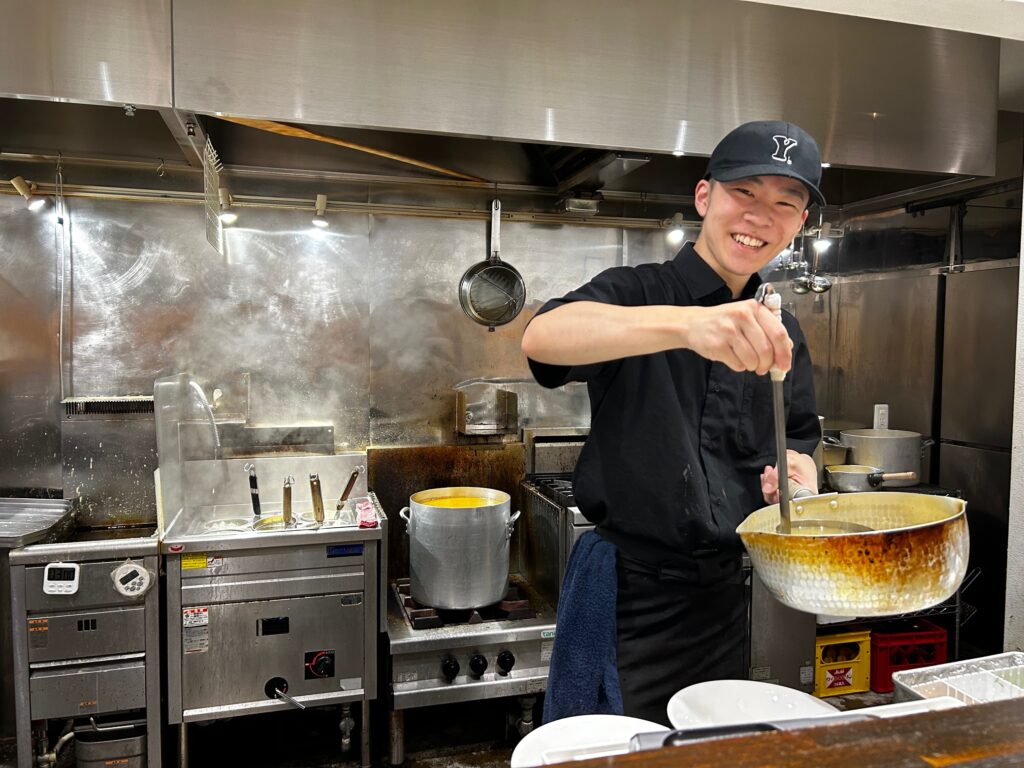
🍽 Dinner: A journey around town to locate a recommended Ramen restaurant (トリノセツリ) – we weren’t disappointed!
💭 Reflection: Lakeside lines → patient climb → swift valley drop — and suddenly we’re on the west coast. A compact day that felt bigger than the miles.
Day 17 – Tsuruga → Fukui (Coast Road, Bamboo Pass & City Lights)
📏 Stats: 64 km | Ride time ~4:00
🌥 Weather: Overcast turning to warm rain (~25 °C); light southerly tailwind at times.
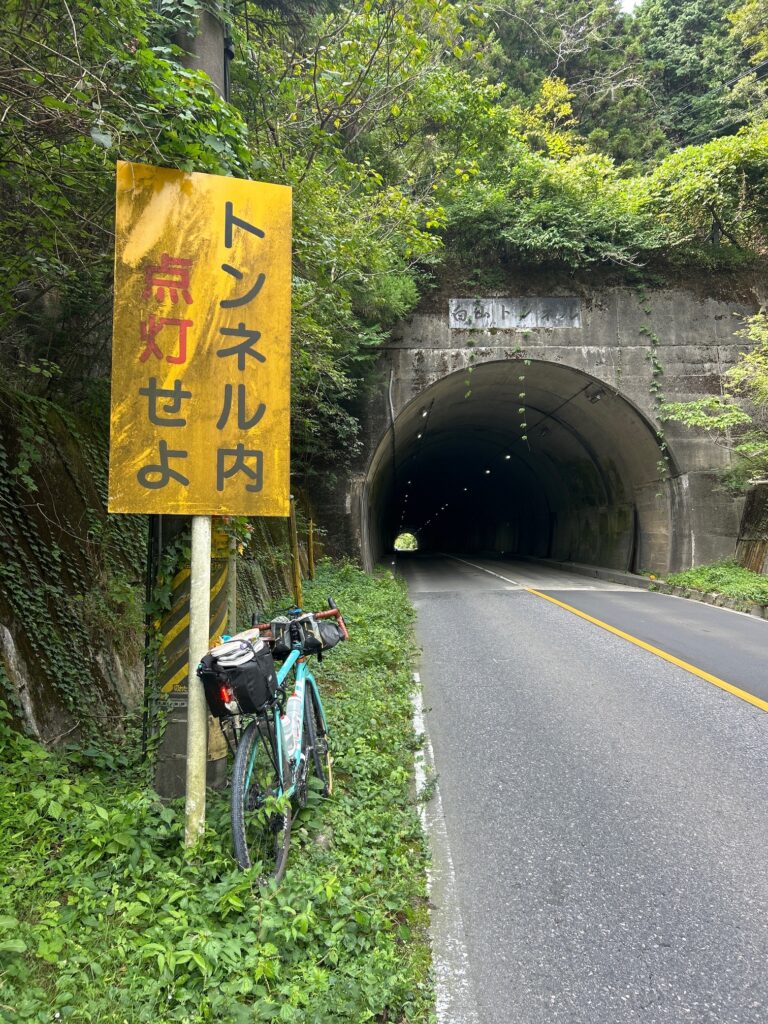
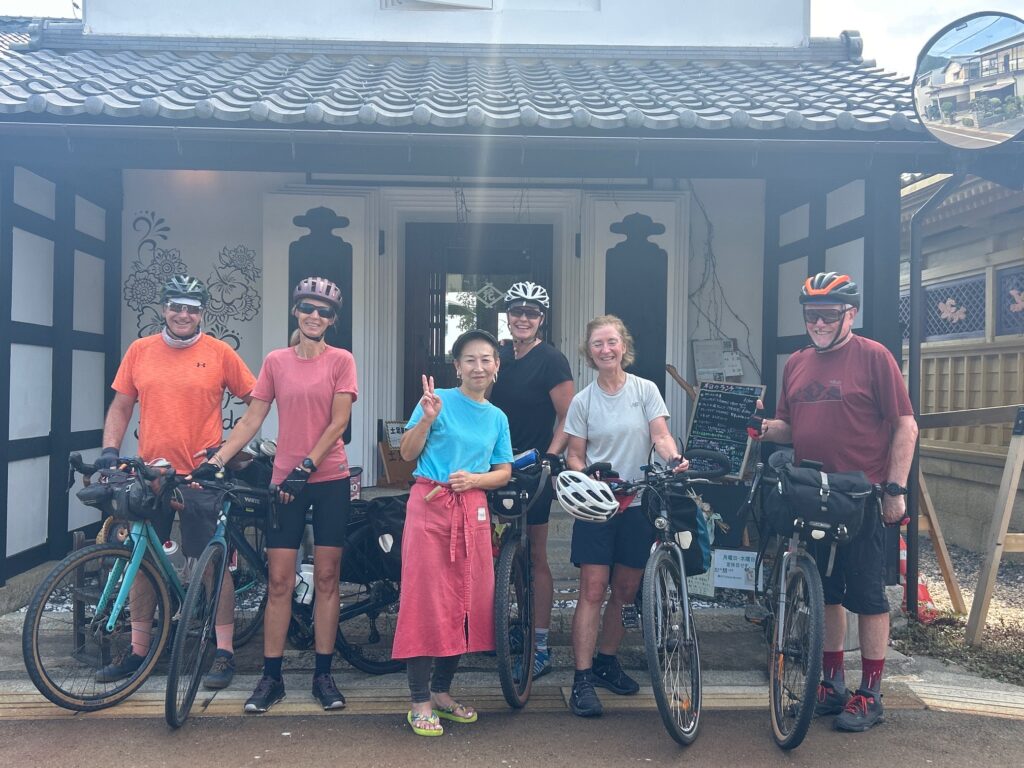
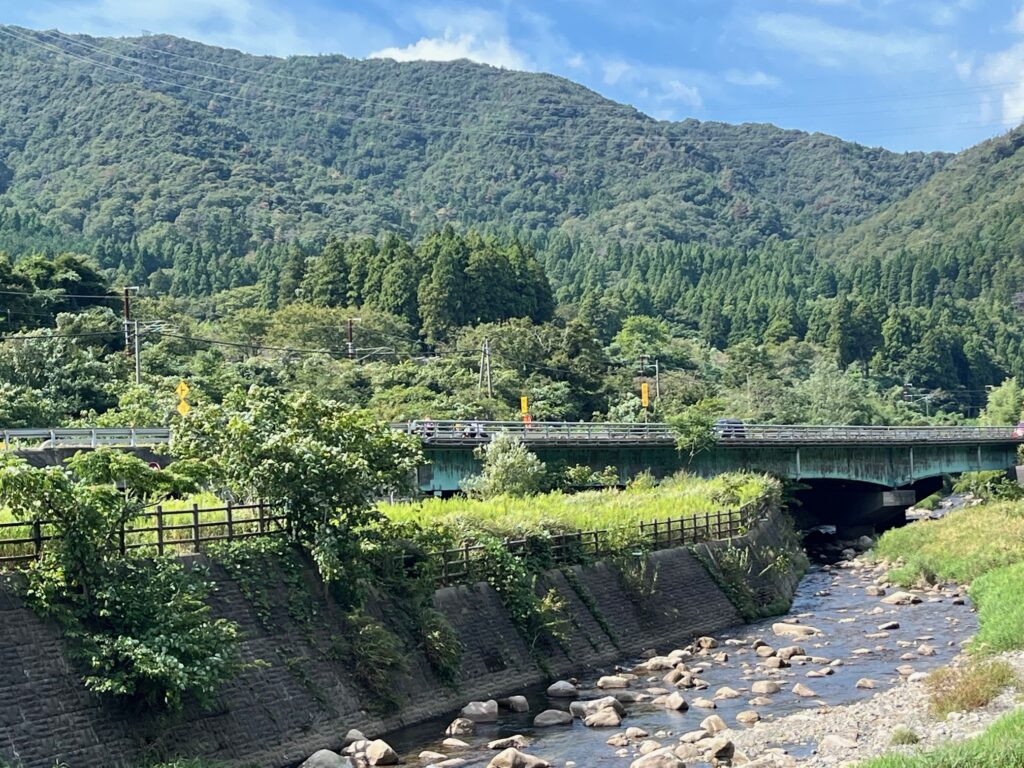
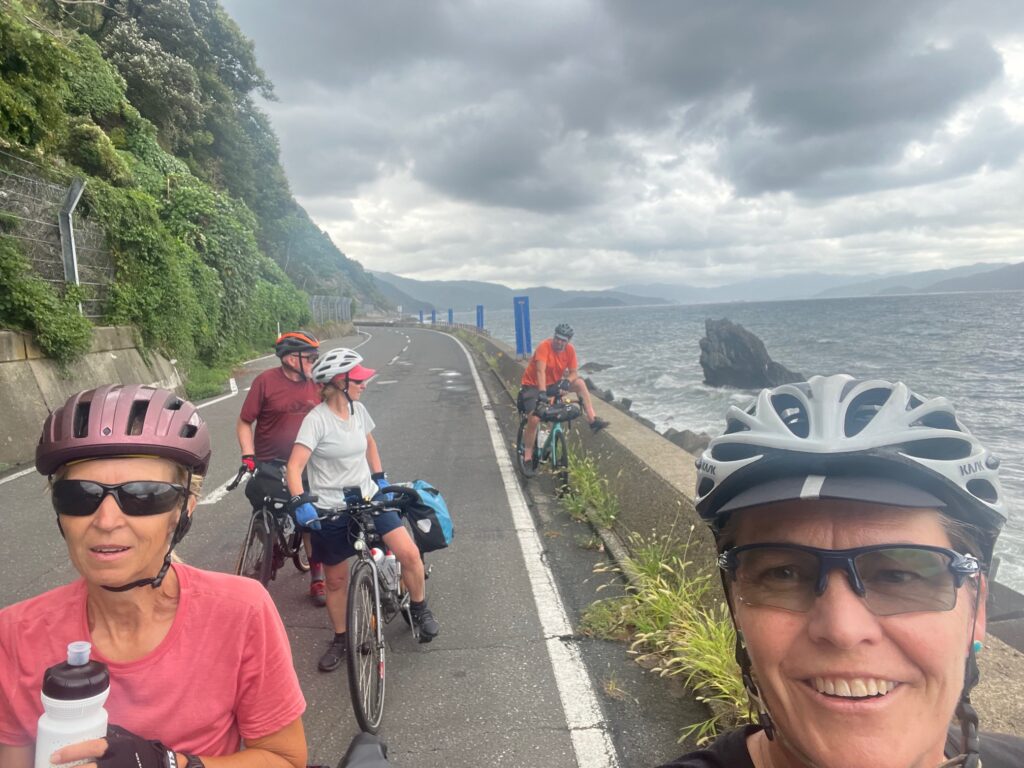
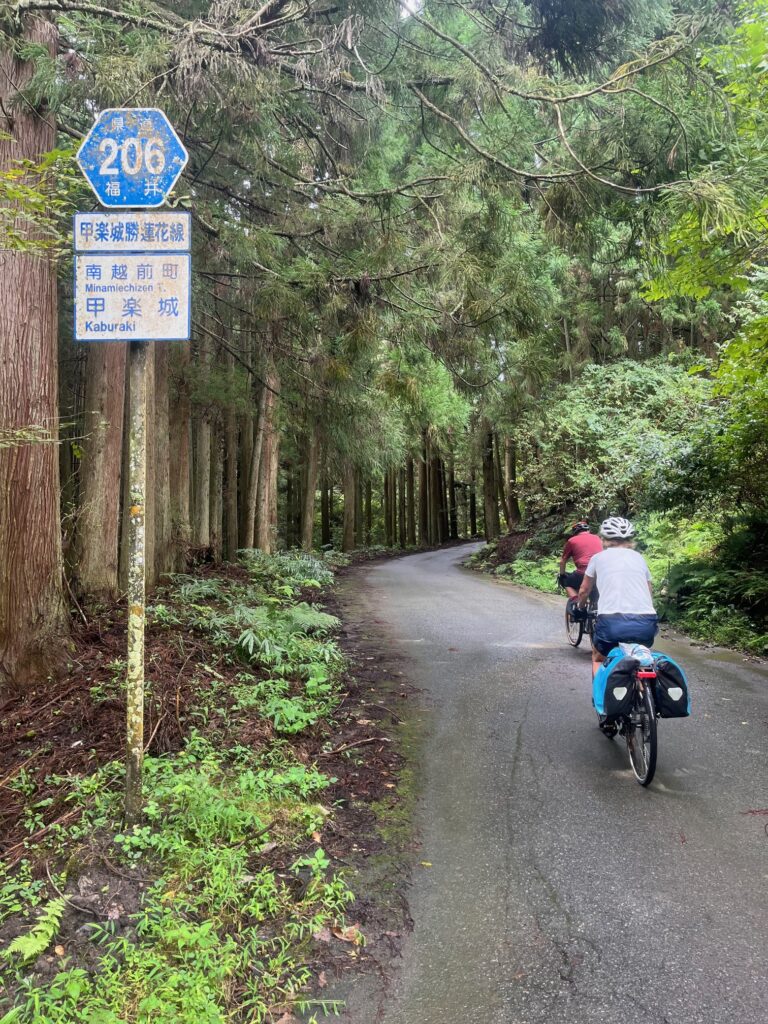
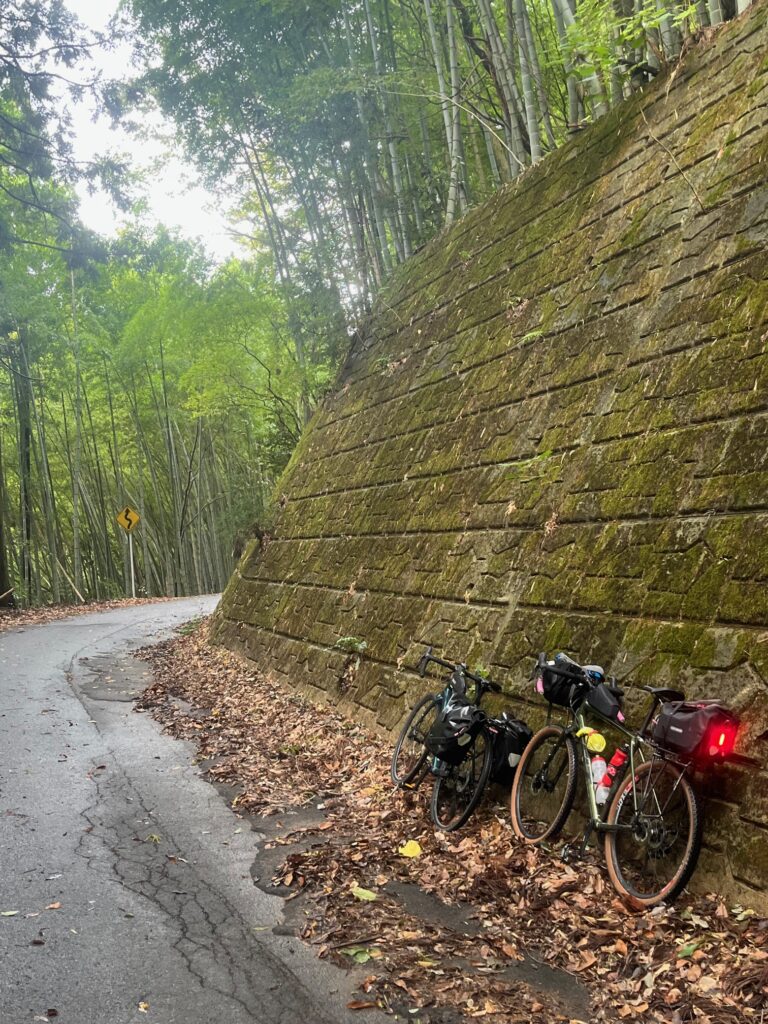
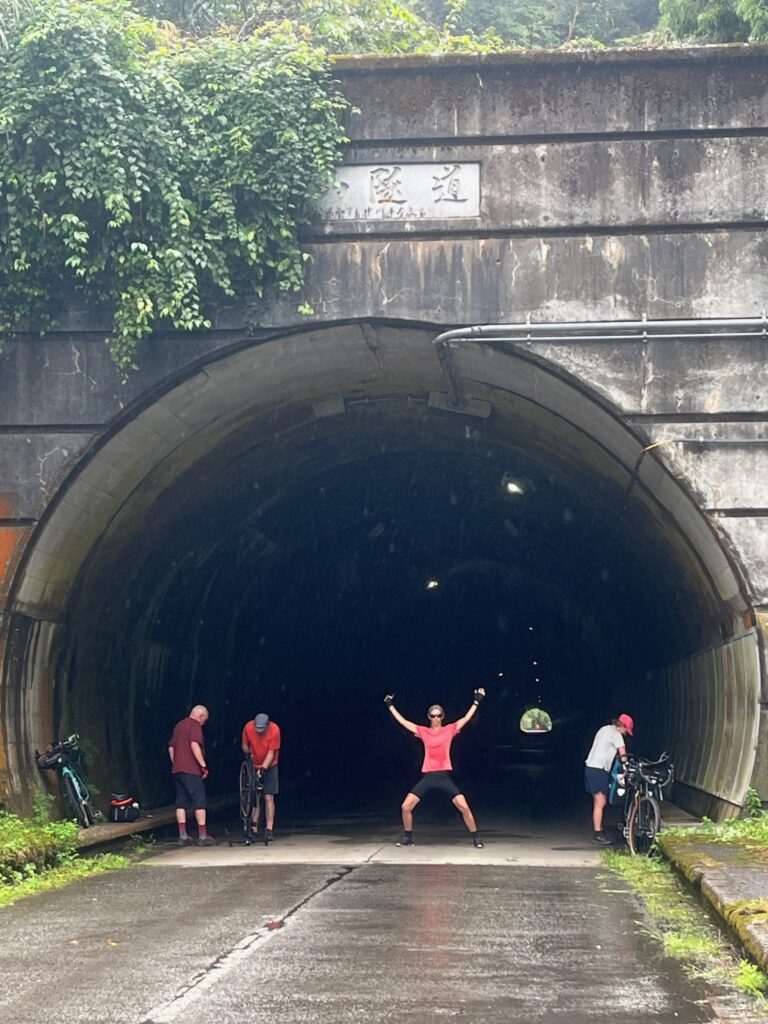
🗺 Route & Notes: Start ~08:00 and rolled north along Tsuruga Bay—the Sea of Japan opening up over our shoulder as the bay widened—sea to the left, forest to the right. Busy with trucks, yet courteous drivers throughout. Shoreline features: tunnels, avalanche galleries, and fresh landslide repair — a Japanese riff on the Great Ocean Road. Warm tropical showers set in but temps kept it comfortable. Charming stops along Route 8: Kamino, Nagashu Shuhama, Ishihata Beach, and Suizu Beach (quiet sand, fishing boats). Picked up Route 204, then turned inland at Kaburaki to climb Route 206 — a steady ~250 m switchback ascent through bamboo forest. Crested at a quiet tunnel (felt almost abandoned). Mid-tunnel, Dave’s flat (our first of the trip!) —fixed with zero traffic passing. Dropped into the Hino River valley, skirted Echizen City, and rolled through Sabae City via farmlands and beautiful rice paddies, then finished damp and drying in Fukui.
⛽ Fuel / Food: Early stop at the Lawson on the outskirts of Tsuranga for the usual Banana, Smoothie and Protein Bar – based on coffee strategy, maybe also the cold café latte, before heading up the coast. A second stop after our descent on the rain outside of Echizen City.
🏡 Stay: Hotel Reverge Akebono — a very welcoming concierge of quite wet cyclists. Also happy to store our bikes in courtyard away from traffic and prying eyes.
🍽 Dinner: Blue Light Café — Italian- and wine-leaning; little English needed once we started talking good food and good bottles.
💭 Reflection: Wavy coast, great green climb, valley drop, a surprise tunnel pit stop, and rain that never chilled. A great day in the saddle – really great day!
Day 18 – Fukui → Kaga (Valley Flats, Lakeside Paths & Dune Bikeway)
📏 Stats: ~45 km | Ride time ~3:00
🌥 Weather: ~25 °C, dry, slight tailwind — an easy, cruisy day.
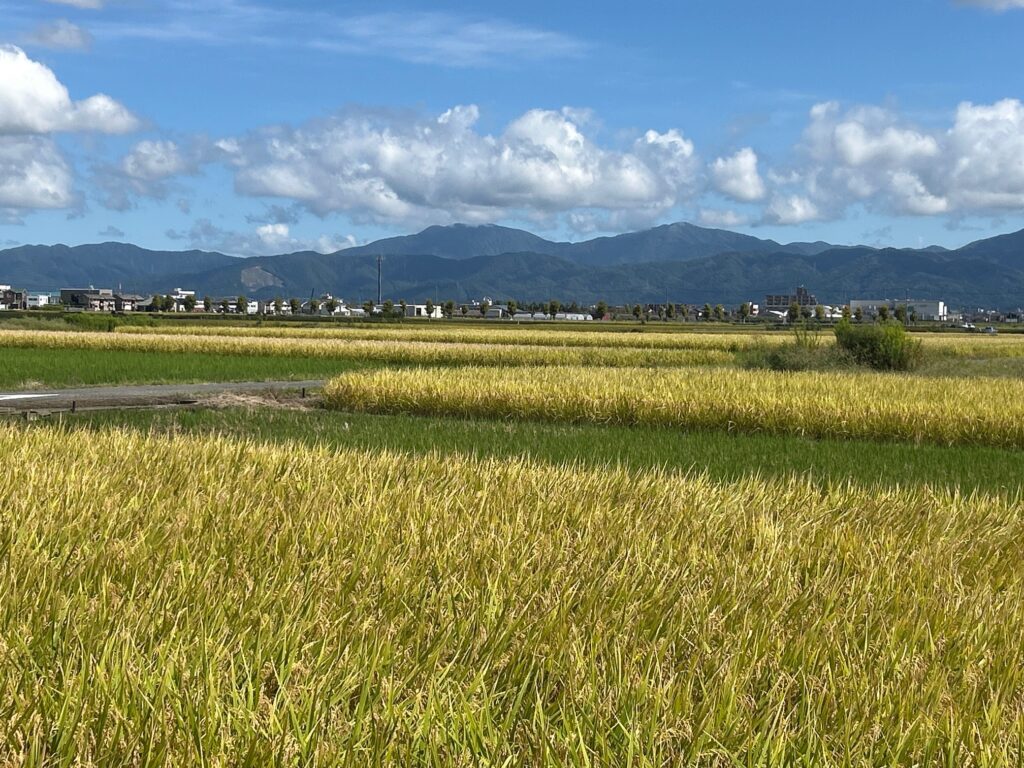
🗺 Route & Notes: Start ~09:00 with a basic bike maintenance using the previous days weather as a prompt to clan and lube our chains and ensure air-pressures. Continued to roll north via Sakai → Awara → Kaga along a broad valley between two mountain ranges — mostly flat with a couple of gentle rises. The quintessential Japan mix: homes, rice paddies, and small industry sharing the same blocks — and it works. Loop of Lake Kitagata (Awara) — lakeside paths + a cycling park — then onto a signed cycle route that continues past Kaga toward Kanazawa. Near Shioya Beach we joined a coastal path behind the dunes for our first clear Sea of Japan views of the day. Café stop & repair: puncture #2 (this time Anna-Christina’s rear tyre) just 100 m from Umibouzu Café. Fixed the tyre sitting in the sun, coffees in hand, overlooking the surf. Lovely spot full of heritage surf memorabilia and a quirky, eclectic collection. Wayfinding overlapped the Ishikawa-Satumi Tour Route and the Japan Heritage Kaga 4 Onsen Route — we swapped between them heading north.
⛽ Fuel / Food: Breakfast on the Fukui sidewalk from FamilyMartconvenience-store – bananas, smoothies, iced lattes — our now-classic morning combo.
🏡 Stay: North of Kaga – Iotsu — a beautiful old village with cobbled lanes and dark-wood houses; very Japanese Cotswolds. Close to Hashidate Fishing Port with local fishing/ship museums.
🍽 Dinner: With many places closed, we raided FamilyMart at the Amagozen Service Area — pot noodles, chips, beers. Our host even drove Dave for errands and a quick village tour — above-and-beyond hospitality.
💭 Reflection: A laid-back, well-signed day linking lake, dunes, and fishing towns — the perfect penultimate stage before the finale into Kanazawa.
Day 19 – Kaga (Iotsu) → Kanazawa (Finale on the Sea of Japan and Beautiful City)
📏 Stats: 55 km | Ride time ~3:00
🌥 Weather:: Mid 20’s – mostly fine with a helpful tailwind — ideal last-day roll.
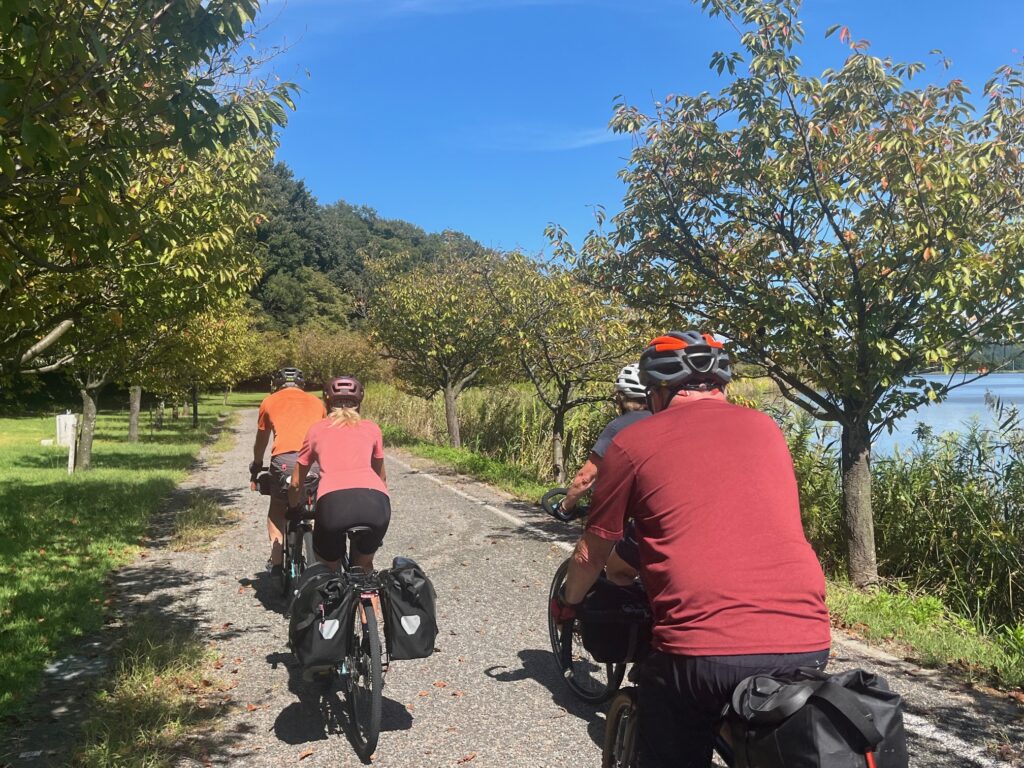
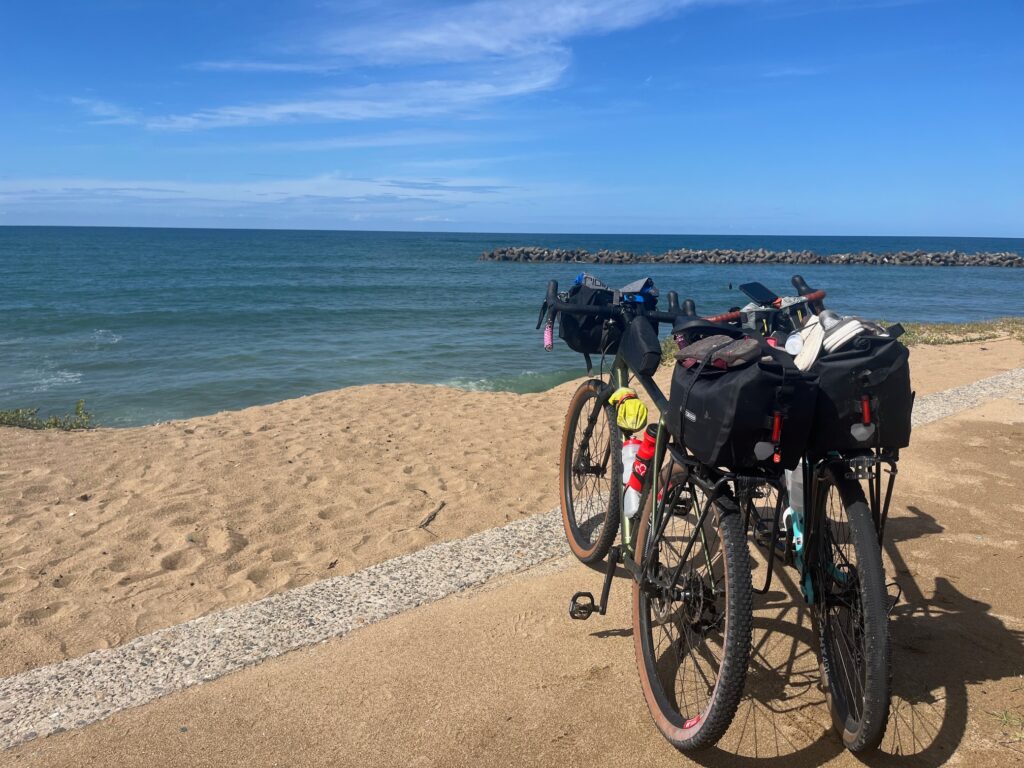
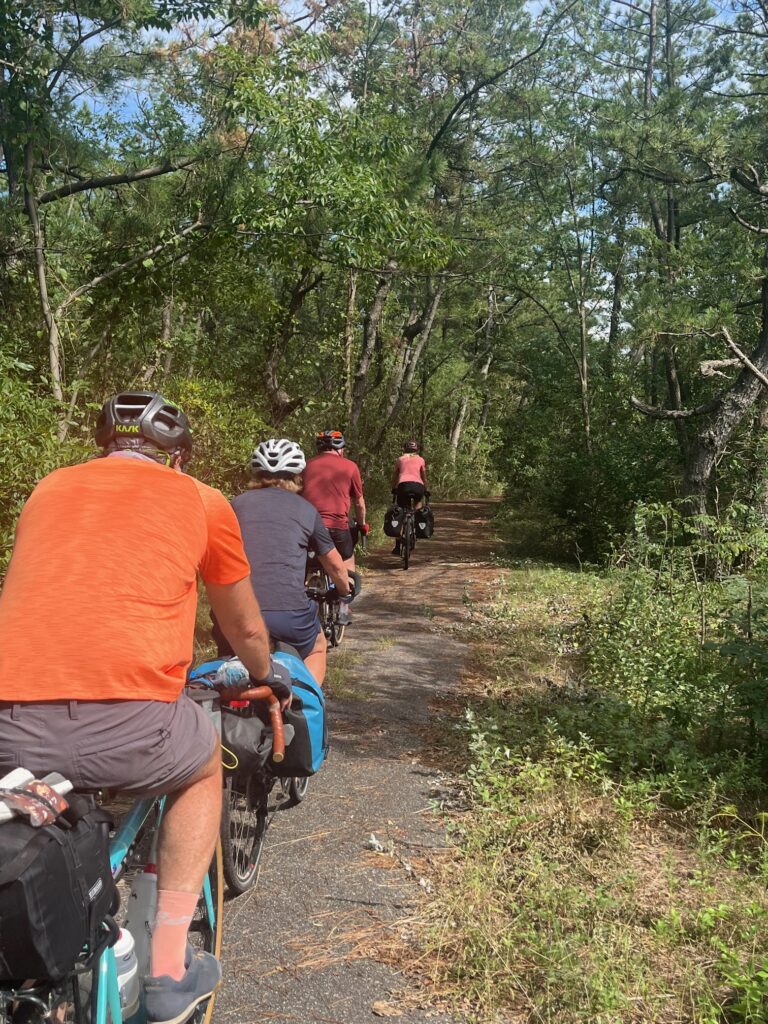
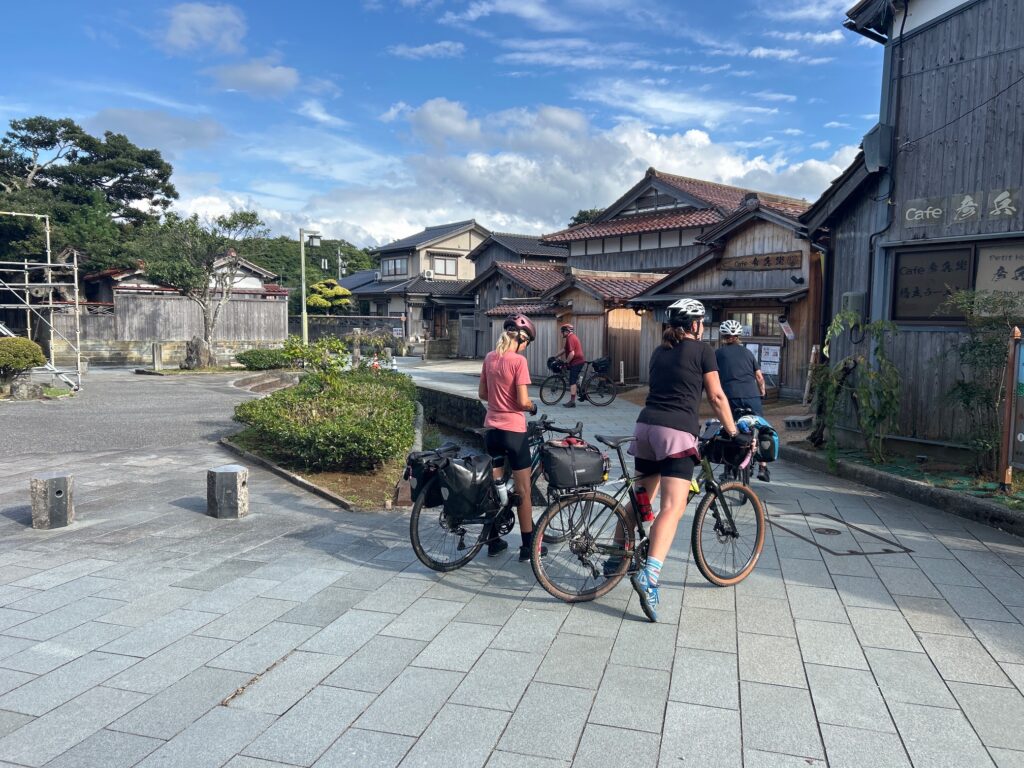
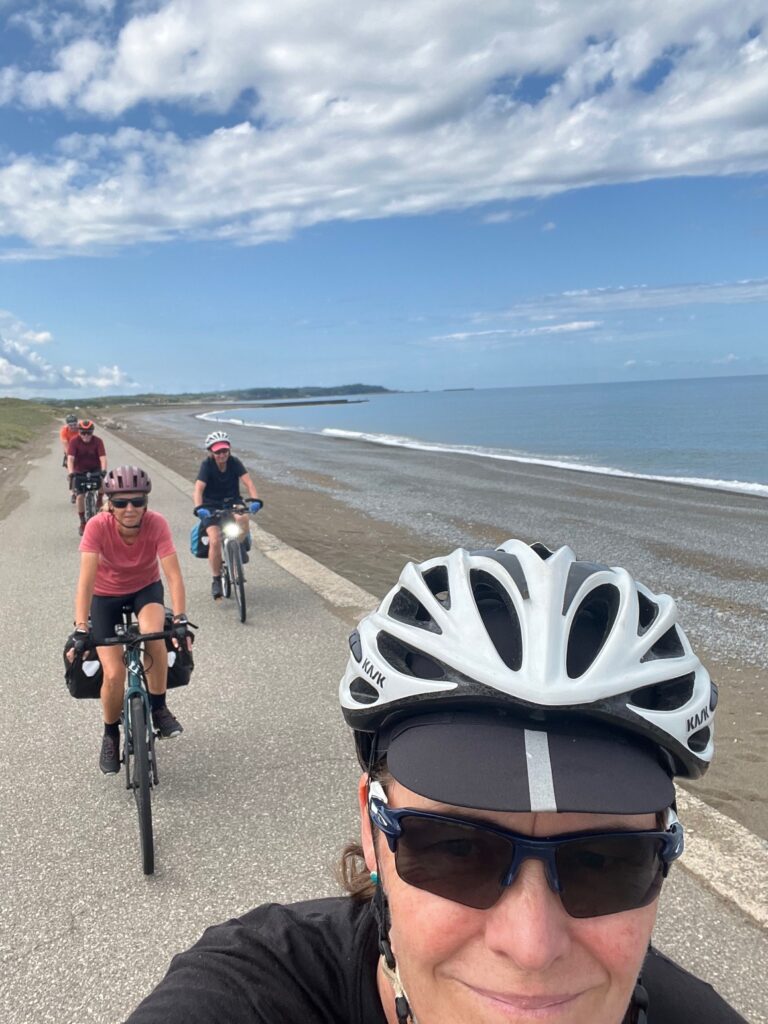
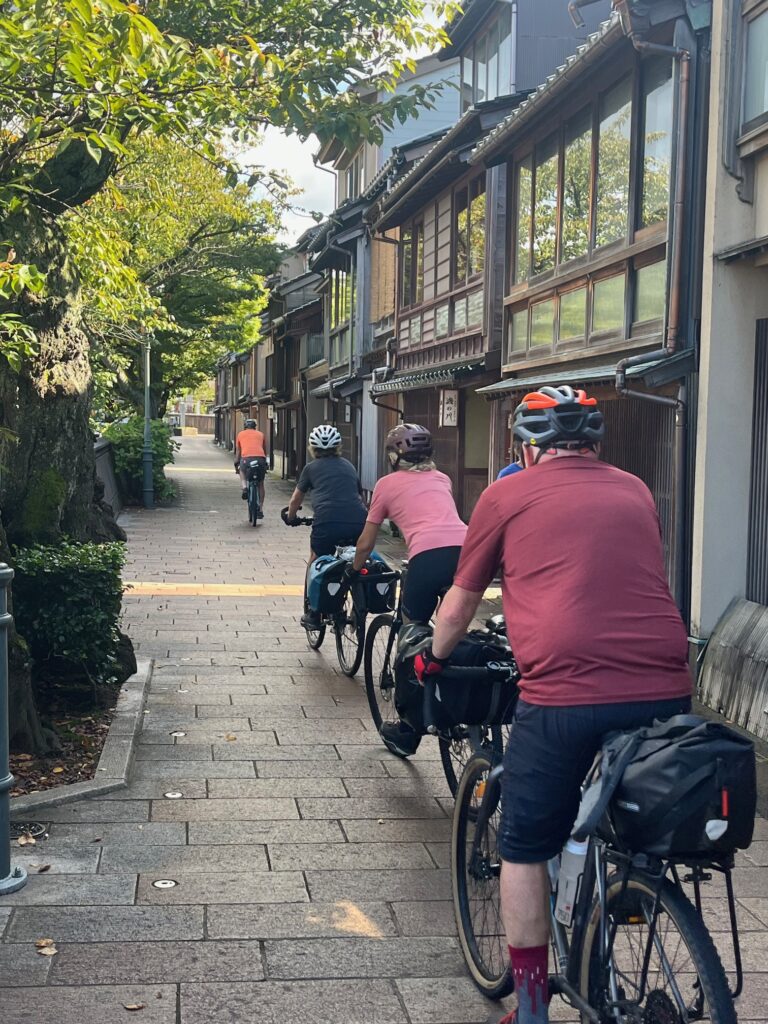
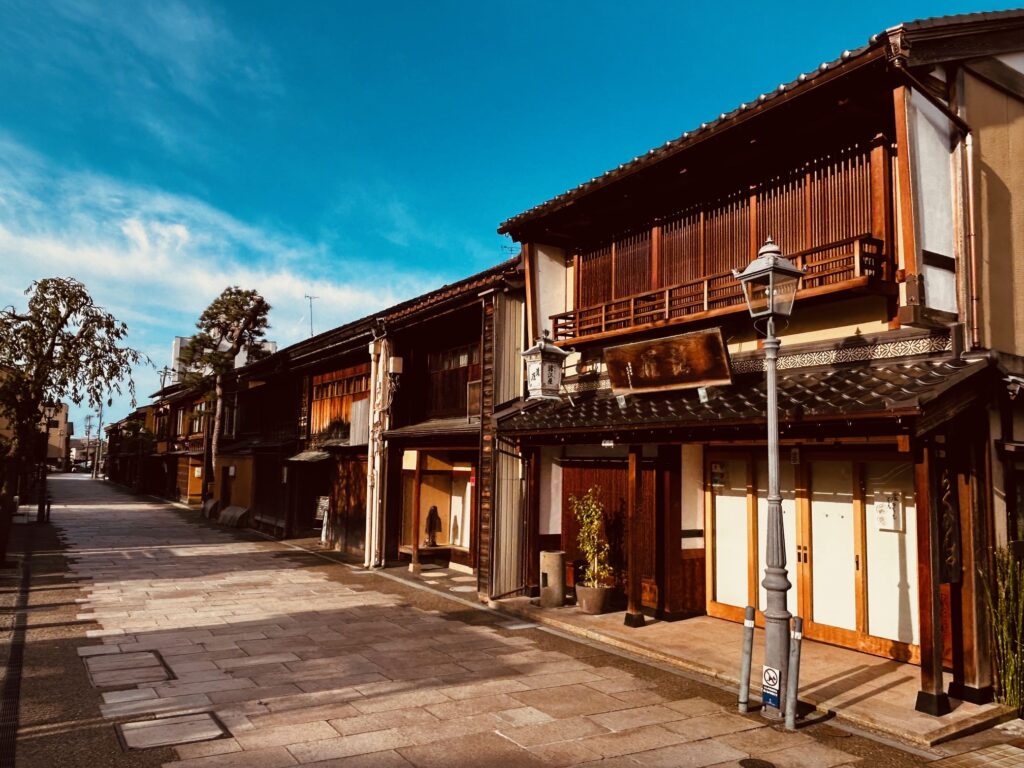
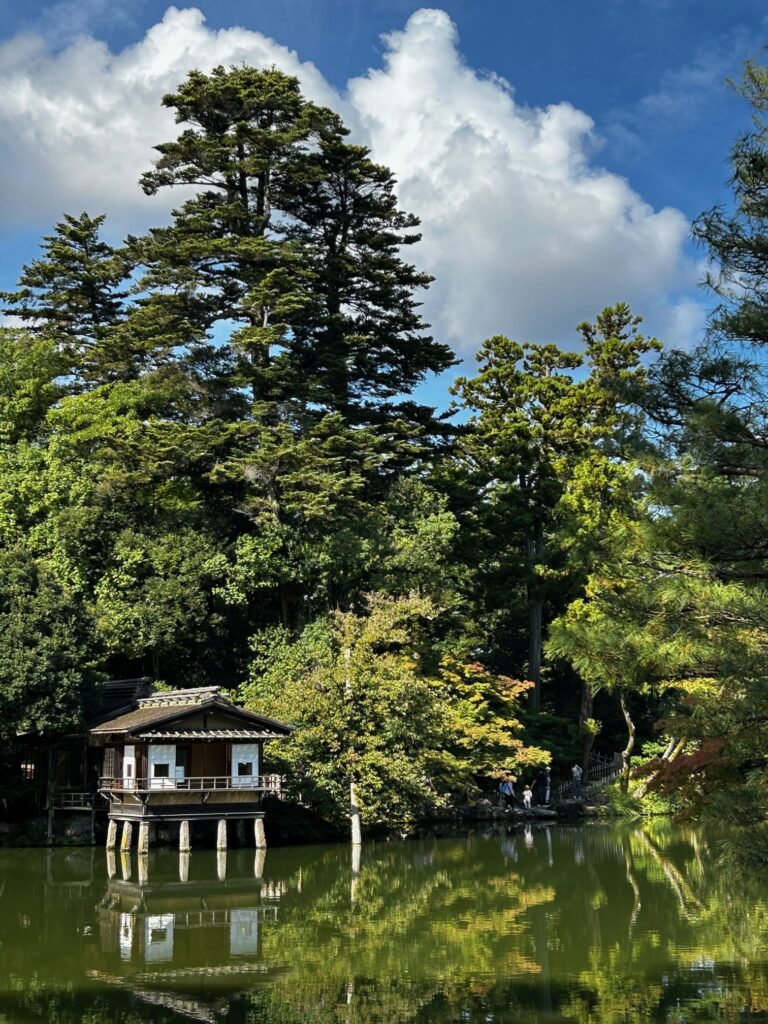
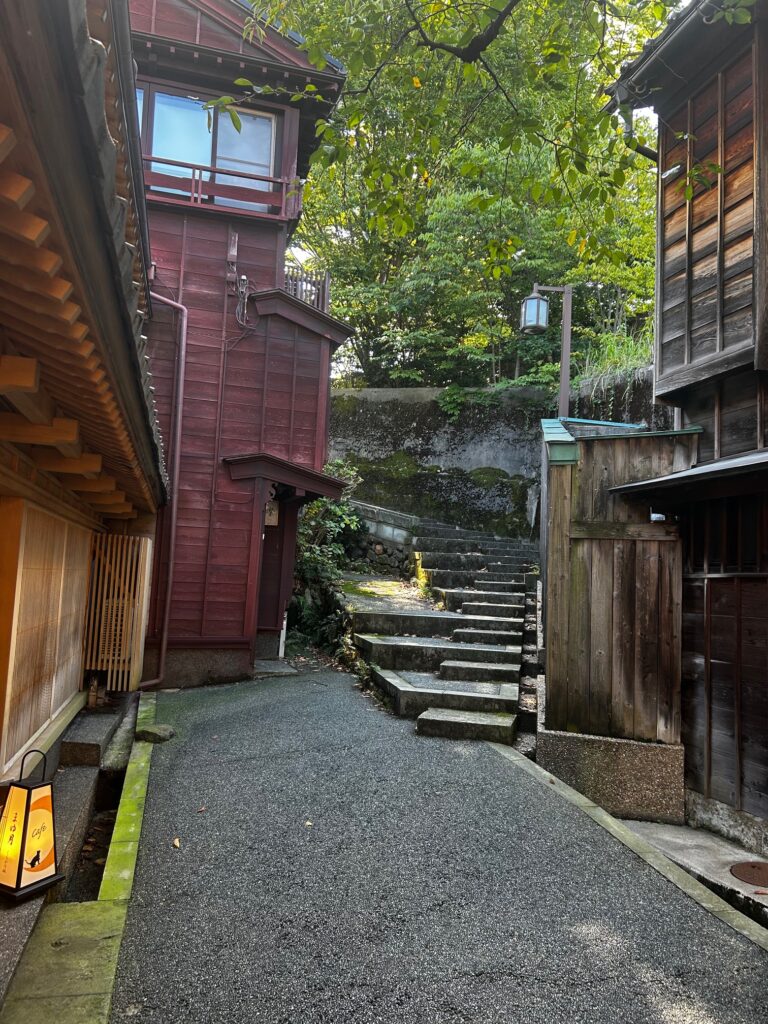
🗺 Route & Notes: Farewell to Iotsu, straight onto the coastal bikeway (a few short detours where works were underway). Second swim of the trip: Chris, Janette & Anna-Christina jumped into warm, clear water, floating between the beach and coastal breakwaters. North via Komatsu and Hakusan, then onto the river path that feeds into Kanazawa about 5–6 km out. As is usual practice for large cities, include a familiarisation loop of key sights to assist with city navigation and planning.
⛽ Fuel / Food: Second visit to the FamilyMart at the Amagozen Service Area for usual breakfast. A stop for a celebratory coffee at the Moron Café in the old Samurai area of Kanazawa just after 13:00.
🏡 Stay: Sennichi House (south of the river) — a cosy 2 story, two-bedroom home just right for the five of us for two nights.
🍽 Dinner: a real treat – a very nice husband and wife owned French restaurant – Bistro Yuiga — champagne and fine French food to toast the ride. A follow-up drink to close the night at a very Japanese type bar – small streets, a small bar that fits 5 people named – Jazz Bistro (月うさぎ)
💭 Reflection: A gentle coastal victory lap into one of Japan’s great small cities. Our Honshu horseshoe now tallies ~875 km — a wonderful finish. Now for a few days off the bike as we explore Kanazawa and get back to Tokyo.
Summary – Reflections
- Distance: ~875 km over ~21 days (incl. prep and rest days).
- Riding style: Light bikepacking, Rinko-ready for trains; mixed surfaces (urban paths, levees, coastal bikeways, low-traffic roads, a few significant climbs and steep pinches).
- Weather: Mostly mid–high 20s °C, a couple of tropical showers, several days with helpful tailwinds.
- Route balances variety (megacity → surf towns → high passes → ancient capitals → great lake → Sea of Japan) with rideability (plenty of protected paths and courteous drivers).
- The daily rhythm—conbini breakfasts, frequent water stops, and a post-ride drink and explore—suited the heat and the density of cultural stops.
- Japan rewards unhurried curiosity: small detours (watchtowers, canals, pocket museums, tiny cafés) created many of the trip’s best memories
Summary – Lessons Learned
- Elastic targets: Having a “bail-out” rail line nearby (e.g., Day 11) reduces stress; pushing on (Day 7) is fun only when conditions align (downhill + tailwind + time).
- Heat-aware windows: 07:00–08:00 starts helped; mid-day breaks at conbini/cafés were key for recovery
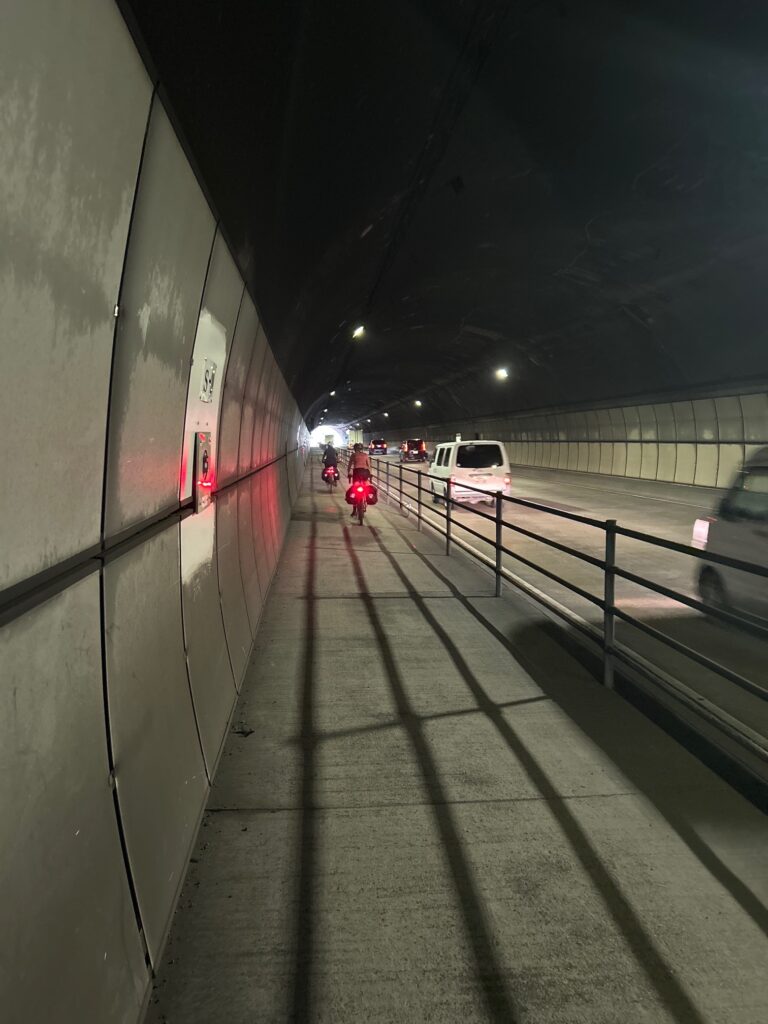
- Tunnels: Front/rear lights always on; reflective accents make a noticeable difference. Quiet tunnels can be eerie, noisy tunnels are VERY noisy and can be intimidating.
- Lean kits worked: Two cycling tees/shorts + minimal off-bike wear were enough with frequent laundries/conbini supplies.
- Chain lube & wipes: Humid conditions plus seaside salt = wipe and lube little-and-often.
- Rinko bags early was the right move—no last-minute scrambles – built in contingency = confidence
Closing thought
Twenty -one days stitched together a coast-to-coast narrative: tram bells and geisha lanes, tea ridges and rice grids, tunnels and tide lines—capped by a champagne finish in Kanazawa. The trip is about the constant progression on the bike, that gives you time to watch, process and reflect, but it is also about the the micro-moments—watching sumo in a 12-seat bar, fixing a flat in a silent tunnel, sipping coffee in a 150-year-old lakeside house—are the ones that will keep this ride alive for years.
Leave a Reply